Learn Piano Keys and Finger Placement - Beginner Guide
July 8, 2026
Learn Piano Keys and Finger Placement - Beginner Guide
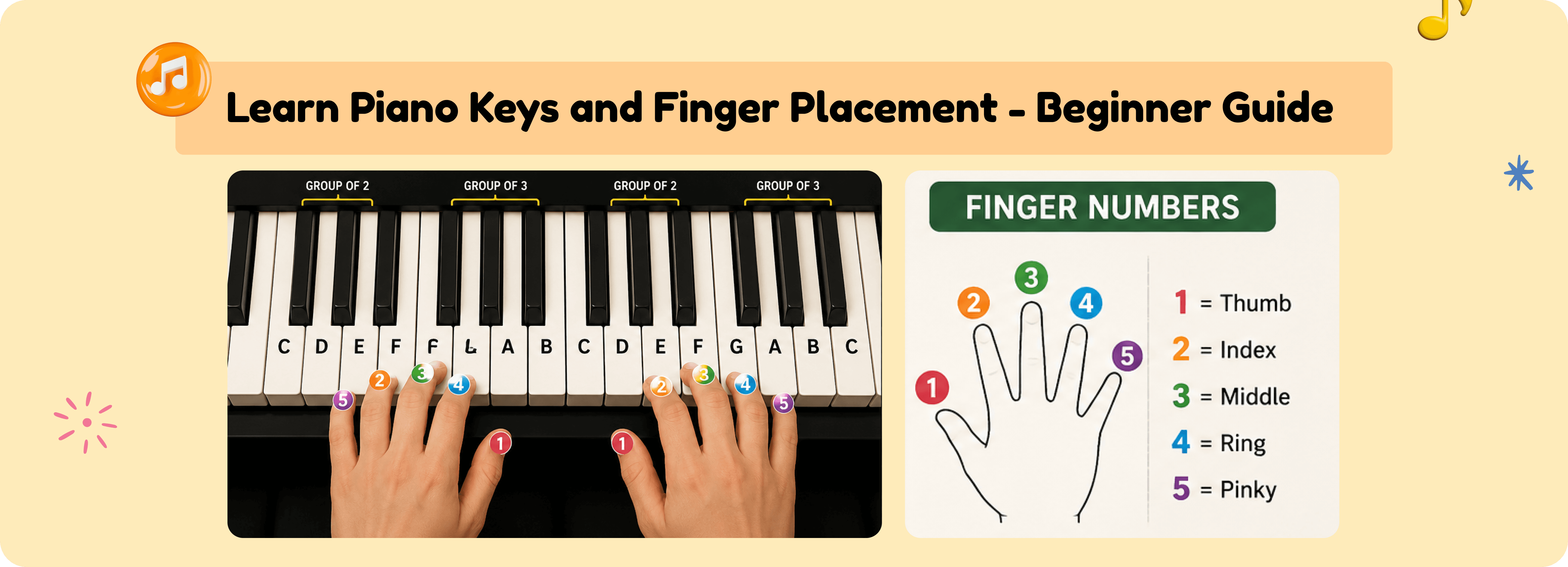
The proper positioning of fingers on the keys is just as crucial in playing the piano as learning notes and chords. This not only ensures that you'll have more control but also helps you move easily on the keyboard and keep stress at bay. There's no need to play quickly in order to have proper technique. Getting into good habits now will make scales and chords easier to handle as you progress.
Learn the Piano Finger Numbering System
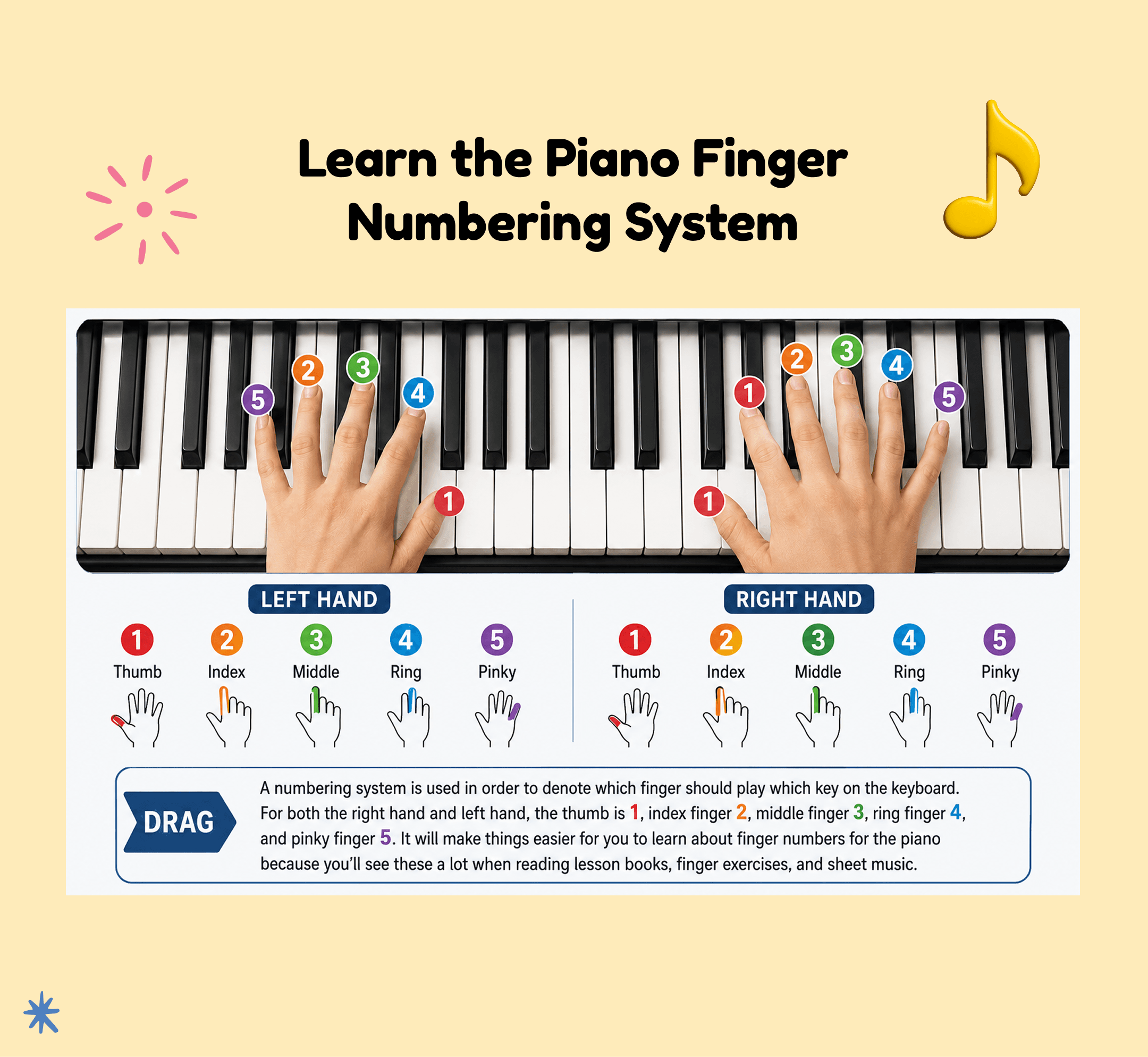
A numbering system is used in order to denote which finger should play which key on the keyboard. For both the right hand and left hand, the thumb is 1, index finger 2, middle finger 3, ring finger 4, and pinky finger 5. It will make things easier for you to learn about finger numbers for the piano because you'll see these a lot when reading lesson books, finger exercises, and sheet music.
Keep Your Fingers Naturally Curved
Maintaining your fingers curved while playing the piano is another key component of correct finger positioning when playing the piano. The tips of your fingers should always be curved, not stiff and flat on the keys. When you have your hand correctly positioned, you will notice that your fingers can move independently, which improves dexterity and control over the piece.
Position Your Hands for Easy Movement
Technique is not based on immobilizing your hands; rather, you should position your hands in such a way that all fingers are able to reach the keys around them without straining and with your wrists straight and loose. Learning the proper hand position used by piano players will help you move easily along the keyboard without having to stretch awkwardly from one key to another.
Use Consistent Fingering While Practicing
Using consistent fingering when practicing makes it easy for your body to get accustomed to movement automatically. It is vital when you want to build great piano fingering skills, especially when you are working on scales, chords, and melodies that you are already familiar with. There is a pianist’s finger positioning chart that you can use during the process of learning. With time and practice, the finger movements will become automatic.
Build Good Habits Every Time You Play
Proper technique is achieved by making gradual, but continuous, progress through small steps, and not by sitting and playing for hours at a time. Start your lessons with easy five-finger exercises, and take care to ensure that your hand placement, finger action, and evenness are correct before going to your music. As you can see, whether you practice on a real piano or our virtual piano, starting with good hand placement will be beneficial for mastering new pieces of music.
Frequently Asked Questions
How long does it take to develop good piano finger placement?
The majority of students observe results in a few weeks. Daily work devoted to hand positioning and fingers' movements for 10 to 15 minutes can help to develop good habits which will gradually become natural.
Should I always follow the finger numbers in sheet music?
It would be a good idea, especially while learning a new composition. The choice of numbers was made to make the passage easier to perform. With the development of your skills, you'll be able to choose different fingerings.
Why do my hands feel tense while playing the piano?
Tension in your hands may be caused by pressing down on the keys too strongly or keeping your fingers too rigid. Staying loose with your wrists and fingers, and taking small breaks while practicing, will ease you into better playing.
Can I improve finger strength without special exercises?
Yes. Playing of scales, melodies and beginner pieces in the correct way helps to build up finger strength and coordination. Practice is more important than any finger strength exercise.
Do digital pianos and online pianos use the same finger placement?
Yes. Whether you are playing on the acoustic piano, the digital piano, or even the online piano, the finger placement is always the same. Learning the right technique of playing the piano applies on all the pianos.
What should I practice after learning proper finger placement?
After mastering finger placement on the piano, incorporate proper finger placement techniques with scales, chords, and simple tunes. Proper finger placement during actual playing will develop your techniques into good playing techniques.
Related Lessons
View All Lessons
Ready to Play?
Go ahead and start practicing with our online piano right in your browser. Have fun playing songs, lessons, and more.
Play Now