
Techniques for Beginners
Daily Piano Practice Routine for Beginners Builds Strong Musical Habits
How to Practice Piano Daily Simple Routine for Beginners to build skills with short exercises, warm-ups, finger drills, and timing practice. Learn how to improve faster with easy daily habits.

How to Practice Piano Daily – Simple Routine for Beginners helps new learners build solid musical habits through short, structured sessions.By
combining warm-ups, scales, chords, rhythm practice, and a simple melody, beginners can grow steadily without feeling overwhelmed.Daily practice builds confidence, smooth finger movement, and better control, making the learning journey enjoyable and successful.
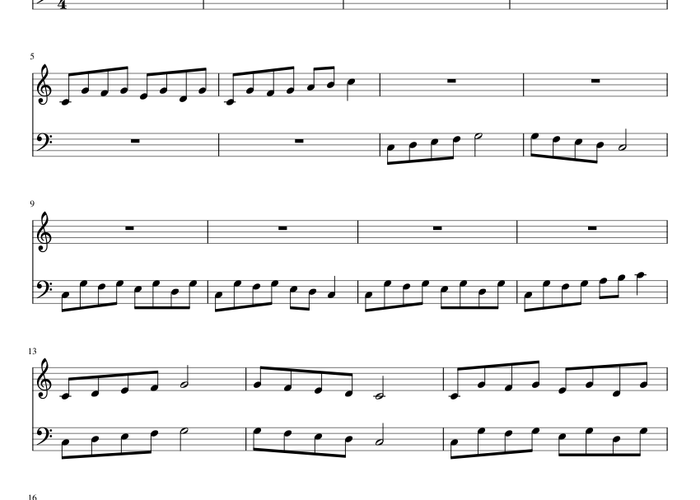
Piano Everyday - Piano Daily Practice Routine Guide to Learning Piano.
Learn Piano Every Day - Easy Routine to follow as an amateur to develop skills through short exercises, warming up, finger exercises, and time exercises. Get to know how to be improved quickly by simple daily routines.
Simple Routine to Practice Piano Every Day provides
new students with an effective direction towards the daily practice. The practice that is done on a daily basis does not have to be in the form of long sessions, but rather it should be in the form of short, targeted steps that enhance the fingers strength, rhythm and musical confidence. The basic routine will ensure the beginners remain motivated and prevent frustration and develop good musical habits.
The importance of practice on a daily piano.
Practice every day assists the beginners to become better quicker since practice makes memory.
Small sessions are less difficult to sustain and eliminate the possibility of missing days.
This rhythmical practice makes hands strong, gives better time and builds musical perception in a natural way.
Novices tend to get confused once they acquire too much information at a time.
This issue is resolved through daily routines which divide the learning process into simple steps.
You do not have to spend an hour a day; even 10-15 minutes will help to gain confidence and rhythm.
The Question of how to organize a daily practice with piano.
A well-organized routine allows novices to be focused.
You have an everyday plan to ensure that you move forward rather than just guessing what to work on.
This also takes stress off and aids in gauging progress with time.
Good routine consists of warm-ups, finger activities, scales, chords and a little melody.
These little exercises are practiced every day and enhance the sense of coordination and the establishment of solid musical grounds.
Newcomers must focus on slow and gradual practice as opposed to speed.
Advantages of Practicing Piano each day.
Helps develop powerful muscle memory.
Enhances the timing and rhythm.
Gains confidence with practice.
Lessens anxiety and frustration.
Increases power in the fingers.
An Exercise to Warm You Up in the Morning.
Playing hands: Warm-ups make your hands ready to play.
Start with some light finger taps on the flat surface.
This is the act of waking every finger and enhancing independence.
Next, you should put your hands on the keyboard and play slow notes one after another.
Start with C, D, E, F, and G.
This makes you stretch your hands and experience the movement and then get into harder exercises.
Number List: Daily Simple Practice Routine
- Take two minutes to warm up your fingers.
- Slowly practice C major scale in either direction.
- Play a single simple chord such as C major or G major.
- Play a little tune that you know.
- Finish with slow exercise on the metronome.
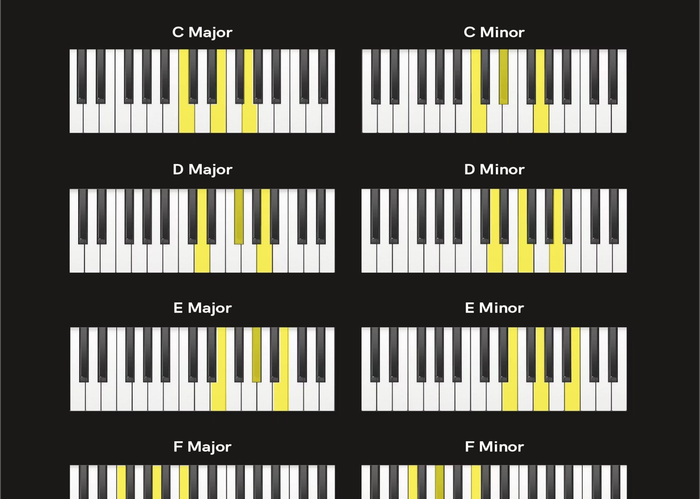
Scales Practice Scales for Better Finger Control.
Scales develop coordination, accuracy and movement.
Begin with C major scale since it involves the use of only white keys.
Play extremely slowly and at first, concentrate on even smooth notes.
Scale should be repeated 3-5 times a day.
This enhances the flow of your fingers and prepares you to the higher lessons.
The more you feel confident, the slower, the speed.
Simplifying Chords and Adding them to Your Practice.
- The chords assist the beginner to have a feel of musical harmony.
- Begin with C major, G major, F major and A minor.
- These are the chords that can be found in almost all of the beginner songs.
- Alternate between two chords at a slow pace.
- Everyday work develops seamless transitions.
Even minutes in chords can be used to make beginners enhance their hand coordination.
The Importance of Rhythm in the everyday.
- One of the greatest problems of beginners is timing.
- MetronomeUse a metronome to keep you steady and consistent when playing.
- You should begin with slow beats and count every click.
- Beat and practice tapping one note.
- then change between two notes such as C and G.
- Practice of rhythm daily enhances timing and instills confidence.
Practicing a Melody Each Day
- The practice is fun with playing a simple melody.
- Select the songs that you are familiar with since they are reputed to be easy to follow.
- Songs that are easy to learn such as Twinkle Twinkle or Happy Birthday are ideal.
- Slowly repeat the melody 3-5 times.
- Concentrating on striking every note.
The daily melody practice makes muscle memory stronger and expression better.
FAQs
- What is the appropriate time taken by beginners to practice piano per day?
- Novices are expected to practice between 10 and 15 minutes a day.
- Regular sessions are better than long and irregular sessions.
- Will the daily practice assist beginners to learn more quickly?
- Yes, the daily practice enhances the strength of the fingers, rhythm and the confidence, which helps the beginner learn faster and easier.
- What a beginner should include in the day to day routine of playing the piano?
- Everyday routine should be used to include warm-ups, scales, chords, rhythmic practice and a simple melody.
Conclusion
How to Practice Piano Everyday - Easy Routine to Practice as a Beginner will assist new students to develop sound musical routines by taking short, structured lessons.
Warm up, scale, chords, practice in rhythm, and a simple tune will allow beginners to develop gradually and without overwhelming them.
With practice on a daily basis, confidence is gained, finger movement is mastered and more control is achieved so that the learning process is an enjoyable success.
More from the blog
Keep exploring new ideas
Piano: Psychological Development.
How Piano Learning Improves Memory Over Time
The process of learning, adaptation, and growth of people is mainly driven by memory. Learning Piano has emerged as one of the effective techniques of memory reinforcement via formal repetition, auditory, coordination and recalling over time. This article discusses the process by which practicing piano develops various forms of memory, reasons why these advantages become increasingly more effective, and how the benefits of learning a piano help to retain in the minds of non-musical areas.

Piano & Skill Development
How Piano Practice Builds Consistency and Self-Discipline
Self-discipline and consistency are crucial personal qualities in the contemporary life but are becoming more challenging to master. The learning of piano provides a natural and effective method of developing both in a structured form of learning, in a progressive manner and through long term commitment. This paper will examine how practice in the piano will develop the consistency over the time, why the self-discipline will develop naturally at the instrument and the applicability of these abilities far beyond music in the life.

Piano & Lifelong Learning
The Reason behind the Rise of Piano Learning among Mature Beginners in the world.
The world has witnessed a potent surge in piano learning among adult learners. More individuals are learning the piano later in their lives and this is due to the flexibility of digital tools, lifestyles and now people are more focused on their personal development. The article discusses the reasons why this trend is being experienced, how adult learners treat piano differently, and why this trend is transforming the contemporary culture of the piano.
Piano & Modern Skills
The reason Learning Piano Is Better than Multitasking in a Distracted World.
Piano learning is becoming an effective tool to reconnect attention and deep thinking in a day and age where we are bombarded with notifications and do not spend enough time in deep contemplation. The mental clarity ensured by years of discipline in the practice of the piano may be that which is afforded by very few activities because it demands constant focus, physical coordination and active listening. This paper discusses the connection between learning the piano and attention, the level of cognitive and mental discipline and the reason why more and more individuals are turning to the piano to overcome distraction in the modern world.

The Culture of Piano and Contemporary Music.
The reason why Minimalist Piano Music is becoming a sound of this decade.
The minimalist piano music has come out as one of the most effective sounds of the modern age. The style is marked by its simplicity, repetition, and restraint, and they are defining the manner in which individuals listen, create, and relate to piano music nowadays. This paper delves into the reasons behind the growth of minimalist piano in popularity all over the world, its reflection of the contemporary life, and why it is a simply a new voice of this decade.
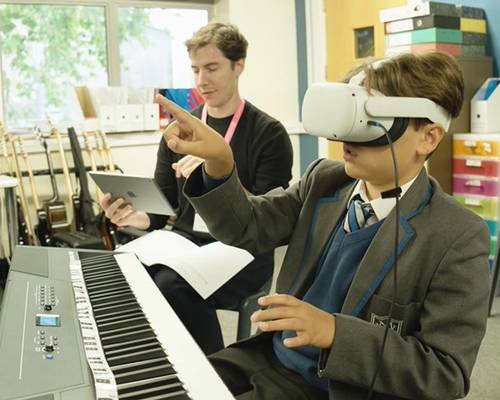
Piano & Future Learning
The Way AR is beginning to transform Piano Learning.
The concept of augmented reality is gradually presenting itself in the business of piano study, providing a fresh interpretation of music, technique, and practice. AR is transforming the interaction between pianists and the keyboard by combining digital guidance and physical instruments to create a new approach to playing the piano. This paper discusses the reasons behind the growing interest in augmented reality learning of piano, its functionality as well as its potential future impact on the teaching of piano.The concept of augmented reality is gradually presenting itself in the business of piano study, providing a fresh interpretation of music, technique, and practice. AR is transforming the interaction between pianists and the keyboard by combining digital guidance and physical instruments to create a new approach to playing the piano. This paper discusses the reasons behind the growing interest in augmented reality learning of piano, its functionality as well as its potential future impact on the teaching of piano.