
The Culture of Piano and Contemporary Music.
The reason why Minimalist Piano Music is becoming a sound of this decade.
The minimalist piano music has come out as one of the most effective sounds of the modern age. The style is marked by its simplicity, repetition, and restraint, and they are defining the manner in which individuals listen, create, and relate to piano music nowadays. This paper delves into the reasons behind the growth of minimalist piano in popularity all over the world, its reflection of the contemporary life, and why it is a simply a new voice of this decade.
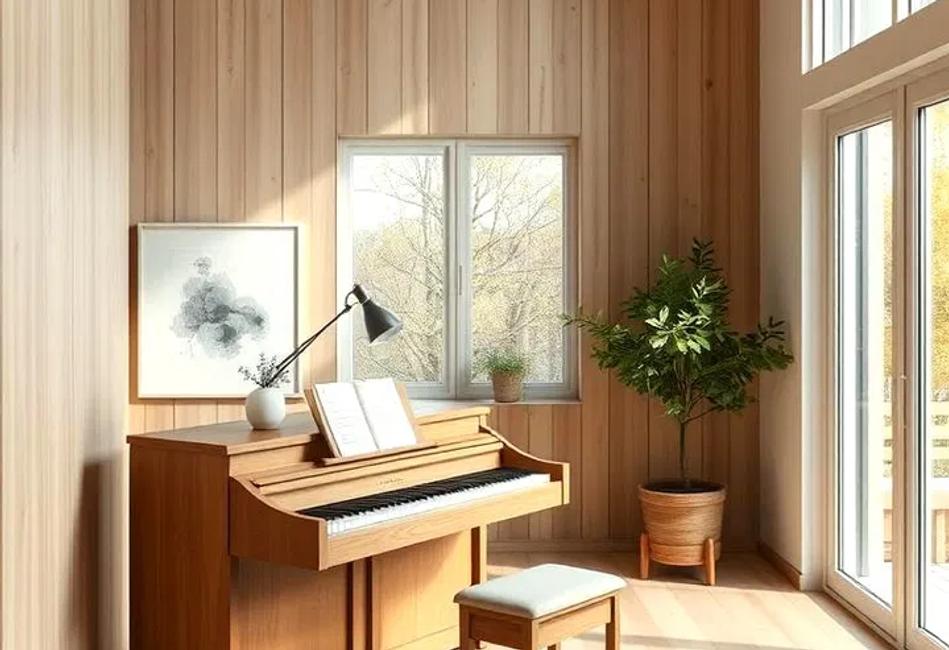
In the recent ten years, the role of piano music has changed in very subtle but significant manners. Piano has been replaced in concert halls and formal recordings with playlists, films, routines and moments of reflection. The center of this change is minimalist piano music, the music style characterized by not being intricate, but by restraint.
Minimalist piano music does not present itself massively. It does not come in loud, it does not impress at the beginning, it is present because it has to be present. This low-key sound has become very resonant in a world that is full of information and stimulation. It is not that people are seeking more intensity. They are seeking certain certainty.
Minimalist piano music is a phenomenon that goes beyond a taste in music. It is an expression of the way people desire to feel.
What Minimalist Piano Means Nowadays
Minimalist piano music has been misconstrued as something simplistic or incomplete. In reality, it is intentional. It employs less notes, slower pace, and repetition, to make space other than fill it.
This music does not hasten to resolution. It allows phrases to breathe. Silence will be incorporated in the composition instead of a vacuum that will have to be filled. The listener is welcomed to relax into the sound instead of listening to a narrative.
Contemporary minimalist piano departs with the earlier minimalist movements by being less conceptual and more emotionally accessible. It is not so much intellectual experimentation but presence.
The reason why this sound will resonate with the modern life

Modern life is fragmented. It is always a stimulation of attention in several directions. The minimalist piano music provides a counterbalance.
Its uniform trends bring about stability. It has poor harmonic motion minimizing cognitive load. There is no need of analyzing or anticipating by the listeners. They are able to coexist with the sound.
This feature renders minimalist piano to be the perfect fit into the present listening experiences where music is more of a companion than the ruler. It facilitates concentration, contemplation and emotional control and does not require attention.
The Emotional Effect of Repetition
One of the characteristics of the minimalist piano music is repetition. Repetitions bring familiarity and comfort as opposed to being a sign of stagnation.
The repetitions enable the listener to drift into the music. The little alterations are significant since the immediate environment is consistent. One such note changed can be felt deeply when all other factors remain the same.
This method is an imitation of the emotional processing. It takes healing and reflecting and is not always demanding some form of aggression to return to the same thoughts. This emotional rhythm is manifested in minimalist piano.
Why Silence is as Important as Sound
Minimalist piano music is extremely conscious of silence. Between notes there are pauses to give time to the natural considerations of resonance. The listener gets time to absorb what was played.
Silence has become a subject of empty space in most of contemporary musical styles. Minimalist piano makes use of silence. It defines the emotional experience in same way as sound does.
This deliberate silence is in line with the increased respect of stillness in modern culture.
How Minimalist Piano became a Streaming Hit
Minimalist piano music has been popularized by the streaming sites. Consistency, tranquility, and emotionalness are rewarded in mood-determined playlists.
Minimalist piano is ideal to such requirements. Songs mingle flawlessly without disturbing. They facilitate lengthy listening periods without getting bored.
Since algorithms emphasize retention more than novelty, minimalist piano naturally promotes itself to the top. Its delicacy is used to its benefit instead of a weakness.
The Impact of the Film, Television, and Digital Media.
Minimalist piano has entered as a half-staple of film and television music. It is not too emotional, and this gives it a chance to complement scenes without overwhelming them.
This association has influenced the expectations of the listeners. The viewer has attained the association of minimalist piano with an inward look, change, and silent intensity.
With the rise of digital storytelling among platforms, this sound still sounds topical and emotionally accurate.
The reason why Pianists are attracted to Minimalism
Minimalist music has provided freedom to many pianists. The stress to achieve virtuosity goes away. The expression is internal as opposed to performative.
Pianists are able to concentrate on speech, time and intent. One chord in the hand might be more worth than a hundred passages that are hurried and totally devoid of message.
This movement brings back to the piano playing the emotional heart of the playing.
Minimalism as a Backlash to Complicatedness
The emergence of minimalist piano may also be regarded as the anti-extravagance response. Musical value was traditionally the measure of difficulty, speed, and density, which was the case over decades.
Minimalism questions such an assumption. It indicates that meaning is not a complex need. It challenges the audience to take time and pay attention to detail.
The philosophy is also associated with the wider cultural trends that prefer purposeful life to a continuous success.
Why Minimalist Piano Revives Non-Musicians
Minimalist piano music is at once available. One does not need to have musical knowledge to enjoy it. Pacing and harmony are used as a direct means of conveying emotion.
Complex classical music usually frightens the non-musicians. Minimalist piano eliminates such an obstacle. It speaks to uninstructed listening.
This accessibility has increased the viewership of the piano.
Connection of Minimalism and Mindfulness
Meditative music is in line with minimalist piano music. Its repetition makes it easy to listen with concentration. It is slow and resembles the meditative breathing.
Most individuals listen to minimalist piano music when they are meditating, journaling, or reflecting on their lives. The music does not draw attention, but enhances it.
This practical position gives it a cultural relevance.
How Minimalist Piano Alters Composition
Little has to be done to compose minimalist piano music. It is up to the composer to determine which ones should be discarded as opposed to adding them.
Any note is responsible. Consonant decisions become conscious. Timing becomes expressive.
This science brings about sanity. The composer gets to learn how to believe in simplicity and allow emotion to naturally come out.
Why This Style Prospers in Home Listening
Minimalist piano music is self-sufficient. It goes hand in hand with the home settings when the listeners want to listen to the calm and not the spectacular.
Minimalist piano provides a soft landing place in a house full of screens and background sinus. It characterizes atmosphere without specifying it.
This is compatible with the domestic life and contributes to its popularity in the long run.
The Minimalism Critique and Misunderstanding
Minimalist piano music is occasionally criticized as shallow or repetitive even though its popularity has risen. Such criticisms are terribly misplaced.
Minimalism does not involve demonstration of complexity. It is about creating space. It is worthwhile not because of its technical display but because of emotional resonance.
Listening to minimalist piano is not necessarily difficult to listen to.
The reasons why Minimalist Piano Is Here to Stay
New novelty does not motivate this trend. It is a reaction to long-term human desires to relax, concentrate and emotionally get straight.
Music that provides relief will be necessary as long as life in the modern world is stressful and excessive. Minimalist piano serves that purpose accordingly.
It can be endlessly varied without loss of identity because of its simplicity.
The Future of the Minimalist Piano Music
Minimalist piano music will also keep on developing with technology and culture. There will come new textures, techniques of production and hybrid styles.
Nevertheless, the main concepts will still be the same. The style will be characterized by space, restraint, and emotional honesty.
The expressiveness in piano is natural making it central to this development.
The significance of this trend to the legacy of the piano
Minimalistic piano music has re-invented the definition of the piano music. It has moved its emphasis on performance to presence.
This change does not nullify custom. It expands it. The piano is not only a mechanical of skill, but also a machine of silence.
This increased identity enhances the cultural sustainability of the piano.
Conclusion
The emergence of minimalism in piano music is indicative of a more radical change in the way individuals connect with sound, emotion and time. This music provides slowness in a world that is fast. In a high-context culture, it is restraining.
Minimalist piano is not concerned with attention. It earns trust. It provides room to the listeners to breathe and reflect by the use of simplicity, repetition and silence.
This is the reason why minimalist piano is not only a trending. It is shaping the sound of this decade.
More from the blog
Keep exploring new ideas
Piano: Psychological Development.
How Piano Learning Improves Memory Over Time
The process of learning, adaptation, and growth of people is mainly driven by memory. Learning Piano has emerged as one of the effective techniques of memory reinforcement via formal repetition, auditory, coordination and recalling over time. This article discusses the process by which practicing piano develops various forms of memory, reasons why these advantages become increasingly more effective, and how the benefits of learning a piano help to retain in the minds of non-musical areas.
Piano & Skill Development
How Piano Practice Builds Consistency and Self-Discipline
Self-discipline and consistency are crucial personal qualities in the contemporary life but are becoming more challenging to master. The learning of piano provides a natural and effective method of developing both in a structured form of learning, in a progressive manner and through long term commitment. This paper will examine how practice in the piano will develop the consistency over the time, why the self-discipline will develop naturally at the instrument and the applicability of these abilities far beyond music in the life.
Piano & Lifelong Learning
The Reason behind the Rise of Piano Learning among Mature Beginners in the world.
The world has witnessed a potent surge in piano learning among adult learners. More individuals are learning the piano later in their lives and this is due to the flexibility of digital tools, lifestyles and now people are more focused on their personal development. The article discusses the reasons why this trend is being experienced, how adult learners treat piano differently, and why this trend is transforming the contemporary culture of the piano.
Piano & Modern Skills
The reason Learning Piano Is Better than Multitasking in a Distracted World.
Piano learning is becoming an effective tool to reconnect attention and deep thinking in a day and age where we are bombarded with notifications and do not spend enough time in deep contemplation. The mental clarity ensured by years of discipline in the practice of the piano may be that which is afforded by very few activities because it demands constant focus, physical coordination and active listening. This paper discusses the connection between learning the piano and attention, the level of cognitive and mental discipline and the reason why more and more individuals are turning to the piano to overcome distraction in the modern world.
Piano & Future Learning
The Way AR is beginning to transform Piano Learning.
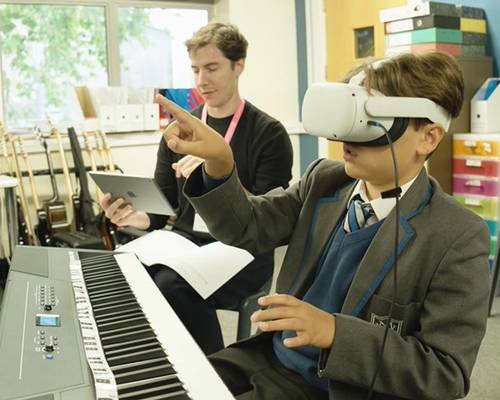
The concept of augmented reality is gradually presenting itself in the business of piano study, providing a fresh interpretation of music, technique, and practice. AR is transforming the interaction between pianists and the keyboard by combining digital guidance and physical instruments to create a new approach to playing the piano. This paper discusses the reasons behind the growing interest in augmented reality learning of piano, its functionality as well as its potential future impact on the teaching of piano.The concept of augmented reality is gradually presenting itself in the business of piano study, providing a fresh interpretation of music, technique, and practice. AR is transforming the interaction between pianists and the keyboard by combining digital guidance and physical instruments to create a new approach to playing the piano. This paper discusses the reasons behind the growing interest in augmented reality learning of piano, its functionality as well as its potential future impact on the teaching of piano.
Piano & Music Industry
Why Artificial Intelligence-Composed Piano Music Is Overwhelming Streaming Services.
Piano music generated by AI is quickly spreading through the streaming platforms, and it is often hard to distinguish between the music written by humans and the music created by AI. Artificial intelligence is slowly transforming the nature of the creation, distribution, and consumption of piano music, whether it be ambient playlists or movie piano sounds. In this article, the author examines the reasons behind the trend of AI piano music, its impact on actual pianists, and what this change could imply on the future of piano art.