
Piano & Music Industry
Why Artificial Intelligence-Composed Piano Music Is Overwhelming Streaming Services.
Piano music generated by AI is quickly spreading through the streaming platforms, and it is often hard to distinguish between the music written by humans and the music created by AI. Artificial intelligence is slowly transforming the nature of the creation, distribution, and consumption of piano music, whether it be ambient playlists or movie piano sounds. In this article, the author examines the reasons behind the trend of AI piano music, its impact on actual pianists, and what this change could imply on the future of piano art.

Streaming websites have become the leading location where individuals learn about piano music over the last few years. Focus playlists to sleep soundtracks are dominated by piano-based soundtracks that are mood-based. A slight but potent transformation has started to transform this landscape, however, in the recent past. An increasing part of the piano music that is being released on streaming sites is not composed or performed by a human at all.
The piano music produced by AI has slowly become mainstream. These songs are usually bare, emotionally neutral and algorithmically purposeful to suit certain moods. Numerous listeners do not even suspect that they are listening to the music that is completely composed by the artificial intelligence. It does not sound as the change on the surface or is not controversial, but the implications of this change on the lives of the pianists, composers, and the listeners are deep.
Once an instrument with the human touch and an instrument to express emotions, now the piano is at the center of one of the most complicated transformations in the modern music culture.
The Introduction of AI Piano Music into the Streaming Ecosystem
AI piano music did not come out of the blue. It was developed slowly together with the algorithmic habits of listening. The streaming services are moving towards music categorisation based on mood, more than on music genre. Studying, sleeping, relaxing or focus playlists are more focused on consistency rather than individuality.
The situation is most suitable to artificial intelligence-generated piano music. Artificial intelligence has the capability to create infinite variations of the relaxing, non-obtrusive piano instruments that satisfy the algorithmic conditions well. Such songs are cheap to produce, need no entertainer, and are available to upload in bulk.
Consequently, AI piano music has actually been a fitting fit within streaming ecosystems that value quantity, predictability, and retention of listeners.
The reason why piano is the ideal instrument in AI music

The piano is the only instrument that is well adapted to AI generation. The fact that its linear arrangement, pitch structure and harmonic flexibility are easily modeled by algorithms makes it easier to model convincingly. Basic chords, low tempo and patterns are easy to transfer into machine generated patterns.
Piano music is not as dependent on the expressive nuance or the control of breath as on the instruments that often depend on the expressive aspects. This is usually sufficient in the case of background listening.
The technical compatibility has resulted in the piano being the predominant instrument in the AI generated music catalogs.
Why Audiences so Frequently fail to distinguish
Majority of AI piano songs are not meant to be actively listened. They are there to facilitate an activity and not to command. Subtle emotional depth is less conspicuous in this case.
When people listen to piano music in their playlists, they tend to pay attention on how the music generates their sense of feeling but not their creator. When the sound is relaxing and non-obtrusive it serves its purpose.
Since the AI piano music is nearly programmed to prevent errors, sudden changes, or surprises, it falls in the background of the sound environment where the expressiveness of human performers is not the key factor.
The Algorithms as the Question of the Piano Music Amplification by AI
Streaming algorithms prefer a music that keeps the listeners occupied without them having to skip. Pianobots are made AI-generated tracks with this purpose.
Their repetitive composition minimizes the boredom of the listener. Their regular movements do not allow one to be distracted. Their duration and speed are ideal to playlist specifications.
Since they are works that do well through algorithmic recommendations, they are being suggested more often by platforms. This poses a feedback mechanism with AI generated piano music becoming visible because it fits in the feedback mechanism more as compared to the expressive and unpredictable human music performance.
The implication of this trend to human Pianists

The development of AI-generated piano music poses a question and challenge to human pianists and composers. An up-and-coming number of independent artists depend on streaming discovery and revenue. With AI monitoring flood playlists, the competition is raised to the highest level.
Piano music created by humans may have some expressive overtones that algorithms are not given priority. This is capable of disadvantaging emotionally rich performance in entirely algorithmic settings.
Nevertheless, this change also brings out the aspect of what machines are incapable of copying completely. Human will, narration and emotional risk are hard to automate with any degree of persuasion.
Why AI Piano Music will be popular with Platforms and Curators
AI piano music is industry efficient. It lowers the cost of licensing, eases the rights management, and provides an unlimited supply.
In the case of platforms with millions of tracks, AI-generated content can be controlled and predictable. Curators will have a chance to keep up with the mood playlists without having to depend on human artists that have a changing style or who are not always available.
Such efficiency makes the AI piano music appealing in spite of its creativity restrictions.
The Classical Piano Music Debate on AI
The emergence of AI piano music evokes philosophical issues of emotion and genuineness. Piano music has been connected with the individuality of expression and human frailty.
When the audience learns that a composition which they found soothing was done by an algorithm, the responses are mixed. Others are indifferent and they are concentrating on functionality but not the origin. Another group of people are feeling out of place as they believe that there is something missing.
This emotional discussion cuts across some wider questions concerning the place of human creativity in a world of data.
The reason this trend is particularly powerful among ambient piano genres
Advanced AI-created piano music is most successful in the ambient and minimalistic style. The focus of these genres is on atmosphere rather than narrative and therefore they are simpler to model algorithmically.
Machine generation is compatible with repetition, slow harmonic movement, and the slight variation. Audiences with a need to concentrate or have a calming effect tend to enjoy predictability, which AI is capable of providing.
This does not imply a complete loss of ambient piano, but it is highly overlapping.
The way Pianists are keeping up with the AI Shift
Other pianists counter this by bending towards what will not be easily reproduced by AI. Emphatic timing, contrast of dynamics, and anecdotal narration are the characteristics.
Others change the focus to live performance, training or direct audience participation. Space in platforms where human presence can be observed provides space in which authenticity is more important than the effectiveness of algorithms.
Instead of playing the game on the same level as machines, most musicians create value in a human relationship.
The distinction between functional and expressive Piano music
The piano music by AI emphasizes the increased gap between functional and expressive music. Functional music is there to aid in activity. Music is also expressive to express emotion and story.
The two also exist, but they will fulfill different roles. Issues come in where systems are unable to differentiate the two.
Knowing this difference can be used to understand why AI piano music is flourishing in certain settings and hollow in others.
The reason why listeners still want human playing of piano music
Although AI has emerged, listeners still want to be touched through the music played by a human piano. Live performances, live records, and personal and soul-based compositions are still very popular.
Human piano players bring forth uncertainty, exposure, and deliberate inaccuracy. These attributes provide bondage as opposed to the comfort itself.
AI is capable of sound simulation, whereas it does not do well at simulating lived experience.
The Piano Music of AI is surrounded by certain ethical questions
The credit, transparency, and ownership of artificial intelligence and music generated via AI ethical questions emerge about the expansion of AI piano music. This is because there are many occasions where listeners do not know that they are listening to machine-generated work.
There are those who maintain that sites ought to identify AI music. Others consider functional importance to be more important than origin.
With the further evolution of AI, these ethical concerns are going to be increasingly difficult to disregard.
The Future of Piano Music in a Hybrid Landscape
The future of piano music is probably going to be hybrid and not divided. Piano music generated by AI will still be functional, whereas human pianists will be utilized in areas of expressing, engaging, and telling stories.
Technology can also be utilized as an instrument instead of an enemy and it can support human composers instead of ousting them.
The role of the piano will develop more instead of becoming smaller.
Why This Trend Matters Now
The AI-composed piano music is seen as a more general shift in the creation and consumption of art. It defies the creative, value, and human contribution assumptions.
This is a trend that should be understood by pianists. Consciousness enables the artists to be placed in an intentional position and not in a reactive manner.
The piano is not going away, however, the surrounding environment is evolving at a very high rate.
The implication of this on Piano Learners
To learners, this change emphasizes on the significance of expression. It is no longer sufficient to merge with the techniques.
Working on musical voice, emotional sensitivity and interpretive richness are less and less wasteful in a world where the sound of a simple piano can be programmed.
Piano nowadays is learning to be human with music.
Conclusion
The development of AI-composed piano music streaming platforms is an important shift in the current music culture. Although machines now generate enormous quantities of useful piano music they also demonstrate the invaluable worth of human behavior.
The piano is a very human being instrument, despite the influence of technology redefining its environment. Instead of eliminating the art of the piano, such a trend explains the real values of music, which are intent, emotion and bonding.
The human piano voice is not less relevant to the world filled with algorithmic sound.
More from the blog
Keep exploring new ideas
Piano: Psychological Development.
How Piano Learning Improves Memory Over Time
The process of learning, adaptation, and growth of people is mainly driven by memory. Learning Piano has emerged as one of the effective techniques of memory reinforcement via formal repetition, auditory, coordination and recalling over time. This article discusses the process by which practicing piano develops various forms of memory, reasons why these advantages become increasingly more effective, and how the benefits of learning a piano help to retain in the minds of non-musical areas.
Piano & Skill Development
How Piano Practice Builds Consistency and Self-Discipline
Self-discipline and consistency are crucial personal qualities in the contemporary life but are becoming more challenging to master. The learning of piano provides a natural and effective method of developing both in a structured form of learning, in a progressive manner and through long term commitment. This paper will examine how practice in the piano will develop the consistency over the time, why the self-discipline will develop naturally at the instrument and the applicability of these abilities far beyond music in the life.
Piano & Lifelong Learning
The Reason behind the Rise of Piano Learning among Mature Beginners in the world.
The world has witnessed a potent surge in piano learning among adult learners. More individuals are learning the piano later in their lives and this is due to the flexibility of digital tools, lifestyles and now people are more focused on their personal development. The article discusses the reasons why this trend is being experienced, how adult learners treat piano differently, and why this trend is transforming the contemporary culture of the piano.
Piano & Modern Skills
The reason Learning Piano Is Better than Multitasking in a Distracted World.
Piano learning is becoming an effective tool to reconnect attention and deep thinking in a day and age where we are bombarded with notifications and do not spend enough time in deep contemplation. The mental clarity ensured by years of discipline in the practice of the piano may be that which is afforded by very few activities because it demands constant focus, physical coordination and active listening. This paper discusses the connection between learning the piano and attention, the level of cognitive and mental discipline and the reason why more and more individuals are turning to the piano to overcome distraction in the modern world.
The Culture of Piano and Contemporary Music.
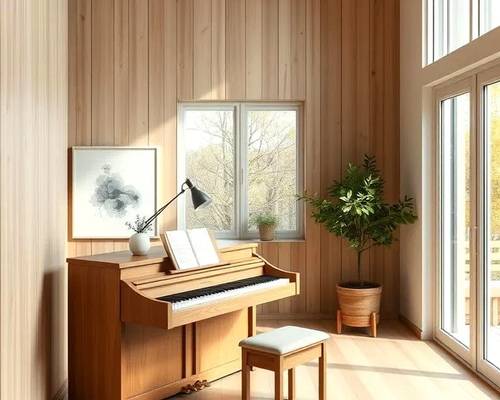
The reason why Minimalist Piano Music is becoming a sound of this decade.
The minimalist piano music has come out as one of the most effective sounds of the modern age. The style is marked by its simplicity, repetition, and restraint, and they are defining the manner in which individuals listen, create, and relate to piano music nowadays. This paper delves into the reasons behind the growth of minimalist piano in popularity all over the world, its reflection of the contemporary life, and why it is a simply a new voice of this decade.
Piano & Future Learning
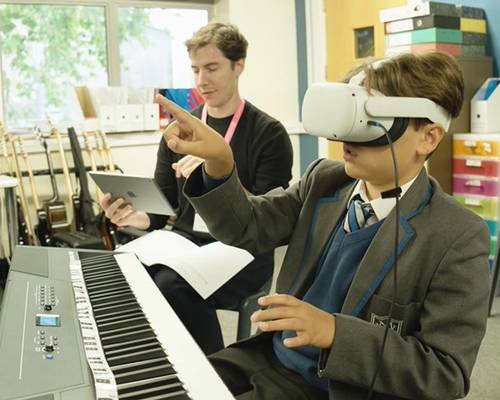
The Way AR is beginning to transform Piano Learning.
The concept of augmented reality is gradually presenting itself in the business of piano study, providing a fresh interpretation of music, technique, and practice. AR is transforming the interaction between pianists and the keyboard by combining digital guidance and physical instruments to create a new approach to playing the piano. This paper discusses the reasons behind the growing interest in augmented reality learning of piano, its functionality as well as its potential future impact on the teaching of piano.The concept of augmented reality is gradually presenting itself in the business of piano study, providing a fresh interpretation of music, technique, and practice. AR is transforming the interaction between pianists and the keyboard by combining digital guidance and physical instruments to create a new approach to playing the piano. This paper discusses the reasons behind the growing interest in augmented reality learning of piano, its functionality as well as its potential future impact on the teaching of piano.