
Piano & Mental Well-Being
How Learning Piano Provides Mental Rest in an Overly busy World.
The state of mental calmness has become more and more hard to keep in the world of speed, pressure, and continuity. The art of learning piano is becoming an influential means of regaining internal tranquility by concentration, organization, and mindful practice. This paper discusses the ability of learning to play the piano and how it can reduce mental clatter, why it can foster emotional stability, and how this calming effect on the mind can be best applied to real-life situations.
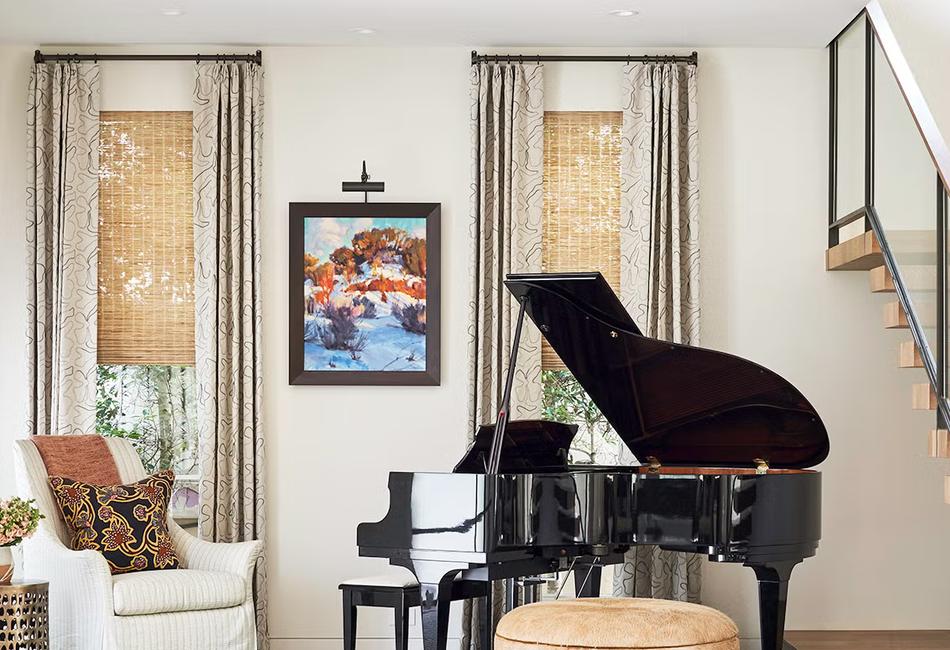
Life today moves quickly. The work is busy, the pressure is high, and there is just a sense of lack of space in the mind. Even the times of relaxation are often stimulated. Most individuals have the feeling of persistent mental uneasiness, in which minds remain racing even after work is complete.
To counter this condition, there is an increasing enthusiasm in the activities that do not bring additional input but rather generate clarity. Learning piano has been one of such activities. Instead of loading the mind, it aligned the attention, decreases the pace of the mind and promotes sustained attention.
This is not accidental. The piano provides an organized space in which the sound is developed in time, movement is not spontaneous, and one is to be attentive. These attributes make the study of piano a stable way to the state of peace of mind.
The reason Mental Calm is so uncommon nowadays
Emotional balance and uninterrupted concentration are the keys to mental calm. It is in the modern world that both are frequently disrupted. Thought is divided into rapid changing of tasks, frequent alerts and pressure to react.
The mind is not able to calm down when the concentration is split many times. Internal dialogue even on the time of rest does not allow one to relax. In the long term, such an trend will result in the psychological exhaustion instead of clarity.
It takes more than idleness to calm down. It demands a conscious involvement, which substitutes the noise in the mind with meaningful attention. This is provided through piano learning.
The Effect of Piano Learning on the Internal Speed

The learning of piano brings slowness by necessity. Sound travels through time, and it cannot be hurried or lose its articulation. Students should learn at a slow paced speed that can be controlled and heard.
This decreasing is not only to the body but also to the mind. Breathing steadies. Thoughts align with rhythm. The focus moves away on diffused issues to the here and now.
Repeats give the learners an opportunity to feel like slowing down their inner speed.
The Focus Purpose in the Development of Calm
Peace does not mean lack of action. It is the lack of distracting needlessly. Piano lessons require one to be attentive, hence less mental clutter.
Background worries are naturally conducive when a full concentration of mind on sound and movement is involved. The mind is preoccupied positively.
This intentional activity creates serenity by immersion and not avoidance.
Why Sound Produces a Regulating Influence over the Mind
Sound has a direct effect on mental condition. The perception is organised by Rhythm and harmony so that the mind has a structure that they can predict.
Learners do not listen passively, but attentively at the piano. They control sound as it is intended and this makes the interaction even more fulfilling.
This listening will assist in controlling the patterns of thinking, which will minimize the chaos in the mind.
The physical movement promotes mental relaxations
Piano lessons are a combination of movements and focus. The movements of hands are controlled by sound and time.
This is a coordination which has the mind grounded in the body. The consciousness moves out of abstraction to corporeality.
The grounding will lower the mental agitation and stabilize emotions.
The reasons why Piano Learning Promotes Presence
Presence is being present and understanding what is going on at a given time. The process of learning piano develops presence since one is required to stick to sound and movement.
Distraction brings about instantive loss of control. It is a mild way of drawing attention back without being judgmental.
With time, presence is simplified and natural
The Correlation between Being at Peace and Organizing
Structure aids in tranquility through uncertainty minimization. Piano music gives definite patterns and anticipations.
Students are aware of what lies ahead and therefore they do not need to have their ear on the ground.
This is a structured setting that provides psychological safety that facilitates relaxation
The way practicing the piano helps decongest the mind
Mental overload is a phenomenon that arises when there is too much thinking to think over. In practicing piano, the focus is limited to a single activity.
Such narrowing of the mind gives the mind a chance to have a rest that is not affected by making decisions all the time. The interest is not divided as it is united.
A united focus is naturally relaxing
The importance of Piano Learning in Promoting Emotional Control
Emotions are also efficiently managed when the individuals are aware and react to the internal states in a composed manner. This is facilitated by piano learning.
The learners become aware of tension in sound and movement and adapt. This feedback promotes corrective backlash as opposed to coercion.
This will provide greater emotional stability
The Repetition Process and Stability
Repetition brings forth predictability. The reduction of stress is a result of predictability.
In the piano, familiarity and confidence are established by repetition. Students are aware of what is going to happen and how they are to react.
This steadiness facilitates peaceful interaction
The reason Piano Practice is Meditative, but Not Passive
The state of meditation usually entails concentration. This state is made by piano practice in its course of action.
Piano learning is an active relaxation as opposed to the passive relaxation where the mind remains tense.
The balance makes the experience invigorating as opposed to exhausting
The Use of Listening to Attain Mental Quiet
Listening gives internal dialogue a silence. Listening is one of the skills that are trained in the art of piano.
Students are concerned with tone, schedule, and balance. The inside chatter is reduced and the focus is shifted to sound.
Listening is a door to psychological silence
The Support of Piano Learning in the Inconsistency of Calm with Time
Relaxation becomes better with practice. Learning Piano offers a uniformed way of doing this.
Sessions support practices of concentration and attention. Peace is compound instead of a transient thing.
In the course of time, students develop stabilized mental conditions even without practice.
The reasons Piano Learning promotes a smooth progress
Pressure disrupts calm. Learning piano promotes slow enhancement as opposed to fast outcomes.
Learners embrace the idea that development is gradual. Such acceptance lowers the frustration.
Moderate development helps in emotional stability.
Response to Stress How Piano Learning alters Response to Stress
Piano acquired skills tend to affect stress reaction in other places. Students are more tolerant and reserved.
They take time before responding and they make better decisions.
This change will show increased emotional control.
The rationale behind why Calm is beneficial to better learning and creativity
Peace provides room to clarity. The mind is steady when quiet, thus, learning is enhanced and creativity is easier.
This relationship is evidenced in the learning of piano. Serene concentration generates improved sound and control.
This percept crosses over to music.
The Connection between Relaxation and Confidence
This confidence arises when one feels that he or she is in charge over attention and emotion. This control is acquired over time in learning piano.
Students feel confident in the fact that they can stay on course even through problems.
This assurance builds in peace.
The Piano Learning as a Reflections Promoter
Reflection intensifies the process of calm because an experience is given time to take its course. There are breaks in piano practice that are taken to reflect.
Learners do not rush to listening and correct.
Reflection aids reflexive interaction.
Why Piano Learning Resonates With the Current Well-Being Requirements
Numerous new trends on well-being are aimed at minimizing stimulation. Another alternative is piano learning where the stimulation is substituted with structured focus.
Such a substitution is intentional and not oppressive.
The piano is utilized to create equilibrium and not evasion.
The way Calm Practiced at Piano Transfers to Everyday Life
Students tend to observe less intense reactions in real life scenarios. Tasks feel more manageable.
The routine of active participation touches on everyday life and interactions.
Relaxation is an aspect of life and not a temporary condition.
The reasons why Piano Learning Underpins Long-term Emotional Stability
Stability is built out of the steady regulation of emotions. The learning of piano gives repetitive chances of such regulation.
Every session sets the tone of peaceful interaction.
The stability increases with time.
The Culturally Shifting to the Intentional Living
Intentional living is becoming more popular. Piano studying fits this change, where it is proposed to spend time and mindfully.
This cultural alignment helps it in its further development.
The reason why Piano in particular is particularly effective in developing Calm
The piano is full of sound, movement and form. Calmness is better served under this integration rather than a number of activities.
There is not many endeavors where such a moderate arrangement of attention is needed.
The tool is still specially appropriate to mental health.
Long-term effects- Mental health and balance
The mental habits are transformed over time through piano learning. Students have a better mind and emotional stability.
These returns are long-run accumulated and stabilized.
It is not just the influence on music.
The reason why Calm will continue to be necessary
Being able to stay calm will be more important as life keeps gaining pace.
This ability is enhanced by learning piano which does not require being taught but an experience.
Its applicability will keep increasing.
Conclusion
Practising piano is a sure way of having a calm mind to live in the hectic world. Practicing the piano by paying close attention, excellent listening and structured movement, the mental noise is reduced and emotions are balanced.
This calm is not temporary. It enriches with the regular contact and is transferred into daily life. Learning piano does not eliminate difficulty, but it is a lesson to deal with difficulty with stability.
Piano learning in a busy world is a refreshing experience that revives what most people desire the most, an unaltered mind that is clear and focused on the action in a purposeful manner.
More from the blog
Keep exploring new ideas
Piano: Psychological Development.
How Piano Learning Improves Memory Over Time
The process of learning, adaptation, and growth of people is mainly driven by memory. Learning Piano has emerged as one of the effective techniques of memory reinforcement via formal repetition, auditory, coordination and recalling over time. This article discusses the process by which practicing piano develops various forms of memory, reasons why these advantages become increasingly more effective, and how the benefits of learning a piano help to retain in the minds of non-musical areas.
Piano & Skill Development
How Piano Practice Builds Consistency and Self-Discipline
Self-discipline and consistency are crucial personal qualities in the contemporary life but are becoming more challenging to master. The learning of piano provides a natural and effective method of developing both in a structured form of learning, in a progressive manner and through long term commitment. This paper will examine how practice in the piano will develop the consistency over the time, why the self-discipline will develop naturally at the instrument and the applicability of these abilities far beyond music in the life.
Piano & Lifelong Learning
The Reason behind the Rise of Piano Learning among Mature Beginners in the world.
The world has witnessed a potent surge in piano learning among adult learners. More individuals are learning the piano later in their lives and this is due to the flexibility of digital tools, lifestyles and now people are more focused on their personal development. The article discusses the reasons why this trend is being experienced, how adult learners treat piano differently, and why this trend is transforming the contemporary culture of the piano.
Piano & Modern Skills
The reason Learning Piano Is Better than Multitasking in a Distracted World.
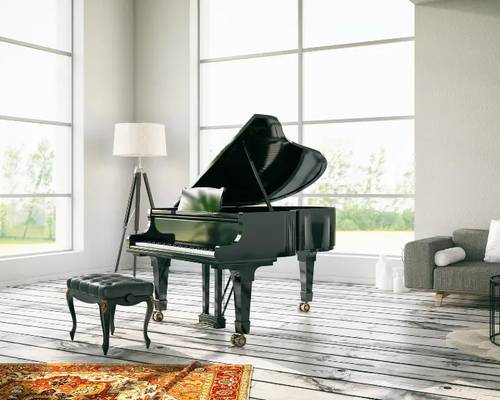
Piano learning is becoming an effective tool to reconnect attention and deep thinking in a day and age where we are bombarded with notifications and do not spend enough time in deep contemplation. The mental clarity ensured by years of discipline in the practice of the piano may be that which is afforded by very few activities because it demands constant focus, physical coordination and active listening. This paper discusses the connection between learning the piano and attention, the level of cognitive and mental discipline and the reason why more and more individuals are turning to the piano to overcome distraction in the modern world.
The Culture of Piano and Contemporary Music.
The reason why Minimalist Piano Music is becoming a sound of this decade.
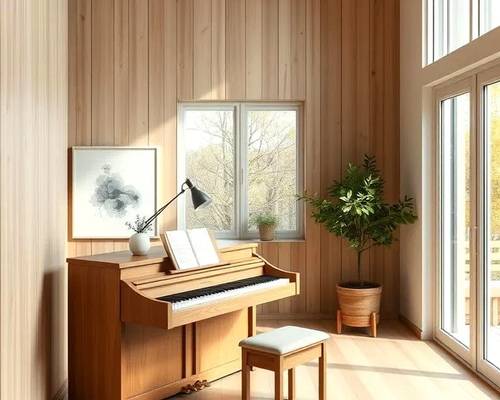
The minimalist piano music has come out as one of the most effective sounds of the modern age. The style is marked by its simplicity, repetition, and restraint, and they are defining the manner in which individuals listen, create, and relate to piano music nowadays. This paper delves into the reasons behind the growth of minimalist piano in popularity all over the world, its reflection of the contemporary life, and why it is a simply a new voice of this decade.
Piano & Future Learning
The Way AR is beginning to transform Piano Learning.
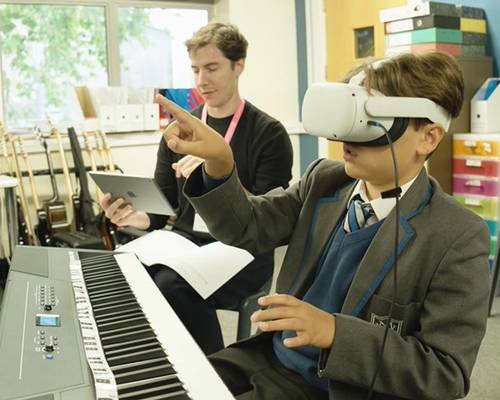
The concept of augmented reality is gradually presenting itself in the business of piano study, providing a fresh interpretation of music, technique, and practice. AR is transforming the interaction between pianists and the keyboard by combining digital guidance and physical instruments to create a new approach to playing the piano. This paper discusses the reasons behind the growing interest in augmented reality learning of piano, its functionality as well as its potential future impact on the teaching of piano.The concept of augmented reality is gradually presenting itself in the business of piano study, providing a fresh interpretation of music, technique, and practice. AR is transforming the interaction between pianists and the keyboard by combining digital guidance and physical instruments to create a new approach to playing the piano. This paper discusses the reasons behind the growing interest in augmented reality learning of piano, its functionality as well as its potential future impact on the teaching of piano.