
Piano & Music Education
How Piano Learning Physically Reshapes the Human Brain Today
Learning the piano does more than develop musical skill—it physically reshapes the human brain over time. By engaging memory, movement, sound, attention, and emotion simultaneously, piano learning strengthens neural connections and enhances cognitive flexibility. This article explores how long-term piano practice influences brain structure, processing, and mental resilience across different stages of life.
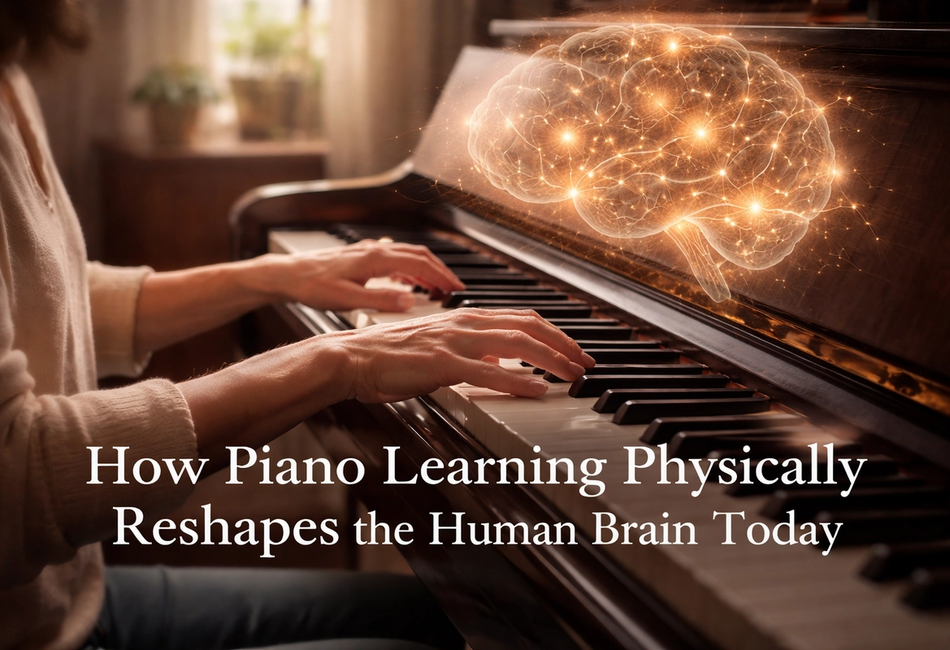
The study of the piano can be linked with music, discipline, or art, but its impact is far beyond that. Piano learning literally changes the brain of a person over years of practice and studying. This change is not a conceptual one, but is quantifiable, structural and permanent. There is no other activity that leads to such a combination of physical coordination, auditory processing, memory and emotional awareness as playing a piano.
Although many individuals believe that piano is a creative activity, neuroscientists are gradually finding more reasons that it is considered to be one of the most intricate activities that a person can exercise. The process of reading music as well as playing along using both hands alone, listening and changing the movement in real time compels the brain to establish new connections and reinforce existing ones. These changes overtime go beyond music and affect the way the brain process information, solve problems and be able to adjust to problems.
The Natural capability of the Brain to evolve
The human brain is not fixed. It is continually changing with experience, which is referred to as neuroplasticity. The brain restructures itself when an individual engages in a repetitive strenuous activity to carry out the same activity more effectively. Neuronal pathways become more robust, intuition among parts becomes sharper and connections that are not used become duller.
The learning of piano triggers neuroplasticity. Piano playing involves the activation of many brain systems concurrently, unlike most of the activities in which only one of them is utilized. The visual processing is used to interpret musical notation, the processing of sound is used to assess sound, finger movement is handled by motor regions, and the tracking and structuring are handled by memory systems. Emotional centers react to the meaning of music and attention systems are the upholders of attention.
Such a high degree of integration compels the brain to develop.
The Brain hemispheres used in Piano practice
The ability of the learning of the piano to involve both sides of the brain simultaneously is one of the most outstanding features of the learning of the piano. The left hemisphere which has been thought to be associated with logic and structure handles rhythm, counting and technical accuracy. The right brain, which is allied to creativity and spatial consciousness, deciphers melody, tone and emotional expressiveness.
Piano playing involves the use of both sides of the brain since unlike work, which is biased in one side of the brain, when you are playing the piano, both sides must work together. Such collaboration enhances communication within the corpus callosum which is the fiber connecting the two brain halves. Studies demonstrate that in most cases musicians possess a better corpus callosum which enables a musician to transfer information faster and more efficiently.
This increase in communication promotes balanced thinking, or, in other words, analytical and creative thinking, outside of music.
Fine Control and Motor Skill Development
Extraordinary fine motor control is required in playing piano. The individual fingers have to be in control but at the same time be coordinated with the rest. The two hands tend to do various movements simultaneously, even in conflicting quantities or dynamics.
In order to satisfy these requirements, the brain optimizes the motor maps the neural models of movement. As the finger moves repeatedly, it becomes more precise, efficient and automatic. This heightening is observed in the brain imaging studies, in which the representation of the finger motor cortex is larger in the brains of pianists.
These are not changes that are lost with the cessation of practice. Pensioners with long-term piano playing have better motor coordination which is applicable in tasks involving dexterity, control and precision.
Sensory and Sound Awareness Auditory Processing
Auditory processing is dramatically improved with the use of piano learning. Pianists are taught to listen to variations in pitch, variations in timings, and tonal color being extremely sensitive. This sound discrimination reinforces the neural connections in the auditory cortex.
With time, the skill of the pianists is to hear the sound before it hits. The brain anticipates the sound of a note by feeling and moving and then contrasts the outcome to desire accordingly. This continuous process of feedback improves the listening capabilities and auditory memory.
The improvement in auditory processing is also able to help in language acquisition, listening comprehension, and communication in the future.
Piano Learning Strengthened Memory Systems
Nothing can test the memory as well as playing the piano. Various memory systems are mobilized during playing the piano: visual memory to read the notes, motor memory to control fingers, auditory memory to get the sound, and structural memory to get the musical structure.
Repeated practice of a piece reinforces the working memory which retains the information temporarily and the long term memory retains the patterns and sequences. Gradually, the piano players acquire outstanding memory skills that can often memorize long pieces of music at a very high level of accuracy.
These are not only benefits in music. Piano students often show increased recall, concentration and learning abilities in non-musical fields.
Timing, Cognitive Control, and Attention
It takes continued focus in playing the piano. Distraction will ruin rhythm, accuracy, or expression. The brain reinforces such networks that are involved in cognitive control and timing to sustain performance.
Time is also a crucial factor. Pianists have to know how to move exactly according to some rhythm inside them. This time sensitivity develops timing mechanisms in the brain which is also used in speech, coordination and decision-making.
Consequently, there are high chances that piano students become more focused, have better impulse control and task management.
Emotional Processing and Regulation
The nature of music is emotional, however, when studying the piano, some control is introduced. To ensure technical control, the pianists need to control the intensity of emotions. High tension disrupts performance whereas being calm increases it.
This dynamic builds emotional regulation systems of the brain. Players get conscious of the impact of emotion on performance and get to adapt. In the long run, this realization helps in emotional regulation and stress management.
Even playing piano can trigger the brain reward pathways whereby the dopamine is released once the challenges are conquered. This makes the motivation and perseverance stronger.
The Effect of Long-term Piano study on the Brain
Studying the piano would have accumulative effects over a long period. Some of the structural brain differences found in the experienced pianists are: more gray matter density in motor, auditory and visuospatial parts. The brain networks become functionally connected which enables the brain to process information faster.
These reforms are indicative of efficiency, rather than growth. The brain becomes accustomed to doing multi-level tasks using less effort thus releasing the cognitive space to higher thinking.
Notably, these advantages do not only apply in childhood. Neuroplastic changes in adult learners also prove that the brain is not fixed in its whole life.
Piano Learning and Cognitive Aging
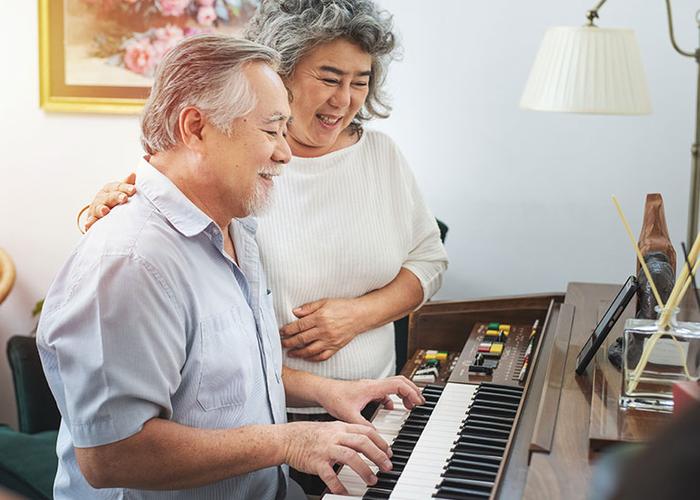
Aging brings the issue of brain health to the forefront. Piano learning provides an effective means of cognitive activity that can be used to maintain a healthy aging process.
Using the piano, memory, attention, coordination, and emotion are all challenged at the same time. Such multi-dimensional stimulation could be useful in slowing down the process of cognitive decline by maintaining neural networks to be active and flexible.
The research indicates that musical training correlates with the slow age-related changes in cognition. Although the use of piano is not a treatment, it is a significant method of using the brain intensively with time.
One of the reasons why Piano is the most effective activity amongst others
The activities that are good to the brain are numerous, yet learning of piano is unique due to its complexity and integration. Physical exercises enhance motor ability. Language is built up through reading. Games may enhance strategy. All these are brought together in one activity through piano.
It needs to be moving, listening, reading, remembering, feeling and timing simultaneously. This unification makes the brain coordinate various systems at any given time and form strong neural networks.
It is due to this that learning the piano can tend to have a wider cognitive, compared to a domain specific activity.
The Effect of Repetition and Intentional Practice
The change in neuroplasticity relies on repetitions. The practice of piano offers systematic repetition that is varied. The repetitions strengthen neural connections, and the absence of automaticity is ensured by musical variability.
This repetition versus attention is optimal to brain development. The brain consolidates helpful associations and it is flexible.
Intentional learning of playing the piano with time causes the brain to get used to learning efficiently, a skill that is transferred to other fields of life.
The Learning of Piano at the various life stages
At the various ages, the brain reacts to the learning of the piano in different ways but the gains are evident in all ages.
- Cordination, attention and basic cognitive skills are nourished in children.
- Young people enhance emotional control and executive functioning.
- Adults improve concentration, memory and resistance to stress.
- The elderly promote cognitive stability and affective wellness.

The piano accommodates the learner although it still challenges the brain.
The reason the Brain Retains Piano Long after it Stops Practising
Piano learning is one of the most interesting features in that it is long lasting. Former pianists can still be coordinated, understand music and sensitive to sound even after extended intervals of absence.
This perseverance is indicative of deep neural encoding. Piano learning forms robust networks that are distributed that are accessible even when they are not in use.
These long-term effects indicate how significant the learning of the piano can be in the brain in terms of structure and functionality.
Engaging the Brain Lifelong: The Piano
Piano learning is infinite in contrary to plateau activities. There is never enough to polish, experiment and communicate. This makes sure that there is constant mental activity.
With the change of life, the change of the relationship with the piano occurs. It can be less challenge and more expression, less learning and more reflection. The brain is active in all the stages.
Such versatility makes piano one of the most sustainable ways of cognitive enrichment that could be obtained.
Conclusion
There is much more than music making in learning the piano. It re-sculpts the brain by providing long-lasting combined actions of movement, sound, memory, attention, and emotion. In the long-run, these needs cause permanent neural modifications, which affect thinking, learning, and emotional stability.
As the world grows more and more influenced by passive consumption, it is only the learning of the piano, as an active process of brain-building, which can be held. It is not only limited to the keyboard, but it helps to maintain cognitive health and mental dexterity throughout the life.
More from the blog
Keep exploring new ideas
Piano: Psychological Development.
How Piano Learning Improves Memory Over Time
The process of learning, adaptation, and growth of people is mainly driven by memory. Learning Piano has emerged as one of the effective techniques of memory reinforcement via formal repetition, auditory, coordination and recalling over time. This article discusses the process by which practicing piano develops various forms of memory, reasons why these advantages become increasingly more effective, and how the benefits of learning a piano help to retain in the minds of non-musical areas.
Piano & Skill Development
How Piano Practice Builds Consistency and Self-Discipline
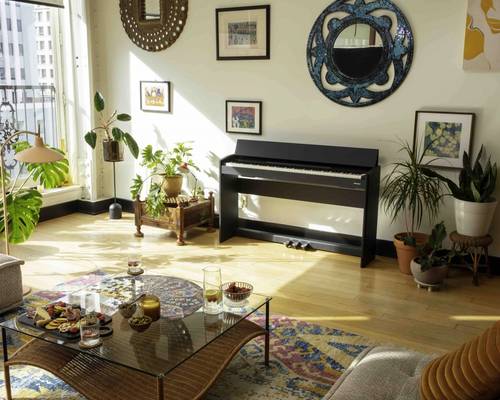
Self-discipline and consistency are crucial personal qualities in the contemporary life but are becoming more challenging to master. The learning of piano provides a natural and effective method of developing both in a structured form of learning, in a progressive manner and through long term commitment. This paper will examine how practice in the piano will develop the consistency over the time, why the self-discipline will develop naturally at the instrument and the applicability of these abilities far beyond music in the life.
Piano & Lifelong Learning
The Reason behind the Rise of Piano Learning among Mature Beginners in the world.
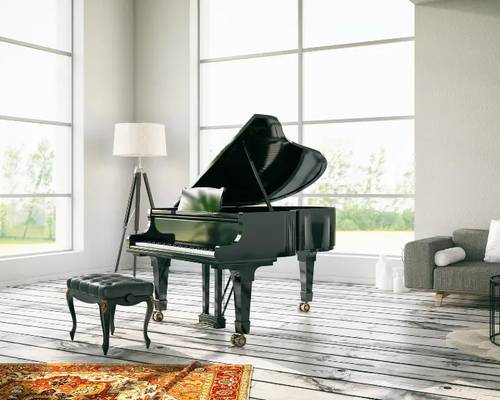
The world has witnessed a potent surge in piano learning among adult learners. More individuals are learning the piano later in their lives and this is due to the flexibility of digital tools, lifestyles and now people are more focused on their personal development. The article discusses the reasons why this trend is being experienced, how adult learners treat piano differently, and why this trend is transforming the contemporary culture of the piano.
Piano & Modern Skills
The reason Learning Piano Is Better than Multitasking in a Distracted World.
Piano learning is becoming an effective tool to reconnect attention and deep thinking in a day and age where we are bombarded with notifications and do not spend enough time in deep contemplation. The mental clarity ensured by years of discipline in the practice of the piano may be that which is afforded by very few activities because it demands constant focus, physical coordination and active listening. This paper discusses the connection between learning the piano and attention, the level of cognitive and mental discipline and the reason why more and more individuals are turning to the piano to overcome distraction in the modern world.
The Culture of Piano and Contemporary Music.
The reason why Minimalist Piano Music is becoming a sound of this decade.
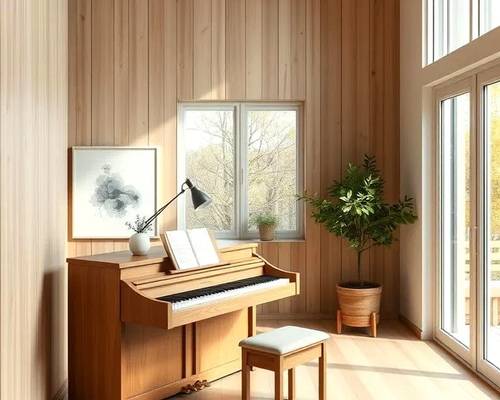
The minimalist piano music has come out as one of the most effective sounds of the modern age. The style is marked by its simplicity, repetition, and restraint, and they are defining the manner in which individuals listen, create, and relate to piano music nowadays. This paper delves into the reasons behind the growth of minimalist piano in popularity all over the world, its reflection of the contemporary life, and why it is a simply a new voice of this decade.
Piano & Future Learning
The Way AR is beginning to transform Piano Learning.
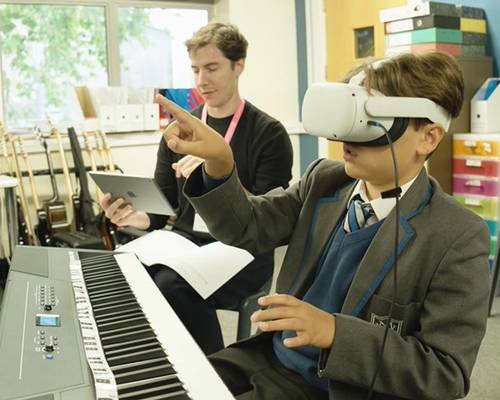
The concept of augmented reality is gradually presenting itself in the business of piano study, providing a fresh interpretation of music, technique, and practice. AR is transforming the interaction between pianists and the keyboard by combining digital guidance and physical instruments to create a new approach to playing the piano. This paper discusses the reasons behind the growing interest in augmented reality learning of piano, its functionality as well as its potential future impact on the teaching of piano.The concept of augmented reality is gradually presenting itself in the business of piano study, providing a fresh interpretation of music, technique, and practice. AR is transforming the interaction between pianists and the keyboard by combining digital guidance and physical instruments to create a new approach to playing the piano. This paper discusses the reasons behind the growing interest in augmented reality learning of piano, its functionality as well as its potential future impact on the teaching of piano.