
Piano & Personal Growth
How Piano Training Enhances Perceptions of Time and Everyday Balance.
Life in the modern time is time-consuming, time-deficient, and hard to control. The learning of piano provides a convenient means of restoring time sense through the promotion of the organization of practice, deliberate rhythm and concentration. This article investigates how learning the piano changes the perception of the time of people and why balance becomes better every day with practice repeatedly and how these changes are not confined to music but to daily life.

Most individuals have the perception that time dictates them and not vice versa. Time flies, work runs together and even free time is spent distracting. The sense of completion or balance can be lacking even in the case of full schedules.
Piano lessons bring about another time relationship. Practice sessions are purposeful, controlled and with an intention. It is not the speed of progress that is important but rather the utilization of time in every session. This change gradually transforms the experience of time to learners.
Instead of being chased by the time, the learners of piano start working with time more intelligently. With time, such awareness affects the balance, planning, and calm mind in everyday life.
The reason why time is as scattered as it is today
The contemporary schedule promotes task alternation. The focus shifts very quickly and does not allow continuity. Even brief pauses tend to be passive and unfocusing in nature.
This fragmentation impacts on the way time is perceived. Time does not seem to pass by, it is wasted. Saturdays are complete and unsatisfactory.
To reclaim time consciousness, it is necessary to have activities that are rewarding of presence and deliberate pace. This is naturally supplied by piano learning.
Piano Learning: The Making of Intentional Time Blocks
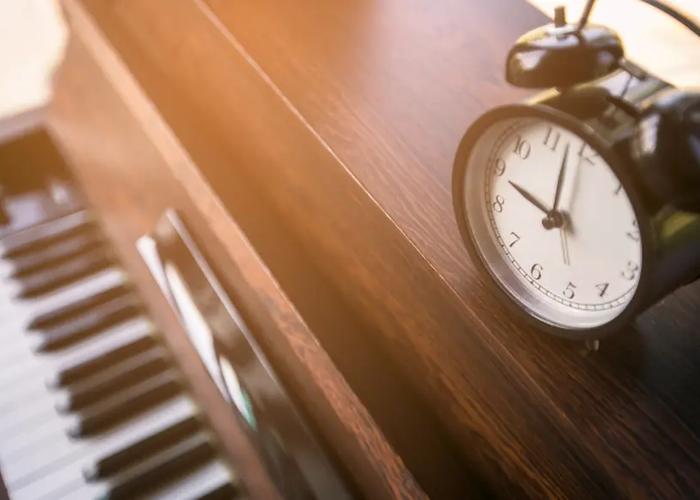
Practiced time is typically divided into distinct intervals of piano practicing. Students dedicate a certain time, though it may be short, and devote themselves to it.
Through repetition, the concentration is on sound and gesture. Time is enclosed and not fragmented. The start and the end of both sessions are evident.
This building trains the brain to honor the time limits, which carries over to the everyday life tasks.
The part played by tempo in cultivating time consciousness
The control of tempo is a basic part of learning the piano. Learners get to learn the impact of speed on clarity, control and expression.
Mistakes are more when playing too fast. The understanding is better when one is slowing down. Patience and timing are learnt through this first-hand feedback.
Students also get more pacing-aware in the long run, whether it is in music or other everyday chores. Rushing is not as attractive when it results in a low quality all the time.
The reason Piano Practice Alters the Sensation of Time Elapsing
Piano practice time seems to be unlike scrolling or multitasking time. Minutes are even richer and more complete.
This disparity is through special attention. Attention unified gives the sense of time being meaningful instead of empty.
Students start to understand which activities can really help to restore the balance and which ones just spend the time.
The way The Piano Learning promotes improved daily planning
Effective use of time requires planning. The planning skills need to be acquired naturally by piano learners through practice.
They make decisions of what they want to be working on, the time they want to work, and whether the time to repeat or to progress. These are the decisions that enhance efficiency.
This is not the only area of this planning habit in music. The day to day schedules are more deliberate and realistic.
The Why of the Short Practice Sessions Productivity
The process of learning piano proves that brief intense sessions can be very effective. Such results are noticeable even after fifteen minutes of attentive practice.
This experience transforms perceptions regarding productivity. Students understand that effectiveness has to do with concentration and not time.
Due to that, time will not be as overwhelming but manageable.
The Correlation between Consistency and Relationship
A balance is formed between activities that are spaced in the right manner. Piano learning promotes moderate attainments as opposed to extremes.
Students are able to practice continuously without getting tired. This is a rhythm that facilitates equilibrium and sustainability.
This means that daily routines are more advantageous and fewer burnouts and inconsistencies are realized.
The manner in which Piano Learning prevents the desire to hurry
Jumping on the piano results in an instant negative response. Hearing becomes distorted and hearing power is lost.
It does not take long before learners are taught to slow down to achieve better results. This teaching gets internalized.
Students will also be more tolerant of time-consuming and attentive processes in the outside music.
The reason why Piano Learning Makes Time Earned
All the practice time is rewarded since the progress is the direct measure of the effort. Students listen to better and become more controlling.
It is this feeling of reward that alters the perception of time as something valuable. Passive consumption is substituted with intentional consumption.
Time itself is something made not lost.
The way Time Awareness Enhances Mental Balance.
Time boundaries create a sense of clarity and mental clarity in the mind. Practising the piano produces some mental shift of activity.
This division is beneficial to concentration and rest. Learners also experience the presence in both rest and work.
The mental balance is enhanced when time gets planned.
The reason behind the need to encourage reflection in Piano Learning
Practicing the piano contains its reflection. students take a break, listen, and assess the progress.
This reflective practice promotes time consciousness by making thinking slow and prioritizing.
Reflection will enable deliberate spending of time and not reactive behavior.
The Transfer of Music Beyond Time Skills
Time consciousness that was gained via learning piano usually manifests itself in everyday life. Students are made more aware of the use of time.
They specialize and minimize distraction.
The learning of piano changes the time habits in an insidious but consistent way.
Why Piano Learning fosters Sustainable Everyday Dances
Growing sustainable practices involve harmony between work and the recovery. Piano acquires this balance.
Practice does not overpower the mind. Rest is not forcefully imposed but rather earned.
This beats are conducive to long-term well-being.
The way Piano Learning fits Mindful Time Use
Conscious use of time means being attentive to every act. This is facilitated with the help of piano learning in the form of attention and pacing.
Students are involved rather than multi tasking. Consciousness increases spontaneously.
Mindfulness is more practical than abstract.
Why Time Consciousness Generates Confidence
Tasks become attainable when time is spent wisely. This is strengthened by piano learning which divides progress into small sessions.
The confidence enhances as the learners feel gradual improvement with no haste.
There is no feeling of time as a constraint.
The Cultural Change to the Purposeful Lifestyle
There are a lot of individuals who are reviewing their ways of time spending. Balance and depth supported activities are becoming important.
The learning of piano is in line with this change because it provides a structured interaction without stress.
Its applicability keeps increasing.
The reason Piano is Particularly Effective in Time Awareness
The piano is a blend of pacing, structure and feedback. All of the parts support the purposeful use of time.
There are few activities that illustrate the effects of pacing in such a manner.
The piano is still a potent instrument of reforming the perception of time.
The Effect on the Daily Balance in the Long Run
Balance improves over time in the learners of piano. Days are not so hectic.
Time will then be something to deal with and not to fight.
Such a change favors long-term health.
Conclusion
Practicing the piano will change time consciousness by promoting deliberate time, attention, and practicing discipline. With the frequent sessions, learners would be in a better relationship with time.
The awareness does not use music alone but also in the day-to-day activities, which promote balance, planning, and clarity of mind. Learning piano never further loads the day. It introduces order and sense into the process of experiencing time.
In a world where time is frequently perceived to be discontinuous, learning piano is a very viable and sustainable method of re-creating a sense of continuity and purpose.
More from the blog
Keep exploring new ideas
Piano: Psychological Development.
How Piano Learning Improves Memory Over Time
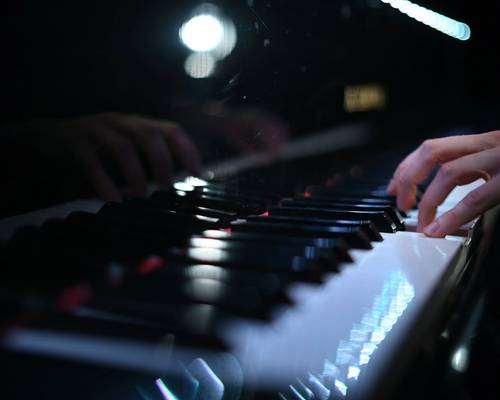
The process of learning, adaptation, and growth of people is mainly driven by memory. Learning Piano has emerged as one of the effective techniques of memory reinforcement via formal repetition, auditory, coordination and recalling over time. This article discusses the process by which practicing piano develops various forms of memory, reasons why these advantages become increasingly more effective, and how the benefits of learning a piano help to retain in the minds of non-musical areas.
Piano & Skill Development
How Piano Practice Builds Consistency and Self-Discipline
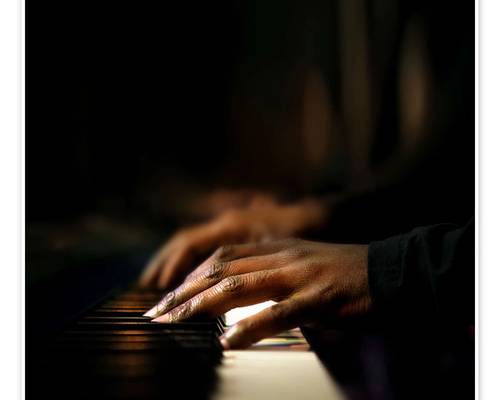
Self-discipline and consistency are crucial personal qualities in the contemporary life but are becoming more challenging to master. The learning of piano provides a natural and effective method of developing both in a structured form of learning, in a progressive manner and through long term commitment. This paper will examine how practice in the piano will develop the consistency over the time, why the self-discipline will develop naturally at the instrument and the applicability of these abilities far beyond music in the life.
Piano & Lifelong Learning
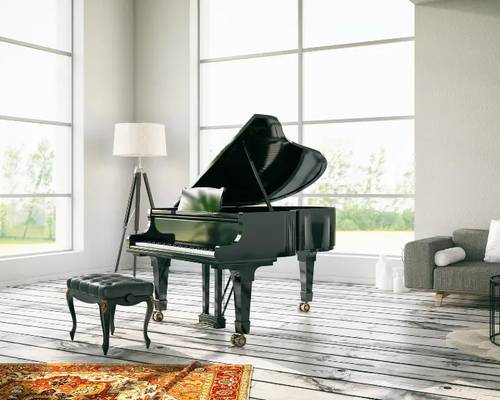
The Reason behind the Rise of Piano Learning among Mature Beginners in the world.
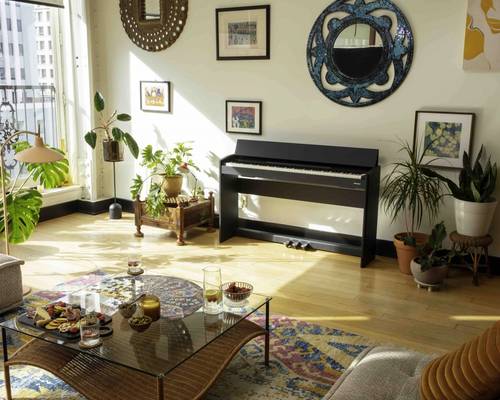
The world has witnessed a potent surge in piano learning among adult learners. More individuals are learning the piano later in their lives and this is due to the flexibility of digital tools, lifestyles and now people are more focused on their personal development. The article discusses the reasons why this trend is being experienced, how adult learners treat piano differently, and why this trend is transforming the contemporary culture of the piano.
Piano & Modern Skills
The reason Learning Piano Is Better than Multitasking in a Distracted World.
Piano learning is becoming an effective tool to reconnect attention and deep thinking in a day and age where we are bombarded with notifications and do not spend enough time in deep contemplation. The mental clarity ensured by years of discipline in the practice of the piano may be that which is afforded by very few activities because it demands constant focus, physical coordination and active listening. This paper discusses the connection between learning the piano and attention, the level of cognitive and mental discipline and the reason why more and more individuals are turning to the piano to overcome distraction in the modern world.
The Culture of Piano and Contemporary Music.
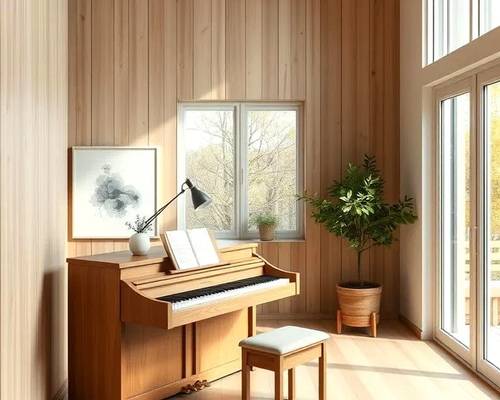
The reason why Minimalist Piano Music is becoming a sound of this decade.
The minimalist piano music has come out as one of the most effective sounds of the modern age. The style is marked by its simplicity, repetition, and restraint, and they are defining the manner in which individuals listen, create, and relate to piano music nowadays. This paper delves into the reasons behind the growth of minimalist piano in popularity all over the world, its reflection of the contemporary life, and why it is a simply a new voice of this decade.
Piano & Future Learning
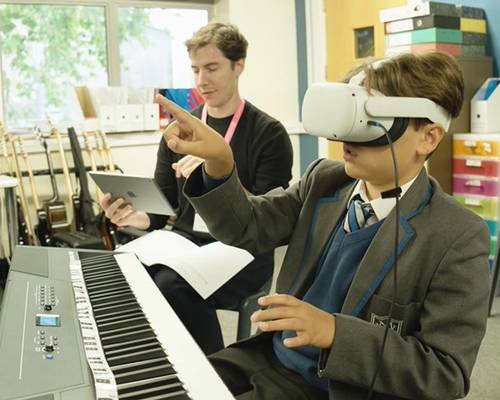
The Way AR is beginning to transform Piano Learning.
The concept of augmented reality is gradually presenting itself in the business of piano study, providing a fresh interpretation of music, technique, and practice. AR is transforming the interaction between pianists and the keyboard by combining digital guidance and physical instruments to create a new approach to playing the piano. This paper discusses the reasons behind the growing interest in augmented reality learning of piano, its functionality as well as its potential future impact on the teaching of piano.The concept of augmented reality is gradually presenting itself in the business of piano study, providing a fresh interpretation of music, technique, and practice. AR is transforming the interaction between pianists and the keyboard by combining digital guidance and physical instruments to create a new approach to playing the piano. This paper discusses the reasons behind the growing interest in augmented reality learning of piano, its functionality as well as its potential future impact on the teaching of piano.