
Online Piano Learning
Learning Piano: How the Piano Teaching Method Model Shapes Discipline, Focus, and Long-Term Thinking.
Learning the piano goes far beyond music. Through consistent practice, patience, and reflection, piano study quietly shapes discipline, focus, emotional balance, and long-term thinking. This article explores how piano learning influences mindset and personal development, revealing why the instrument remains relevant in a fast-paced, modern world.

Being able to learn the piano is sometimes referred to as learning music, however, in actual sense, it is much more than music. In the course of time, the study of piano silently transforms the way a person thinks, focuses, manages effort and takes long-term goals. The notes and melodies that we hear are some of the changes, but changes that occur more inside us- changes that are found in discipline and concentration, in patience and in thinking past the rewards of the moment.
Piano learning is different in a world that is becoming more and more speedy, convenient, and results-focused. It requires patience, regularity and toleration of gradual improvement. Such requirements do not represent a challenge, they are the same features that precondition the power of piano over personal growth. Piano is learned in childhood or in adulthood, but it has effects that go way beyond music in the shaping of the mind.
The Piano as the Teacher of Patience
Patience is one of the first things one learns in piano. The improvement is not easy and this aspect is evident in the initial weeks of learning. Novices might not play simple pieces in a smooth way. Errors reoccur, progress is slow, and disappointment is a common occurrence.
Piano does not bring any instant reward as do the activities rewarding speed or shortcuts. Notes should be practised, the movements of fingers are to be mastered gradually, and coordination is to be trained by time. When in a hurry it nearly always results in poor results. With repetition, the learners will start appreciating the fact that patience is not a choice, but a requirement.
Gradually, this lesson transforms expectations. Students of the piano no longer expect to master the instrument immediately and begin to appreciate gradual progress. This mentality is passed onto everyday life. The activities that were once irritatingly slow to accomplish, such as studying, career development and self-ambition are treated with more leniency and rationality.
Attention in a distracted Age
The contemporary life can hardly be characterized as something that promotes deep-focus. Attention is disrupted by notifications, multitasking and always being stimulated digitally. It is the opposite of this environment which is piano practice. The mind has to be in full concentration in order to play even a short piece.
Reading music, playing with both hands, timing, being an audio-visual, critical listening and timing takes place simultaneously. There is no distraction with this degree of concentration. Any lapse of concentration is instantly revealed.
The practice of the piano on a regular basis conditions the brain to be able to maintain attention longer. As time moves by, learners will see an increase of concentration not only on the instrument but other aspects of life. Reading becomes easier. Problem-solving improves. Activities that previously seemed taxing to the brain are less stressful.
The piano is a place to which deep attention is demanded--and paid.
Temperance Developed by Constancy
The advancement in piano makes one realize one of the many lessons many students learn early on, and that is that talent means nothing when you do not practice. The results of practicing long hours once a week are weaker than those of practicing short periods of time each day. This fact renders discipline clear and quantifiable.
Lack of practice results in stalemate. Hard work results in betterment. This cause and effect relationship is internalised by the learners with time. Discipline ceases to be something abstract and becomes a reality.
Notably, the discipline of the piano is not intensity. It is related to appearing in the office regularly even when there is no motivation. The habit results in reliability and trust in oneself. Students will start seeing that discipline is not compulsion but dedication.
This attitude tends to extend beyond music and it theready contributes to long term success in the areas of education, careers and personal endeavors.
Mental Anchors of Structure and Routine
The learning of piano is an inherently structured process. Schedules of practices, lesson plans and incremental progression give a feeling of order. This structure is very deep-rooted in the minds of many learners especially adults.
Rhythm in the day-to-day life is formed by sitting at the same time at the piano daily. It is a focus of deliberate attention in the face of anarchy. This consistency promotes planning, time management and self responsibility.
Practice on the piano usually becomes a stabilizing factor during stressful or uncertain times. It provides a consistent environment where hard work brings observable outcomes. In the long-term, this structure enhances mental strength.
Errors as an Inevitable Development Process
Errors are inevitable in the piano. Wrong notes, missed rhythms, uneven dynamics, everything is a component of the learning process. Initially, errors may be de-motivating. Nevertheless, piano redefines the error perception of learners, yet slowly.
There is no such thing as mistakes being failure, it is information. They show the areas of attention required. Pianists are taught to think of mistakes as calmly as possible, isolate, and make technical changes. This will develop emotional strength and fear of failure.
When this attitude is formed, students usually get bolder to assume risks in other areas of life. They know that they need to grow through experimentation not perfection.
Training Long-Term Thinking
The learning of piano acknowledges long term commitment. Compositions require weeks or months to learn. Technical skills are slowly cultivated. It takes years and not days to understand music.
The time frame redefines the views of learners regarding effort and reward. Pianists are taught to put effort in the present so that the fruits thereof will not be seen at the present time. Such a capability to postpone gratification enhances long-term thinking.
This attitude underlies planning goals, determination, and decision-making in both professional and personal life. Piano teaches that significant outcomes may take a long time before they are realized.
Mood Control by means of Musical Practice
Piano playing is very emotional and yet requires a control. Affectiveness has direct impacts on performance. Tension leads to mistakes. Indifference enhances precision and articulation.
Learners are able to develop emotional awareness through this feedback loop. They start to notice the impact of stress or frustrations or impatience. Pianists eventually get to know how to control emotions so that they can perform better.
This emotional control is often transferred to everyday life. Learners could be in a better position to handle stress, and stay composed during stress, and face challenges without being reactive but be balanced.
Problem-Solving at the Keyboard
Problems arise with every piano music. Complex phrases, coordination issues, rhythm complexity, and expressive choices must be examined and tried.
Pianists are taught to divide problems into smaller components, experiment and modify strategies. This systematic process empowers solving problems. Learners learn to observe, analyze and refine instead of being emotional.
These abilities are inherently transferred into academic, professional and creative problem-solving, in which patience and organized thinking is critical.
Confidence Built on Effort
The trust in piano does not manifest itself overnight. It is built up slowly by hard work and perseverance. Initial stages are usually not very comfortable, and every minor achievement strengthens the faith in oneself.
This confidence is based on experience as opposed to comparison. Pianists are aware of what they have struggled to achieve their position. This produces a form of silent confidence that is not external praise-based.
Lots of students indicate that they are more ready to take challenges out of music and are more eager to engage in tough tasks because of this confidence.
Piano as the Reflective Space
The practice of playing the piano is usually left alone, which provides solitude. In the absence of distractions, learners get to know their habits, reactions, and thought patterns.
During practice frustration, motivation, impatience, and satisfaction are all noticed. Gradually, a piano player gets to be non-judging of these emotions. This self-awareness facilitates emotional intelligence and mindfulness.
The piano is not merely an instrument, but a reflection of inner tendencies of thought and action.
The Piano at various stages of life.
Piano changes according to life stages.
- In children, it helps in the cognitive growth, attention and emotional expression.
- In the case of adolescents, it offers artistic identity and emotional stability.
- In adults, it provides concentration, balance and self-fulfillment.
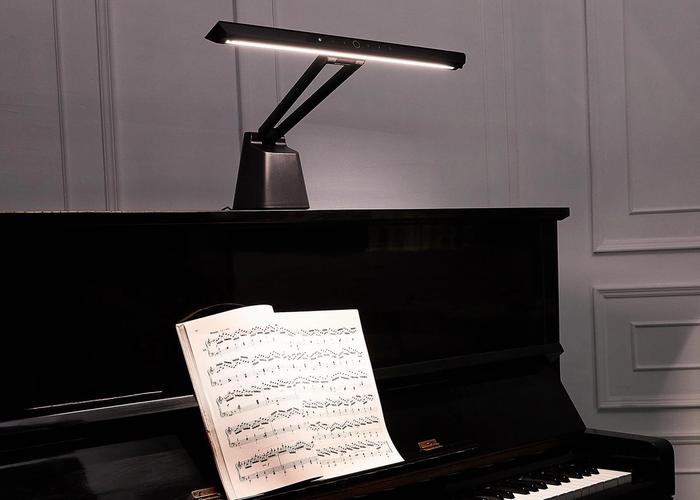
Even at the early age, the mind is molded by piano more than musical talent does.
The reason why Piano Still Matters in the Digital Age
Learning piano is one of the few things in an age of automation, abbreviations, and everlasting stimulation that requires deliberate effort. There is no rush or automation of it. The development is based on existence, patience, and dedication.
This is the sharpness that makes piano very special nowadays. It retards the thoughts, promotes profundity, and reinstates harmony. Having piano lessons is a form of concentration in a world that is distracted.
Conclusion
Musical skill is just a fraction of what is developed in learning piano. It builds discipline, concentration, patience, emotional control and long term thinking. Piano, through repetition and contemplation, affects the way learners handle challenges, affect emotions and appreciate hard work.
Piano lessons are a reminder that it is not possible to achieve meaningful growth in a very fast and instant culture. Lessons at the keyboard are transferred into everyday life, and therefore, the piano is not only an instrument, but also a tool to be used throughout a lifetime to help a person develop.
More from the blog
Keep exploring new ideas
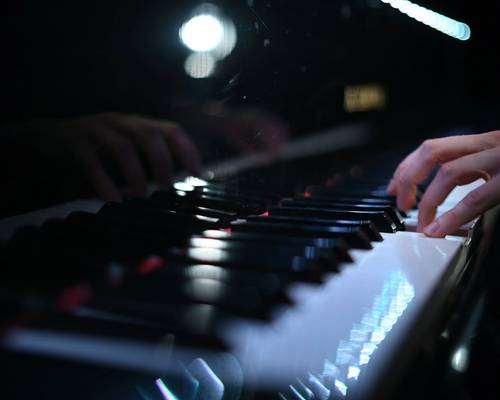
Piano: Psychological Development.
How Piano Learning Improves Memory Over Time
The process of learning, adaptation, and growth of people is mainly driven by memory. Learning Piano has emerged as one of the effective techniques of memory reinforcement via formal repetition, auditory, coordination and recalling over time. This article discusses the process by which practicing piano develops various forms of memory, reasons why these advantages become increasingly more effective, and how the benefits of learning a piano help to retain in the minds of non-musical areas.
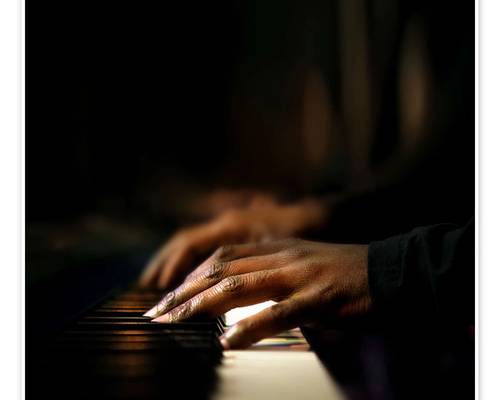
Piano & Skill Development
How Piano Practice Builds Consistency and Self-Discipline
Self-discipline and consistency are crucial personal qualities in the contemporary life but are becoming more challenging to master. The learning of piano provides a natural and effective method of developing both in a structured form of learning, in a progressive manner and through long term commitment. This paper will examine how practice in the piano will develop the consistency over the time, why the self-discipline will develop naturally at the instrument and the applicability of these abilities far beyond music in the life.
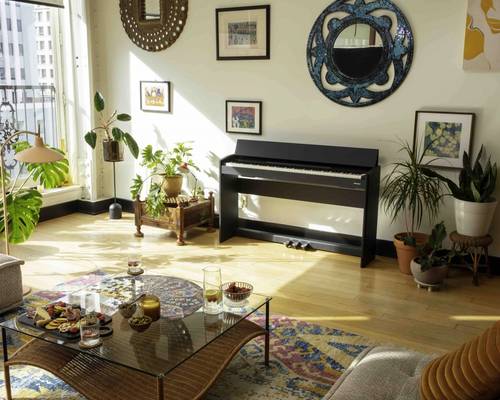
Piano & Lifelong Learning
The Reason behind the Rise of Piano Learning among Mature Beginners in the world.
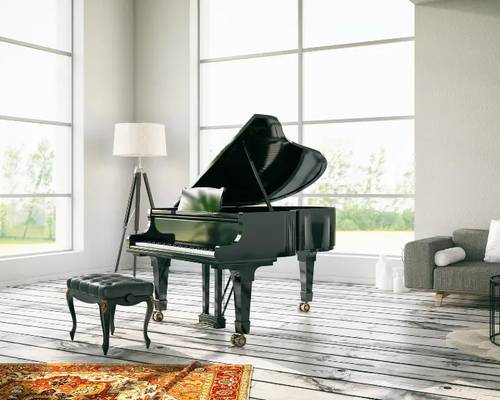
The world has witnessed a potent surge in piano learning among adult learners. More individuals are learning the piano later in their lives and this is due to the flexibility of digital tools, lifestyles and now people are more focused on their personal development. The article discusses the reasons why this trend is being experienced, how adult learners treat piano differently, and why this trend is transforming the contemporary culture of the piano.
Piano & Modern Skills
The reason Learning Piano Is Better than Multitasking in a Distracted World.
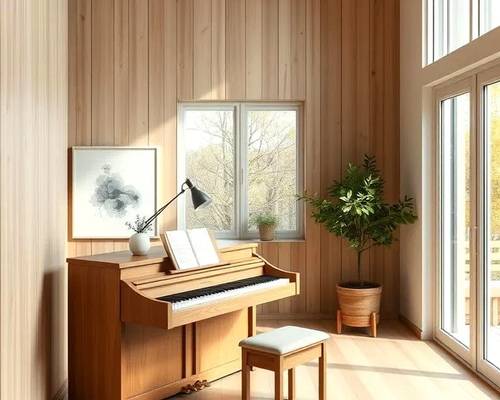
Piano learning is becoming an effective tool to reconnect attention and deep thinking in a day and age where we are bombarded with notifications and do not spend enough time in deep contemplation. The mental clarity ensured by years of discipline in the practice of the piano may be that which is afforded by very few activities because it demands constant focus, physical coordination and active listening. This paper discusses the connection between learning the piano and attention, the level of cognitive and mental discipline and the reason why more and more individuals are turning to the piano to overcome distraction in the modern world.
The Culture of Piano and Contemporary Music.
The reason why Minimalist Piano Music is becoming a sound of this decade.
The minimalist piano music has come out as one of the most effective sounds of the modern age. The style is marked by its simplicity, repetition, and restraint, and they are defining the manner in which individuals listen, create, and relate to piano music nowadays. This paper delves into the reasons behind the growth of minimalist piano in popularity all over the world, its reflection of the contemporary life, and why it is a simply a new voice of this decade.
Piano & Future Learning
The Way AR is beginning to transform Piano Learning.
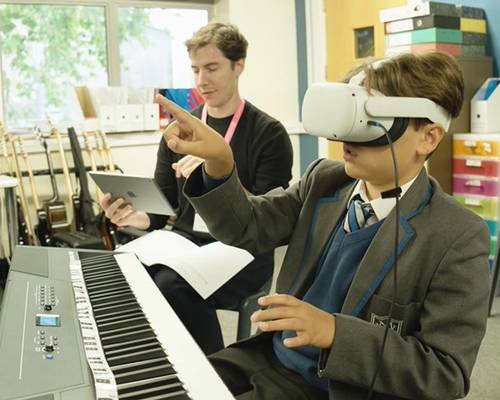
The concept of augmented reality is gradually presenting itself in the business of piano study, providing a fresh interpretation of music, technique, and practice. AR is transforming the interaction between pianists and the keyboard by combining digital guidance and physical instruments to create a new approach to playing the piano. This paper discusses the reasons behind the growing interest in augmented reality learning of piano, its functionality as well as its potential future impact on the teaching of piano.The concept of augmented reality is gradually presenting itself in the business of piano study, providing a fresh interpretation of music, technique, and practice. AR is transforming the interaction between pianists and the keyboard by combining digital guidance and physical instruments to create a new approach to playing the piano. This paper discusses the reasons behind the growing interest in augmented reality learning of piano, its functionality as well as its potential future impact on the teaching of piano.