
Piano & Personal Development
The Article How Learning Piano Builds Emotional Resilience through Long-term Practice.
The emotional resilience is the ability to stay consistent, flexible, and calm in the case of difficulty. This resilience of learning how to play piano takes place automatically by practicing in a structured way, repetition, and gradual development. This paper will examine the strength of learning the piano in building emotional resiliences in the long run, why a regular practice in music develops an inner strength, and how the lessons learned at the piano will far outlive the music to daily life.

There are always difficulties in life. There are the abrupt and disruptive ones and those that develop gradually with time and burn patience. It is emotional strength that defines how individuals react to such instances. It determines whether difficulties result in development or disappointments, re-evaluation or retreat.
Although emotional resilience is usually talked about in an abstract way, it is developed with experience as opposed to theory. Learning Piano offers a viable and sustainable method of achieving this resilience. It does it silently, by means of constant practice at doing it, by a slow process of making it easier, and by reflecting at the time.
On the piano, improvement hardly comes quickly. Developing of skills takes place in weeks, months and years. This rate shows learners that they need to keep steady in situations when improvement is slow and they need to keep appearing when the outcome is faint. With time, these experiences recreate emotional reactions to challenge.
The Real Meaning of Emotional Resilience
Emotional resilience does not mean that one should not face hardship or to feel suppressed. It is the skill to continue to be engaged when things are not going according to plan, to get over a setback and move on to change in a calm and low-stress manner.
Strong people can understand frustration but they are not crippled by it. They embrace the unknown without going astray. These personalities are not born characteristics. They are established by getting used to challenges that are manageable.
It is precisely such exposure that is provided through piano learning.
Why Contemporary Life Makes People Less Strong in Emotions
Most contemporary experiences reduce the capacity to tolerate hardship. The instant results, the quick solutions and the continuous comparison make us less patient. Discouragement is seen soon when the progress is slow.
This climate can render tenacity to be unnatural. Emotional responses are exaggerated and minor failures get bigger than they are.
The gradual progress and reframing the challenge as a growth are an activity that goes into building resilience. Learning the piano acquires such a structure naturally.
The introduction of Healthy Struggle by Piano Learning
Learning the piano constitutes a healthy struggle in the first place. Coordination feels awkward. Timing requires attention. Progress unfolds unevenly.
These are not overwhelming challenges to the learners and are incremental. Every challenge is particular and can be resolved over time and experience.
This balance is crucial. The brain gets to know that there is always a purpose in the effort even when it is not reflected immediately. Emotional resilience directly increases when the learners are kept interested with the uncertainty.
Why Slowness in Progress Makes one more Emotionally Stable
Rapid developments are thrilling, but seldom have the power to create emotional intensity. Slowness, on the contrary, educates patience and permanence.
Gradually improvement is likely to be observed at the piano. A passage is less awkward than it was days before when it was repeated. The control goes up smoothly as opposed to dramatically.
This practice conditions emotional stability. The learners get accustomed to change that happens gradually and become less sensitive to short-term disappointments.
The Effect of Repetition in Emotional Control
The learning of piano is based on repetition. The repetition makes the familiarity more familiar and less emotional.
The tension is reduced when the learners repeat a passage in a calmed manner. Movements become smoother. Confidence increases.
This is the process that resembles emotional regulation. Monotony enables the emotions to die out instead of increasing. In the long run, the learners become more relaxed in reaction to challenge.
The reason why Piano Learning promotes emotional awareness
The emotions affect the playing of the piano. Tension affects sound. Calm produces clarity. Hesitation alters timing.
This real time feedback promotes consciousness. Students observe the impact that emotional conditions have on performance and do not require analysis.
With this realization, learners can start being more attentive to emotional patterns and they will be more responsive.
The way to turn mistakes into Emotional Training Resources
Errors cannot be avoided in the learning of piano. Instead of indicators of failure, they give information.
Every failure brings forth something that should be changed. When students react in a calm manner then things get better.
This re-framing decreases the emotional responsiveness. Learners get discouraged less when making errors and are more solution-oriented.
Emotional toughness becomes greater since errors no longer have an influence on motivation.
Why Piano Learning Cultivates a Nest of Comfort With Imperfection
Perfectionism compromises the resilience through establishing overambitious expectations. This tendency is automatically met in the process of piano learning.
The development is built on the imperfection embraced and developed over time. Players receive the message that they are getting better even when they are not perfect.
Such acceptance creates emotional flexibility. Students are not bored with the lack of perfection to have a sense of success.
How Practice Consistency Drives Emotional Trust
It creates credibility in the process. This trust is strengthened by piano learning by experience.
Students observe that after even taking breaks, the confidence and control is regained through re-practicing. This trustworthiness is emotional security.
Trust replaces anxiety. Students are of the view that, through hard work, things will improve with time.
Why Piano Learning Helps to Reflect, Not React
In the cases when one feels frustrated with the piano it is difficult to act with impulse. Better results are achieved when one slows down and reflects.
Learners stop, listen and make corrections. The practice will minimise emotional escalation.
The inevitable reaction is reflection, which contributes to resilience outside of music.
The Routine as the Creation of Emotional Balance
Routine helps to bring emotional balance. Practicing the piano helps in bringing a sense of order and predictability.
This predictability gives the impression of stability particularly in unstable times. The practice is made a grounding practice.
When it is stable, emotional resilience increases.
The way Piano Learning can bring about persistence
Resilience has persistence as a fundamental aspect. Piano education supports perseverance by the long-term object.
Pieces improve gradually. Skills build over time. Students do not get bored since they are making progress albeit slowly.
This tradition continues in other spheres of life of course.
Why Emotional Nerve Passes Out Of Music
All skills that are developed at the piano are not emotional. They are taken into the daily life by the learners.
They are more patient in handling problems. They are quick to overcome a setback. They place their faith in the improvement process.
The learning of piano is the practice of emotional resilience in the greater environment.
The Why Piano Learning Helps People Cut Emotional Overkill
The overwhelming can usually occur when there is a sense of things being too hard to handle. Piano education offers strict limits.
Students work on small sizes and not whole sizes. This strategy will minimize emotional pressure.
Division of the challenges into digestible bits helps in being resilient.
Correlation of Emotional Resilience and Confidence
When learners experience difficulty and overcome it with time, confidence increases.
The learning of piano presents unlimited chances in this cycle. Every difficulty that is overcome makes it stronger.
Trust is solid and not weak.
The reason why Piano Learning Promotes Emotional Development in the Long-run
The ability to withstand emotions is acquired. The learning of piano is exactly in line with this schedule.
There is no final endpoint. The development process is endless, making it resilient.
In the long-term, this activity helps in long-term emotional resilience.
The Emotional Resilience Cultural Significance
This is because modern life requires emotional strength more than ever. There is always change, uncertainty and complexity.
Learning piano is one of the opportunities to develop this resilience without abstraction and pressure.
It has an application in personal growth and not just in music.
The Uniqueness of Piano in the Resilience Building Process
Movement, listening, timing and reflection are incorporated in the piano. This assimilation confronts both intellect and passion.
There is little done that would give so steady emotional feedback.
Piano is still the only instrument that can be truly effective in the creation of the resilience through experience.
Emotional Well-Being (in the long-term)
In the course of time, piano learners become more emotionally balanced. They are also less anxious when pressured and more changeable.
These advantages do not build up and stabilize.
The piano turns out to be a strength and not a stress.
Conclusion
Practising the piano creates emotional strength by creating consistency in dealing with difficulty, repetition and contemplation. The skills to be present, patient, and flexible are developed after every practice session.
Instead of being afraid and evading hardship, the learners of the piano are taught to deal with it in a peaceful manner. This ability is not only in music but also in everyday life to help in the confidence, balance, and long-term development.
The study of the piano has become a practical and sustainable way of establishing a resilient world and inner stability in a world that sometimes exaggerates emotional stress.
More from the blog
Keep exploring new ideas
Piano: Psychological Development.
How Piano Learning Improves Memory Over Time
The process of learning, adaptation, and growth of people is mainly driven by memory. Learning Piano has emerged as one of the effective techniques of memory reinforcement via formal repetition, auditory, coordination and recalling over time. This article discusses the process by which practicing piano develops various forms of memory, reasons why these advantages become increasingly more effective, and how the benefits of learning a piano help to retain in the minds of non-musical areas.
Piano & Skill Development
How Piano Practice Builds Consistency and Self-Discipline
Self-discipline and consistency are crucial personal qualities in the contemporary life but are becoming more challenging to master. The learning of piano provides a natural and effective method of developing both in a structured form of learning, in a progressive manner and through long term commitment. This paper will examine how practice in the piano will develop the consistency over the time, why the self-discipline will develop naturally at the instrument and the applicability of these abilities far beyond music in the life.
Piano & Lifelong Learning
The Reason behind the Rise of Piano Learning among Mature Beginners in the world.
The world has witnessed a potent surge in piano learning among adult learners. More individuals are learning the piano later in their lives and this is due to the flexibility of digital tools, lifestyles and now people are more focused on their personal development. The article discusses the reasons why this trend is being experienced, how adult learners treat piano differently, and why this trend is transforming the contemporary culture of the piano.
Piano & Modern Skills
The reason Learning Piano Is Better than Multitasking in a Distracted World.
Piano learning is becoming an effective tool to reconnect attention and deep thinking in a day and age where we are bombarded with notifications and do not spend enough time in deep contemplation. The mental clarity ensured by years of discipline in the practice of the piano may be that which is afforded by very few activities because it demands constant focus, physical coordination and active listening. This paper discusses the connection between learning the piano and attention, the level of cognitive and mental discipline and the reason why more and more individuals are turning to the piano to overcome distraction in the modern world.
The Culture of Piano and Contemporary Music.
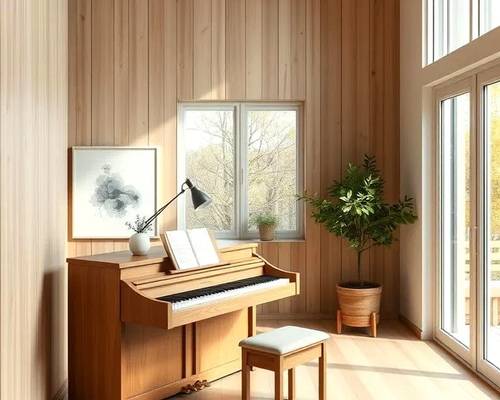
The reason why Minimalist Piano Music is becoming a sound of this decade.
The minimalist piano music has come out as one of the most effective sounds of the modern age. The style is marked by its simplicity, repetition, and restraint, and they are defining the manner in which individuals listen, create, and relate to piano music nowadays. This paper delves into the reasons behind the growth of minimalist piano in popularity all over the world, its reflection of the contemporary life, and why it is a simply a new voice of this decade.
Piano & Future Learning
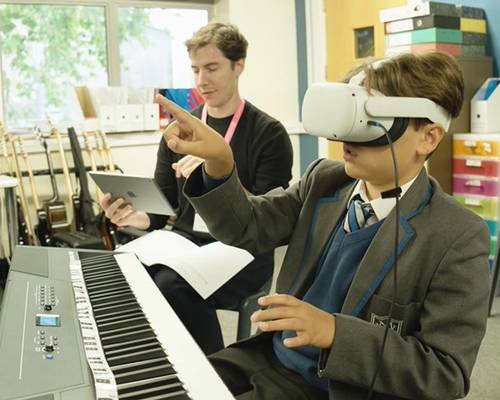
The Way AR is beginning to transform Piano Learning.
The concept of augmented reality is gradually presenting itself in the business of piano study, providing a fresh interpretation of music, technique, and practice. AR is transforming the interaction between pianists and the keyboard by combining digital guidance and physical instruments to create a new approach to playing the piano. This paper discusses the reasons behind the growing interest in augmented reality learning of piano, its functionality as well as its potential future impact on the teaching of piano.The concept of augmented reality is gradually presenting itself in the business of piano study, providing a fresh interpretation of music, technique, and practice. AR is transforming the interaction between pianists and the keyboard by combining digital guidance and physical instruments to create a new approach to playing the piano. This paper discusses the reasons behind the growing interest in augmented reality learning of piano, its functionality as well as its potential future impact on the teaching of piano.