
Piano Technique Guide
The Greatest Secret of Learning Proper Piano Technique in the First Lesson and Not Developing Bad Habits.
Piano method is what the player will be basing everything he or she plays on. Lack of technique will result in sluggish progress, development of tension and development of bad habits that are so hard to break. This comprehensive tutorial describes the correct technique that beginners can develop during the very first lessons, including posture, hand position, movement, and practice routine that will help sustain a long-lasting and healthy piano playing.

Most learners of piano engage in concentration on songs, speed, and progress without paying attention to technique. This will cause future frustrations when the passages that appear to be difficult are not comfortable or even playable when one wishes them to be. The fact is that technique of playing the piano is not a high-level concept but the thing which should be constructed properly at the beginning of the course.
It is very easy to develop bad habits and with no noise. Uncontrolled movement of fingers, trouble with hand position or stiffness in the hands may not be problematic initially, but with time they restrict expression, precision and stamina. The proper practice, however, allows the enjoyment of gaming piano due to its naturalness, effectiveness, and ease.
This tutorial offers an overview of the steps to follow to have an effective piano technique and allows a beginner to prevent the most frequent mistakes and adopt the habit of their own improvement.
The Real meaning of Piano Technique
There is nothing in playing piano fast and impressively. It means the way the body reacts to the instrument. This involves posture, shape of hand, arm movement, control of fingers and relaxation.
Efficient movement of the body is possible due to good technique. It takes away unwarranted tension and simplifies making music. Using bad technique causes the body to act against itself resulting in fatigue and inconsistency.
The concept of technique, as being efficiency of movement rather than difficulty, alters the way of approaching learning among beginners.
Why Technique is More Important than Repertoire
Numerous amateurs jump into the game of playing complete pieces, and before they gain technical consciousness. Enthusiasm is essential but technique defines the extent to which that enthusiasm can bring you.
Strong technique:
- Improves accuracy
- Reduces mistakes
- Prevents physical strain
- Favoring the expressive.
Repertoire is ever-changing. Everything is supported by technique.
Installation of the Piano and the Bench

The set- up has to be right before the keys are touched.
Bench Height
- The elbows are to be a little over the keys.
- Forearms are on the same plane as the floor.
- Wrists were softened, not folded.
Distance from the Piano
- Sit in a way that the elbows are marginally forward.
- Sitting too close or too far is to be avoided.
Wrong bench height is a source of tension even before the start of playing.
Pose: The Foundations of All Technique
Correct posture promotes mobility.
Key posture principles:
- Sit tall but relaxed
- Shoulders down and loose
- Feet flat on the floor
Do not stoop or lean over. The frontal side of the body must not be stiff, but rather, it must feel balanced.
Arms and hands move naturally when one is in proper posture.
Learning Arm Weight and Relaxation
Finger force is one of the largest technical misconceptions. Newcomers always think that keys have to be pressed violently by fingers. The fact is that the arm weight is controlled, rather than it is fingers that generate sound.
The arm is to be heavy, and yet easy. The weight is directed by fingers into the keys and not imposed.
Such an idea lessens tensions and creates richer sound.
The Right hand at the piano
The control, accuracy, and the comfort depend on the shape of the hand.
Proper hand position:
- Fingers naturally curved
- Thumb dropped, and lay on its side.
- Knuckles gently rounded
No bent knuckles or stiff, raised knuckles. The hands must not appear frozen.
The natural shape of hands enables the fingers to move freely.
Finger Independence Tensionless
There is no force development in finger independence, but it is controlled.
Effective finger movement:
- Small, precise motions
- Minimal lifting
- Even pressure
Pulling fingers too hard is counterproductive and retards. Autonomy is attained through alignment not hyperbolism.
Learning: The Position of the Wrist in Piano
The wrist is an interposition between the arm and the fingers.
A healthy wrist:
- Moves freely
- Adjusts to hand position
- Never locks or stiffens
Flexibility of the wrist helps in a smooth phrasing and eliminates strain.
The Ten Things That Beginners Should Not Do
Common mistakes include:
- Playing with flat fingers
- Locking the wrist
- Using only finger force
- Ignoring posture
Such practices may seem comfortable initially but restrict advances very soon.
By correcting them early, one saves years of relearning.
Practice slowly: the secret of Technical Control
Speed hides mistakes. Slow practice reveals them.
Practicing slowly:
- Develops proper muscle memory.
- Improves control
- Reduces tension
Always do not play as fast as you can play cleanly.
Using Scales to Construct Technique Properly
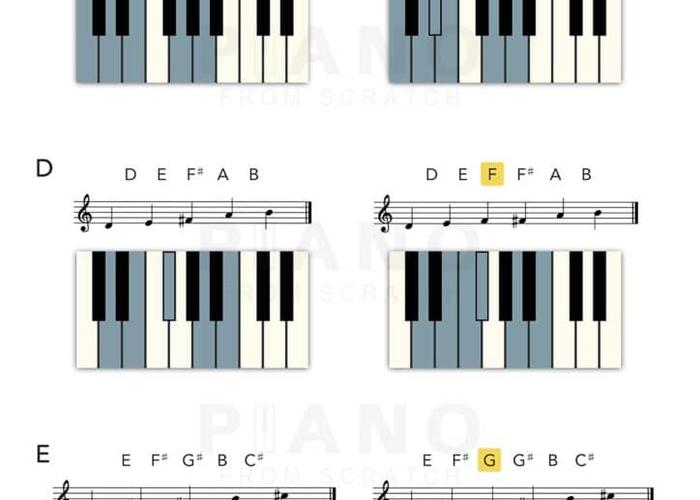
Scales are not warm-ups.
Focus on:
- Even tone
- Relaxed movement
- Smooth thumb transitions
Speed comes later. Control comes first.
The reason why finger exercises are not sufficient
Exercises are beneficial, however, they should be used in music.
Mechanical playing comes as a result of pure repetition without consciousness. With the exercises related to real music, technique is best enhanced.
Technical exercises of balancing with musical use.
Learning to have an even tone in all fingers
The strength of each finger is various. This is naturally balanced through technique.
Practice goals:
- Equal volume
- Consistent articulation
- Controlled release
Forcing is not as important as listening.
Coordination of the Left and Right Hand
Hand movement can be a problem to beginners since their hands act differently.
To improve coordination:
- Practice hands separately
- Combine slowly
- Focus on alignment points
Patience is what enhances coordination and not repetition in itself.
Problems with the Pedal Without Hiding Technique
The pedal improves sound quality, but it is also able to conceal errors.
Beginner rule:
- Learn passages, learn without pedal.
- It is followed by the addition of pedal after control.
Pedal support technique--this should not substitute it.
Awareness and Release of tension
The conflict emerges silently until it is done in a conscious way.
Signs of tension:
- Tight shoulders
- Rigid wrists
- Short-term fatigue during practice.
Pause regularly. Shake out hands. Reset posture.
The process of relaxation is dynamic.
The Development of Technique with Time
Technique develops on the basis of repertoire and experience.
Early focus:
- Posture
- Hand shape
- Control
Later focus:
- Weight transfer
- Tone shaping
- Endurance
Review basics on a regular basis.
The Rationale of Technique in the Beginning
The teachers demand technique to ensure that students are not frustrated, or hurt.
Good technique:
- Prevents overuse strain
- Makes learning easier
- Builds confidence
Technique neglects hamper development.
Training Technique and Not feeling Demotivated
Training Technique Without Demotivation.
Practice in technique does not necessarily have to be dull.
Ways to stay engaged:
- Use technique in short music phrases.
- Set small, clear goals
- Track improvement
Technique is satisfying when it is heard to be progressing.
The Time of gaining sound technique
There is no fixed timeline. However:
- Habits are developed in a few weeks.
- The stabilization of muscle memory occurs after months.
- Perfection is a year-long process.
It is more about consistency rather than speed.
Ineffective technique exposes them to more risk of injury
Healthy technique:
- Distributes effort evenly
- Reduces strain
- Supports endurance
Suffering is not a sign of improvement.
The Interconnection between Technique and Expression
The technique makes expression possible. From lack of control, expression happens by chance.
Phrasing, tone and dynamic contrast depend on physical freedom. Technique restricts not creativity but serves it.
The reason Technique must be revisited on a regular basis
Even the high players go back to the fundamentals.
Technique:
- Alters with changes in repertoire.
- Evolves with body awareness
- Improves with reflection
Always remember that technique is never done.
Creating Trust by technical Stability
In cases where technique is sound, confidence is self-evident.
Players trust their hands. Mistakes decrease. Playing is enjoyable as opposed to being stressful.
Technique generates confidence that is long-lasting.
Last Reflections on Piano Technique
Technique does not belong to perfection--it is a matter of efficiency, comfort as well as control. Proper technique developed at the outset conserves time, avoids frustration and facilitates the development of musical growth at all levels.
With proper posture, motion becomes easy, hands are controlled and the playing of the piano is no longer a struggle, but an expression. Technique does not exist alone of music--it is what enables music to take place.
More from the blog
Keep exploring new ideas
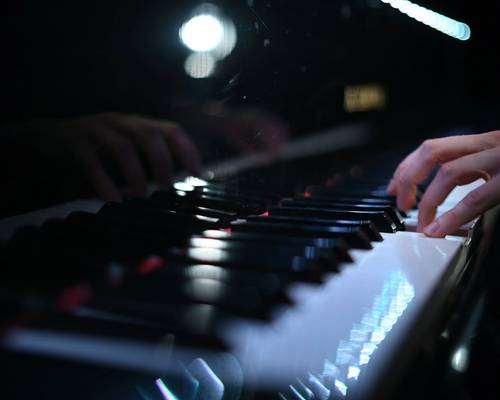
Piano: Psychological Development.
How Piano Learning Improves Memory Over Time
The process of learning, adaptation, and growth of people is mainly driven by memory. Learning Piano has emerged as one of the effective techniques of memory reinforcement via formal repetition, auditory, coordination and recalling over time. This article discusses the process by which practicing piano develops various forms of memory, reasons why these advantages become increasingly more effective, and how the benefits of learning a piano help to retain in the minds of non-musical areas.
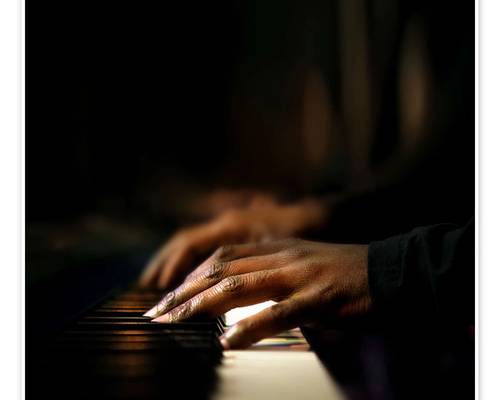
Piano & Skill Development
How Piano Practice Builds Consistency and Self-Discipline
Self-discipline and consistency are crucial personal qualities in the contemporary life but are becoming more challenging to master. The learning of piano provides a natural and effective method of developing both in a structured form of learning, in a progressive manner and through long term commitment. This paper will examine how practice in the piano will develop the consistency over the time, why the self-discipline will develop naturally at the instrument and the applicability of these abilities far beyond music in the life.
Piano & Lifelong Learning
The Reason behind the Rise of Piano Learning among Mature Beginners in the world.
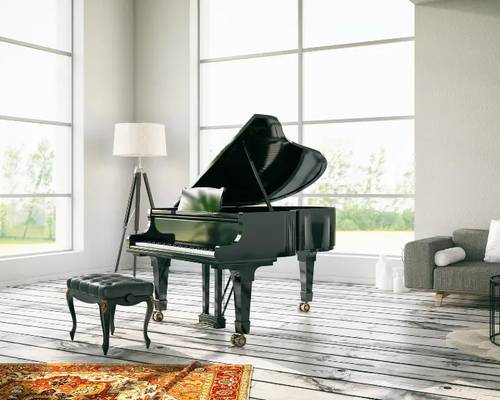
The world has witnessed a potent surge in piano learning among adult learners. More individuals are learning the piano later in their lives and this is due to the flexibility of digital tools, lifestyles and now people are more focused on their personal development. The article discusses the reasons why this trend is being experienced, how adult learners treat piano differently, and why this trend is transforming the contemporary culture of the piano.
Piano & Modern Skills
The reason Learning Piano Is Better than Multitasking in a Distracted World.
Piano learning is becoming an effective tool to reconnect attention and deep thinking in a day and age where we are bombarded with notifications and do not spend enough time in deep contemplation. The mental clarity ensured by years of discipline in the practice of the piano may be that which is afforded by very few activities because it demands constant focus, physical coordination and active listening. This paper discusses the connection between learning the piano and attention, the level of cognitive and mental discipline and the reason why more and more individuals are turning to the piano to overcome distraction in the modern world.
The Culture of Piano and Contemporary Music.
The reason why Minimalist Piano Music is becoming a sound of this decade.
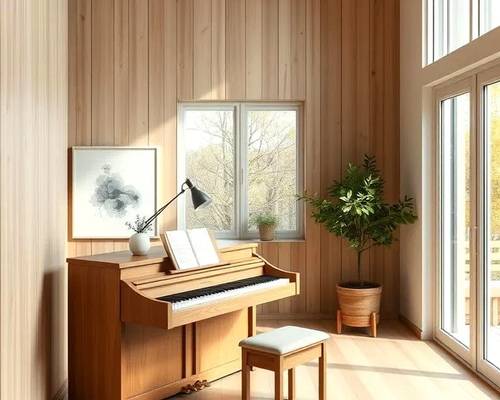
The minimalist piano music has come out as one of the most effective sounds of the modern age. The style is marked by its simplicity, repetition, and restraint, and they are defining the manner in which individuals listen, create, and relate to piano music nowadays. This paper delves into the reasons behind the growth of minimalist piano in popularity all over the world, its reflection of the contemporary life, and why it is a simply a new voice of this decade.
Piano & Future Learning
The Way AR is beginning to transform Piano Learning.
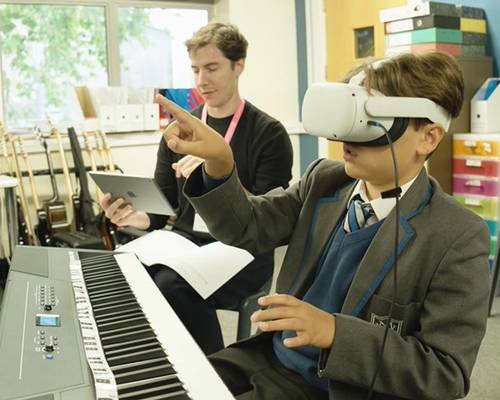
The concept of augmented reality is gradually presenting itself in the business of piano study, providing a fresh interpretation of music, technique, and practice. AR is transforming the interaction between pianists and the keyboard by combining digital guidance and physical instruments to create a new approach to playing the piano. This paper discusses the reasons behind the growing interest in augmented reality learning of piano, its functionality as well as its potential future impact on the teaching of piano.The concept of augmented reality is gradually presenting itself in the business of piano study, providing a fresh interpretation of music, technique, and practice. AR is transforming the interaction between pianists and the keyboard by combining digital guidance and physical instruments to create a new approach to playing the piano. This paper discusses the reasons behind the growing interest in augmented reality learning of piano, its functionality as well as its potential future impact on the teaching of piano.