
Piano History & Music Culture
The Piano: A History of Its Evolution since the time it was invented until the digital era.
The piano’s journey from an experimental keyboard instrument to a central force in modern music spans more than three centuries. Shaped by technological innovation, cultural change, and evolving musical styles, the piano has continually adapted without losing its identity. This article explores how the piano evolved across eras and why it remains essential in today’s musical world.
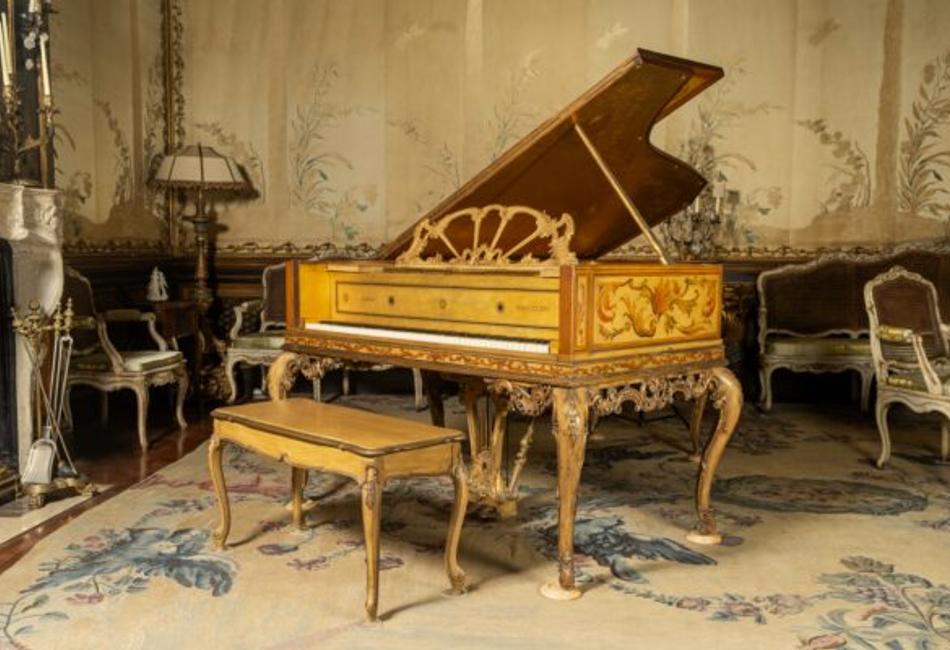
Piano can be viewed as something eternal, something that has always been and will always be that way. As a matter of fact, the piano is a product of centuries of experimentation, cultural transformation, technological advancement, and musical need. What we today know as a modern piano is the result of a very gradual evolution process- one which has been influenced by composers, instrument makers, performers, and changing societies.
Since its inception in the early eighteenth century as a mechanical experiment, the piano has changed over time without losing its identity, which is its use in the production of digital music today. By knowing about the history of the piano, one can realize not only how the instrument evolved but also the reasons why it continues to be the key to music among generations.
Music Before the Piano: The Need of a New Instrument
The harpsichord and clavichord were the leading instruments before the piano. These instruments were graceful and expressive in their respective ways, but they have one huge common factor, which is the absence of a control of dynamism.
Harpsichords were played through the plucking of strings and this is what made the sound constant irrespective of the strength or the sensitivity of the key played. Clavichord had certain expressiveness, still its sound was too limited to fit large halls. The development of music required composers to have more instruments that could reflect emotional contrast soft and strong, soft and harsh.
This increasing need of motion in expression formed the circumstances under which the invention of the piano was to take place.
The Birth of the Piano
Piano was invented in the period of about 1700 by a kind of instrument maker named Bartolomeo Cristofori who was an employee of Medici family, an Italian. His device was the initial name, gravicembalo col piano e forte, which can be translated as harpsichord with soft and loud.
The hammer mechanism that was developed by Cristofori was a breakthrough. Small hammers were used instead of plucking the strings so that the player could play at different levels by touch. It was a revolutionary innovation in keyboard music.
Though the first pianos invented by Cristofori were not an instant success and were technically sophisticated to a degree that could be seen as overly complicated, it formed the basis of a completely new type of instrument, the one that can have dynamic nuance and expressive richness.
This early acceptance and musical experimentation is what brought about the development of music itself
The piano did not acquire popularity quickly in the first part of the eighteenth century. A great number of musicians were used to working with harpsichord and early pianos were not very consistent and durable. Nonetheless, the composers started to experiment with the expressiveness of the piano gradually.
The instrument grew steadier and attractive as designers enhanced the design of Cristofori. Artists found out that the piano gave more possibility to control phrasing and articulation. This brought composers who were concerned with the contrast of emotions and structural complexity.
The responsiveness of the piano to touch was a breakthrough in key board music.
The Piano in Classical times
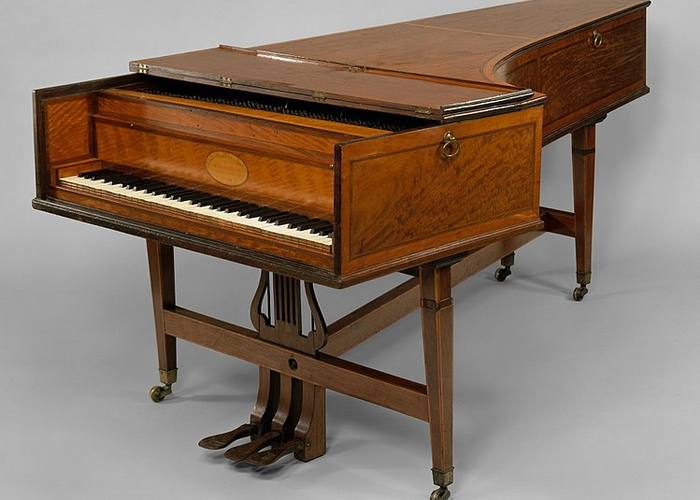
The piano came to be the proprietor of the Classical era by the mid-to-late eighteenth century. The instrument was welcomed by composers like Mozart and Haydn due to its clarity, balance and expressiveness.
The pianos of this era, commonly referred to as the fortepianos, were lighter and more delicate than the present day instrument. They sounded clear and therefore suited complex melodies writing and delicate dynamics.
This epoch was characterized by the shift of the piano as an experimental novelty into a musical voice that has become a necessity. It got into homes, salons, and concert-rooms, and was a reflection of artistic as well as social change.
The Romantic Period and the Development of the Piano
The 19 th century saw the dramatic growth of the role and design of piano. The instrument makers answered this need of romantic composers by reinforcing the construction of the piano.
The frames grew stronger, the strings grew fatter and the range of keyboards was broadened. These developments enabled the piano to deliver a greater richer sound that was able to fill a big concert hall.
Beethoven, Chopin, Liszt, and Schumann and other composers took the piano to its uttermost limits. Their compositions required more technical skills and emotionalism, which strengthened the position of the piano as a leading solo instrument.
The Piano as the Cultural Monument
The piano also became a symbol of culture with the advancement of the musical instrument. It is considered that during the nineteenth century, having a piano was connected with the education, sophistication, and status. Before the recorded sound, piano music was playing in homes and this was used as entertainment.
It was used as a social instrument by families who used to sit around the piano to play music. The teaching of the piano became widespread especially within the middle classes families making the instrument become a part of their lives.
Piano was no longer a professional instrument, but a domestic one.
Technological Developments in the Piano Construction
During the nineteenth and the first part of the twentieth centuries, the piano production became more elaborate. The use of cast-iron frame, cross-stringing and better material of the hammers were innovations that boosted the durability and rich tonal quality.
The developments enabled pianos to sustain more string tension leading to a higher volume and sustain. The grand piano that is used today, with all its loudness and wide range, was created during this epoch of technological sophistication.
Although altered, the basic hammer-string mechanism had not been eliminated, as the essence of the piano was retained.
Piano in the Age of recordings
With the introduction of recorded music in the twentieth century, the sound experience of people changed. Radios, phonographs and the subsequent digital recordings were able to make music available without direct performance.
Instead of devaluing the role of the piano, recording technology increased it. Pianists were able to reach the entire world and classic recordings allowed the future generation to preserve performances.
The piano had easily adapted to become part of the studio recording and film soundtracks. Its emotional and artistic quality was supported by its expressiveness which was easily captured on tape.
The use of the Piano in Jazz and Pop
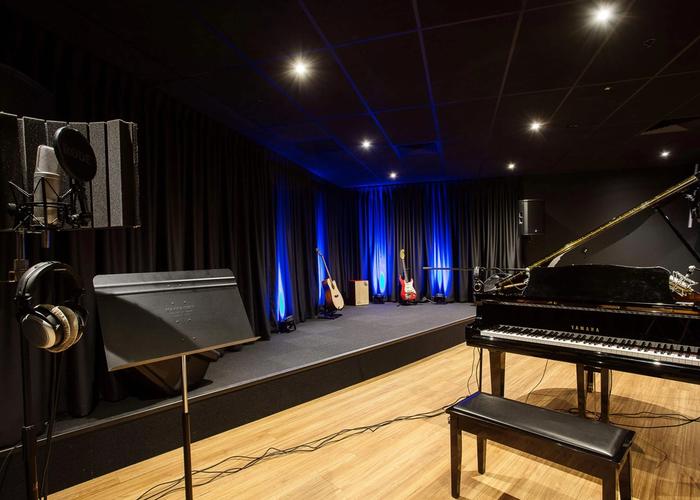
The piano too had a new life in jazz and blues and in popular music. The jazz musicians redefined the instrument with a rhythmic and improvisational voice and utilized it to motivate the harmony and groove.
The piano was used as a compositional and performance instrument in popular music. It was adopted by songwriters to make melodies and harmonies and performers to reach out to audiences on an emotional level.
This flexibility made the piano keep up with the diversification that happened in the musical styles.
The dawn of the Digital Piano
Digital pianos became available with late twentieth-century technology, they were portable, inexpensive and versatile. Although not similar to acoustic instruments, the digital piano increased the availability of learning and performance of the piano.
Digital instruments are what enabled players to practice in silence, to explore with sounds and to blend in into modern production devices. They did not replace the acoustic pianos and instead enhanced their role in the modern music.
The piano did not lose its spirit and went into the digital era.
Why the Piano Has Persisted When All the Rest Has Died
A large number of historical instruments fell into disuse with a change in musical tastes. The piano had survived due to the fact that it can be altered without necessarily being reinvented. The design of it is still user-friendly, its audio is expressive, and its uses are limitless.
The piano is used by composers, performers, teachers and amateurs. It facilitates the solo performance, accompaniment, composition and experimentation.
It is versatile and will therefore outlive times.
The Piano In the Contemporary Education
The piano has continued to be the focus of music education today. Most students usually learn it first since it is a visual aid to the organization of music.
Harmony, rhythm, and melody are more readily comprehended at the piano than on most other instruments. This is the education value that makes the piano remain the centre of musical training all over the world.
The piano will always be needed as long as music education prevails.
The Living Instrument of Piano
Nevertheless, the piano is not a relic even though its history is long. The possibilities of it are still reinterpreted by new composers, performers, and builders. The same keys have a new meaning to each generation.
The history of the piano is continuous, and it is the process of culture change and human imagination that has developed it.
Conclusion
The history of the piano is one of adaptation, innovation and survivability. Since it was invented to overcome dynamic limitation, the piano has not been left behind in the development of human musical expression in the contemporary world of digital music.
Its survival does not happen by chance. The piano fulfills basic artistic requirements, which are expression, organization, versatility, and emotional expressiveness. As long as human beings want to find the meaning with sound, the piano will always remain a key voice in the future of music.
More from the blog
Keep exploring new ideas
Piano: Psychological Development.
How Piano Learning Improves Memory Over Time
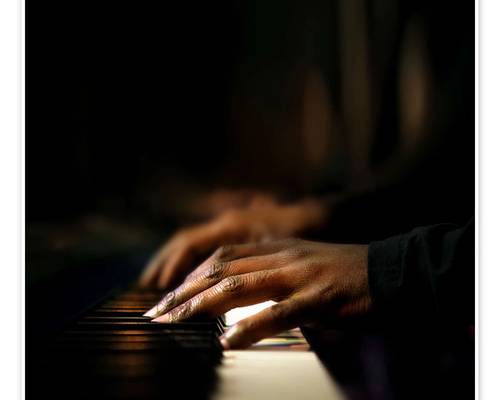
The process of learning, adaptation, and growth of people is mainly driven by memory. Learning Piano has emerged as one of the effective techniques of memory reinforcement via formal repetition, auditory, coordination and recalling over time. This article discusses the process by which practicing piano develops various forms of memory, reasons why these advantages become increasingly more effective, and how the benefits of learning a piano help to retain in the minds of non-musical areas.
Piano & Skill Development
How Piano Practice Builds Consistency and Self-Discipline
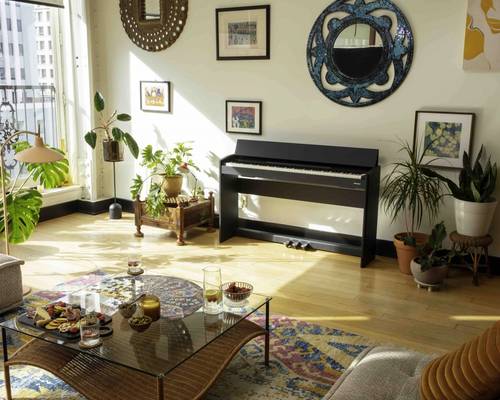
Self-discipline and consistency are crucial personal qualities in the contemporary life but are becoming more challenging to master. The learning of piano provides a natural and effective method of developing both in a structured form of learning, in a progressive manner and through long term commitment. This paper will examine how practice in the piano will develop the consistency over the time, why the self-discipline will develop naturally at the instrument and the applicability of these abilities far beyond music in the life.
Piano & Lifelong Learning
The Reason behind the Rise of Piano Learning among Mature Beginners in the world.
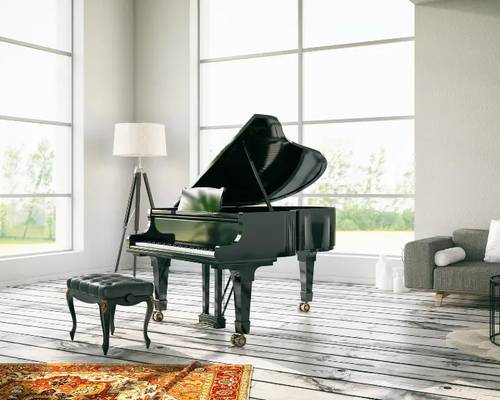
The world has witnessed a potent surge in piano learning among adult learners. More individuals are learning the piano later in their lives and this is due to the flexibility of digital tools, lifestyles and now people are more focused on their personal development. The article discusses the reasons why this trend is being experienced, how adult learners treat piano differently, and why this trend is transforming the contemporary culture of the piano.
Piano & Modern Skills
The reason Learning Piano Is Better than Multitasking in a Distracted World.
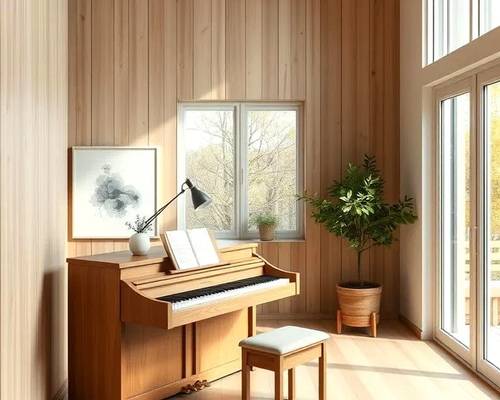
Piano learning is becoming an effective tool to reconnect attention and deep thinking in a day and age where we are bombarded with notifications and do not spend enough time in deep contemplation. The mental clarity ensured by years of discipline in the practice of the piano may be that which is afforded by very few activities because it demands constant focus, physical coordination and active listening. This paper discusses the connection between learning the piano and attention, the level of cognitive and mental discipline and the reason why more and more individuals are turning to the piano to overcome distraction in the modern world.
The Culture of Piano and Contemporary Music.
The reason why Minimalist Piano Music is becoming a sound of this decade.
The minimalist piano music has come out as one of the most effective sounds of the modern age. The style is marked by its simplicity, repetition, and restraint, and they are defining the manner in which individuals listen, create, and relate to piano music nowadays. This paper delves into the reasons behind the growth of minimalist piano in popularity all over the world, its reflection of the contemporary life, and why it is a simply a new voice of this decade.
Piano & Future Learning
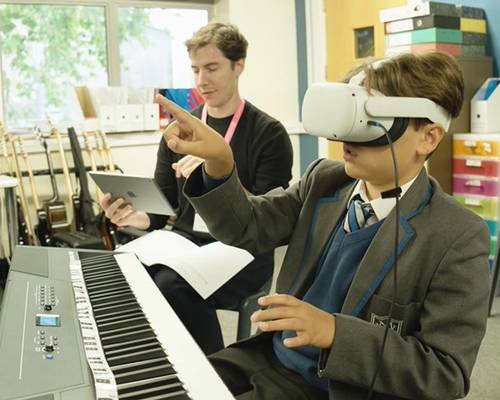
The Way AR is beginning to transform Piano Learning.
The concept of augmented reality is gradually presenting itself in the business of piano study, providing a fresh interpretation of music, technique, and practice. AR is transforming the interaction between pianists and the keyboard by combining digital guidance and physical instruments to create a new approach to playing the piano. This paper discusses the reasons behind the growing interest in augmented reality learning of piano, its functionality as well as its potential future impact on the teaching of piano.The concept of augmented reality is gradually presenting itself in the business of piano study, providing a fresh interpretation of music, technique, and practice. AR is transforming the interaction between pianists and the keyboard by combining digital guidance and physical instruments to create a new approach to playing the piano. This paper discusses the reasons behind the growing interest in augmented reality learning of piano, its functionality as well as its potential future impact on the teaching of piano.