
Piano & Personal Development
The Problem of Learning Piano and the Emotionalawareness and Innerbalance.
Emotional intelligence is now a key competency in the contemporary life, and there are few things that develop it automatically. Piano study is a potent technique of enhancing the emotional knowledge, equilibrium, and expression with sound, motion, and concentration. This paper discusses the emotional awareness that can be gained through the practice of piano, why it brings inner balance overtime and how the benefits far outweigh music in life.

The contemporary life continuously imposes attentional, decision-making and emotional control demands. Individuals are supposed to react fast, change constantly and remain calm in moments of stress. Although productivity systems and digital tools are useful to manage tasks, they hardly assist in having emotional clarity or balance.
Learning piano provides another type of activity. It involves being there, listening and being sensitive instead of being fast. Piano is not about repressed and hurried feelings. They are recognized, formed and manifested by sound.
This process is natural and sustainable over time which leads to an emotional level of awareness. Learning of piano is not merely acquiring a skill. It is made a discipline of inner harmony.
The importance of Emotional Awareness in the present day
Emotional awareness helps one to know what they feel, why they feel, and how to respond rationally instead of acting on the spur of the moment. In its absence, the stress builds up and the level of clarity becomes low.
Most of our daily practices promote distraction and not reflection. People tend to forget about emotions and treat them until they are overwhelming. The process of emotional awareness involves practicing things that decelerate the attention and promote observation.
This environment is produced by piano learning. The sound is developed in a slow manner that allows one to listen and not rush.
How the Piano Learning Promotes Emotional Presence
Piano playing requires attendance. Every note is present only in the time when it is played. One should stick to sound, movement and timing.
This existence is an inward attraction. Students get to know the tension, ease, hesitation and flow. Feelings are not abstract but can be observed as sound is affected by the emotions.
This feedback loop has the effect of teaching the learners to acknowledge the occurrence of emotional patterns.
The Relationship between Sound and Emotion
Emotions are instinctive in sound. Feeling can be conveyed by tone, volume and timing without the use of words.
Learners listen to the differences in expression brought about by the slightest touch at the piano. The approach to take is soft. Force produces intensity. Uncertainty is the result of hesitation.
This emotional sensitivity is developed through an immediate connection of action and sound. Students gain the understanding of the influence of the internal condition on the external one.
The Reason Piano Practice is Emotionally Balancing
When feelings are not opposed but accepted, a balance would be achieved. Practicing the piano provides the environment in which one can feel their feelings without being judged.
No one has to name emotions or settle issues at the moment. They are merely represented by sound and motion.
This approval minimizes emotional tensions. However, as time passes, learners feel more stable and at ease in the course of practice.
The Role of Piano-Slowing in the Control of Emotion
The learning of piano usually involves a slow down. Hard sections are only better when they are made slower and the movements are regulated.
This deceleration is also impacted emotionally. Breathing steadies. Attention settles. The nervous system react to the slowed speed.
This rule is transferred to everyday life. Learners are more at ease taking time to react instead of responding promptly.
The Reason Behind the Safety of the Emotional Expression at the Piano
Expressing emotions verbally is a challenge to many people. Learning piano offers a different avenue which is non-confrontational and personal.
Sound enables one to express without explaining. Emotions can be investigated without use of words or decoding.
Honesty is promoted by this protection. Students get to feel freer to admit emotion as opposed to repressing it.
The Piano Learning Process to Emotional Vocabulary
Emotional intelligence is better when individuals are able to differentiate various emotions. This subtlety is formed through piano acquisition.
Students observe variations in tension/relaxation, urgency/calmness, hesitation/confidence. These differences are made more evident with sound.
In the course of time, emotional experience is more detailed and comprehensible.
The basics of why repetition helps in being emotionally stable
The repetition in the piano causes predictability. Patterns are known and they give ground.
This is stability which makes the emotions emerge without crushing the learner. The repetition provides a protective model where one can express themselves.
When things are consistent and structured, then emotional balance enhances.
The Importance of Listening in the Emotional Awareness
Piano learning consists of listening. Students are taught to pay close attention to tone, balance and time.
This listening goes inwards. With the sound being observed, internal responses can be felt.
Listening is not distractive but it provides emotional clarity through training awareness.
How Emotional Intelligence Enhances Musical Performance
Music expression becomes natural with an increase in emotional awareness. Students are made conscious of the wording and dynamics.
Sound is not mechanical, it becomes reflective. The expression is natural and not artificial.
This development justifies the worth of emotional awareness in learning.
The reason why Piano Learning Facilitates Reflection
Practice in the piano involves reflection. Students stop, listen and correct.
This contemplative practice aids in emotional cognition. Learners think about the way they experienced practice, and how this affected sound.
Reflection enhances emotional control and self-insight.
Association of Emotional Awareness and Patience
Tolerance is backed by emotional awareness. As the learners are aware of the frustration at an early stage, they react rather than escalate.
The patience that is achieved in learning Piano is a reward in terms of better control and increased sound. Students enjoy the advantage of graded answers.
Patience is an emotional ability and not an imposed action.
The way Piano Learning Minimizes Emotional Overload
The problem of the emotional overload is the result of piled up emotions that are not discharged. Practice in the piano provides frequent emotional processing.
Sound gives a vessel that is defined and contained. Emotions flow and not remain at the same place.
This discharge helps one balance emotionally and be clear.
Piano Learning: Why Self-Compassion Works
Achievement at the piano is slow. Mistakes are common among the learners.
This experience teaches to be nice to yourself. Critical self-evaluation impedes improvement whereas empathy promotes development.
In the long run, students come to have a more sympathetic attitude towards the hard work and the imperfection.
The transfer of Emotional Awareness outside of Music
There are many cases where emotional skills acquired at the piano are manifested in day-to-day life. Students will be more sensitive to their answers and reactions.
They take time to respond, pay more attention, and talk in a more sensible manner.
The sensibility with feelings turns into a cross-functional life management skill.
The Reason Piano Learning Makes Inner Balance Long-term
There is the need to maintain inner balance. Study of the piano gives the learner a continuous repetition of balance.
Emotional awareness is not episodic, but rather in a continuous state because of constant interaction.
Emotional stability is sustained over a long term.
The Theoke of Routine in Grounding of Emotions
Routine is created by regular practice at the piano. Emotional grounding is another support that is given by routine; it gives a sense of predictability.
This uncertainty and stress are minimised. The piano is a place of normality in everyday life.
Consistency makes emotional balance stronger.
Why Piano Learning Is Consonant with the Needs of Modern Well-Being
The productivity and emotional wellbeing are often detached in modern life. Learning of piano reconnects them.
It gives a chance to develop without pressures and to manifest oneself without criticism. This correspondence makes the learning of piano particularly useful in the modern world.
Emotional intelligence is integrated in the development process and not an exception.
Creative Confidence with the help of Emotional Awareness
Creativity is less threatening when learners realize how they feel about it. The expression in it is not suppressed.
Piano education stimulates adventure. Emotional intelligence encourages risk-taking.
Development of confidence is based on knowledge and not domination.
The Reason Emotional Skills are Important to Lifelong Learning
Lifelong learning involves persistence, tolerance and self-knowledge. All three are backed by emotional skills.
Learning of piano enhances these attributes through experience and not teaching.
This base justifies constant growth in any life stage.
The Cultural Change to Emotional Intelligence
Emotional intelligence in conjunction with the technical skill is more appreciated by society. Piano learning conforms to this change automatically.
It builds consciousness, expression and equilibrium by direct interaction.
This topicality can justify its further popularity.
The reason why Piano makes such a unique contribution to the development of emotions
The piano is a combination of movement, time and sound. This incorporation forms a strong emotional learning environment.
There are not many activities where inner state is translated onto outer one so quickly.
The piano is the instrument that is still unique in terms of emotional development.
Long-term Effect on Dysfunctional Affect
With time, emotional habits are transformed by learning piano. Students are more conscious, balanced and expressive.
These transformations favor good health outside music. Emotional simplicity is incorporated into everyday life.
The effect is slow but long lasting.
The Importance of This in a Hectic World
Emotional awareness is growing in the world as life gains speed. Piano learning provides the opposite of this in form of presence and reflection.
It provides a reunion between emotion and action.
This equilibrium is needed to grow sustainably.
Conclusion
Piano playing develops emotional sensitivity and emotional self-possession in being present, listening and expressing. Sensitivity to feeling and response is enhanced in each practice session.
Piano learning provides clarity in emotions, which is not limited to music but also applied to daily life by providing time to reflect and express oneself. These advantages are placed, and they are not lost in the long run.
Piano education can be a meaningful journey in the world where it is mostly in the rush rather than in the contemplation of the emotional state and conscious living.
More from the blog
Keep exploring new ideas
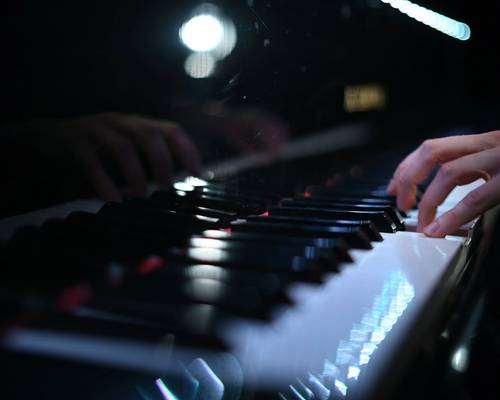
Piano: Psychological Development.
How Piano Learning Improves Memory Over Time
The process of learning, adaptation, and growth of people is mainly driven by memory. Learning Piano has emerged as one of the effective techniques of memory reinforcement via formal repetition, auditory, coordination and recalling over time. This article discusses the process by which practicing piano develops various forms of memory, reasons why these advantages become increasingly more effective, and how the benefits of learning a piano help to retain in the minds of non-musical areas.
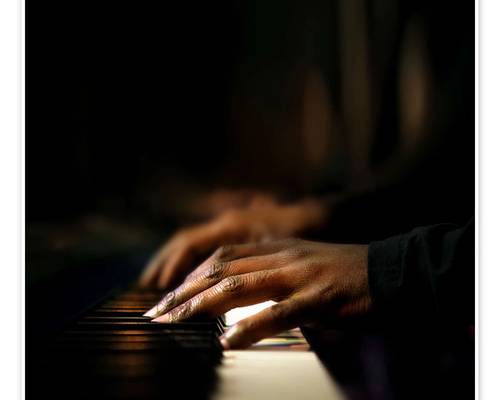
Piano & Skill Development
How Piano Practice Builds Consistency and Self-Discipline
Self-discipline and consistency are crucial personal qualities in the contemporary life but are becoming more challenging to master. The learning of piano provides a natural and effective method of developing both in a structured form of learning, in a progressive manner and through long term commitment. This paper will examine how practice in the piano will develop the consistency over the time, why the self-discipline will develop naturally at the instrument and the applicability of these abilities far beyond music in the life.
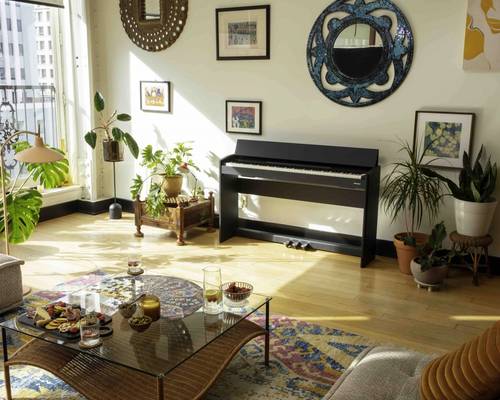
Piano & Lifelong Learning
The Reason behind the Rise of Piano Learning among Mature Beginners in the world.
The world has witnessed a potent surge in piano learning among adult learners. More individuals are learning the piano later in their lives and this is due to the flexibility of digital tools, lifestyles and now people are more focused on their personal development. The article discusses the reasons why this trend is being experienced, how adult learners treat piano differently, and why this trend is transforming the contemporary culture of the piano.
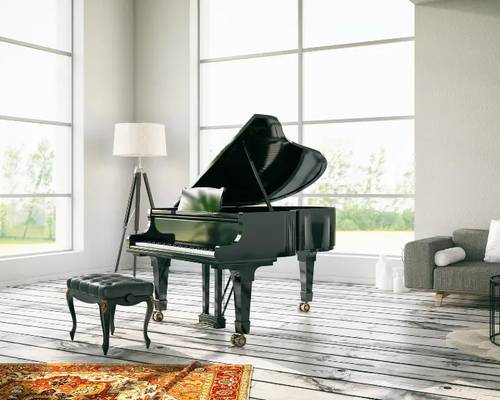
Piano & Modern Skills
The reason Learning Piano Is Better than Multitasking in a Distracted World.
Piano learning is becoming an effective tool to reconnect attention and deep thinking in a day and age where we are bombarded with notifications and do not spend enough time in deep contemplation. The mental clarity ensured by years of discipline in the practice of the piano may be that which is afforded by very few activities because it demands constant focus, physical coordination and active listening. This paper discusses the connection between learning the piano and attention, the level of cognitive and mental discipline and the reason why more and more individuals are turning to the piano to overcome distraction in the modern world.
The Culture of Piano and Contemporary Music.
The reason why Minimalist Piano Music is becoming a sound of this decade.
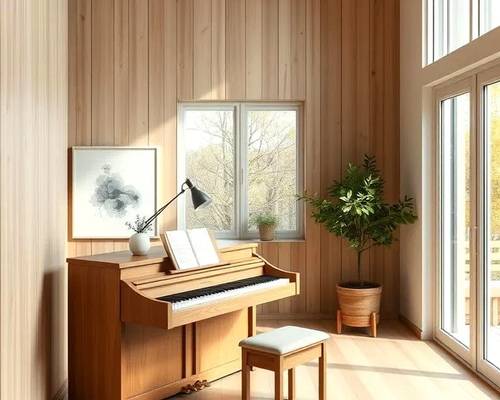
The minimalist piano music has come out as one of the most effective sounds of the modern age. The style is marked by its simplicity, repetition, and restraint, and they are defining the manner in which individuals listen, create, and relate to piano music nowadays. This paper delves into the reasons behind the growth of minimalist piano in popularity all over the world, its reflection of the contemporary life, and why it is a simply a new voice of this decade.
Piano & Future Learning
The Way AR is beginning to transform Piano Learning.
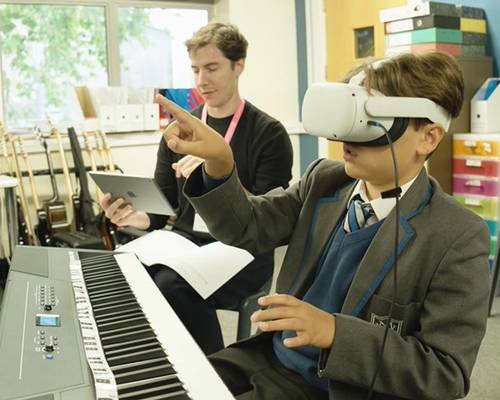
The concept of augmented reality is gradually presenting itself in the business of piano study, providing a fresh interpretation of music, technique, and practice. AR is transforming the interaction between pianists and the keyboard by combining digital guidance and physical instruments to create a new approach to playing the piano. This paper discusses the reasons behind the growing interest in augmented reality learning of piano, its functionality as well as its potential future impact on the teaching of piano.The concept of augmented reality is gradually presenting itself in the business of piano study, providing a fresh interpretation of music, technique, and practice. AR is transforming the interaction between pianists and the keyboard by combining digital guidance and physical instruments to create a new approach to playing the piano. This paper discusses the reasons behind the growing interest in augmented reality learning of piano, its functionality as well as its potential future impact on the teaching of piano.