
Online Piano Learning
The Secret to a Stable Piano Practice Routine that Works.
It can be overwhelming with the number of choices in the market choosing your first piano. Whether it is an acoustic or digital piano, space or budget constraints, or learning objectives, all choices will influence your future development. It is an all-encompassing guide to a beginner and everything you need to know to make the correct choice of piano and embark on your piano education on the correct footing.

It is all thrilling when one starts with the piano but the problem is that after the initial pace, most learners fail. Most of the beginners train hard in a few days, and gradually run out of momentum. Others come and sit in front of the piano regularly but are frustrated by the fact that they do not know whether they are spending their time well. They are not issues of inability that may not be arising--they are issues of unclear or impractical exercise routine.
An effective piano practice program does not require much time or complexity. It must be regular, targeted and sensible in accordance to the real-life of people. Progress is no longer a coincidence when practice becomes part of everyday life.
This tutorial demonstrates the process of creating a long-term piano practice habit. It emphasizes structure, equilibrium, and sustainability as opposed to pressure or perfection.
The Reason as to Why a majority of the Piano Practice Routines are ineffective
It is beneficial to have a reason behind the failure of many before constructing a good routine.
The most widely occurring reasons are:
- Operating without objectives.
- Not establishing realistic day time expectations.
- Going over the same stuff aimlessly.
- Working only when one is well motivated.
Consistency is lost when practice is facilitated by motivation. An effective routine eliminates decision-making and substitutes with organization.
It needs to be a habit of practice and not a challenge of strength of will.
The Real meaning of consistent practice
Consistency will not entail working hours a day. It implies doing it on a regular basis so that you do not lose momentum.
For most learners:
- 20-30 minutes daily is effective
- It is better to have short sessions as opposed to long, irregular sessions.
- It is not failure to miss a day but to quit the routine.
Unity develops acquaintance. Confidence is created through familiarity. Confidence builds progress.
Selecting the appropriate Practice Time
It is one of the greatest errors that learners make by selecting a practice time that is contrary to real life.
Ask yourself:
- At what times do I feel the most mentally Then?
- At what time will I be least likely to be distracted?
- When may practice be automatic rather than forced?
There are those who perform optimally during the morning. Others prefer evenings. There is no right time, there is an imitable time.
After selection, practice time should be regarded as a definite appointment.
Estimating an Achievable Daily Time Allocation
Burnout occurs as a result of overcommitting. Lack of commitment will result in stagnation.
A realistic starting point:
- Beginners: 15-20 minutes
- Middle-level students: 25-40 minutes.
- Advanced learners: 45-60 minutes
Better to extend time afterward than take on too vigorously and abandon it.
The idea is not to get tired but to be in contact with the instrument daily.
Organizing a Piano practice lesson

A well rounded practice is one that is balanced between technique, learning and enjoyment. It is only through play of songs that there will be weak fundamentals. Monotonous physical exercises do not bring excitement.
Four fundamental parts are involved in a balanced session.
Warm-Up: Washing Hands and Mind
Warm-ups are a kind of preparation of both the body and brain.
Effective warm-ups:
- Simple scales
- Five-finger patterns
- Slow chord progressions
It is not to run fast--it is to be aware. Warm-ups indicate to the brain that it is commencing on focused work.
Five minutes is enough.
Technique: Confidence and Building Control
Technique behinds all other playing.
This section may include:
- Finger scales correctly fingered.
- Arpeggios
- Exercises of finger independence.
The practice of the technique should be slow and controlled. Fast playing comes later.
Plateau and injury are avoided by regular practice of technique.
Repertoire: Music - Learning and Developing Pieces
This is the place where music breathes life.
Divide repertoire work into:
- New content (learning notes and rhythm)
- Old material (refining accuracy and expression)
Do not be in the habit of commencing at the very start of a composition. Pay attention to hard parts initially when you are at your best.
Play: A musical Ending on a Good Note
Always practice the freshway, with something pleasant.
This might include:
- Playing a favorite piece
- Improvising freely
- Restarting a part that seems less difficult.
A positive ending enhances the motivation towards the next session.
How to Practice in a Time-Limited Fashion
At the busiest days, cut the session--but never miss it.
Even 10 minutes can include:
- 2 minutes warm-up
- 4 minutes focused section
- 4 minutes enjoyable playing
The continuity of short practice. Long breaks reset progress.
Set Weekly rather than Day-to-Day Goals
Goals that should be met daily can be limiting. Goals per week make things flexible.
Examples:
- Finish learning one section
- Warm-up by a little.
- Memorize a short passage
Goals set on a weekly basis offer freedom of adaptation.
Monitoring Improvement Without Oversight
Practice is made deliberate with tracking.
Simple tracking methods:
- Practice journal
- Checklist of pieces
- Notes on what improved
Do not take progress emotionally. May good be heard in sound.
The Importance of Slower Practice
A high number of learners study too quickly.
Slow practice:
- Reduces mistakes
- Acquires proper muscle memory.
- Improves confidence
The faster the better is the control.
Chopping up Pieces into Managable parts
When handled as a single piece, large pieces are overwhelming.
Break music into:
- Two-bar phrases
- Hands separately
- Rhythm only practice
Small wins build momentum.
Handling Motivational Slumps
Motivation fluctuates. Punishment keeps improvements going.
When motivation drops:
- Reduce practice time
- Change repertoire
- Focus on review
Waiting to get inspired before taking action is never a good idea.
The Most Often Made Practice Mistakes
- Christian practice: rehearsing old, familiar songs.
- Adopting fresh start with errors.
- Performing without hearing.
- Measuring advancement against other people.
Good practice is non-competitive.
The Placement of Teachers in a Practice Routine
The educators do not replace, they offer guidance.
A good routine:
- Applies lesson feedback
- Takes up lesson preparations.
- Reinforces independence
Practice occurs between lessons and not during them.
Application of Technology in Practice

Consistency can be facilitated by technology, through its prudent application.
Helpful tools:
- Metronome
- Recording device
- Practice timer
Use tools that are more helpful than distracting.
Adjusting Your Workout as You Get Better
With the development of skills, habits change.
Adjust:
- Practice time
- Difficulty level
- Focus areas
A habit ought to become a part of you and not to enslave you.
The Case against Talent and in Favor of Consistency
A lot of talented players were not developed by talent, but by habit.
Consistent practice:
- Builds reliability
- Reduces frustration
- Creates confidence
Learning is speeded up by talent and the routine maintains it.
Long Term Goodies of a Good Practice Routine
A good routine:
- Reduces decision fatigue
- Develops musical autonomy.
- How to Remain Constant in a Busy or Stressful Time.
Conclusion
An effective practice timetable of the piano is not associated with intensity it is sustainability. When the practice is a part of everyday life, progress is achieved silently and gradually. Through the process of organization, creating achievable objectives, and focusing more on consistency, rather than perfection, students can transform the process of practicing the piano into a habit that can be counted on.
There is no progress in doing more. It is the result of doing enough, always.
More from the blog
Keep exploring new ideas
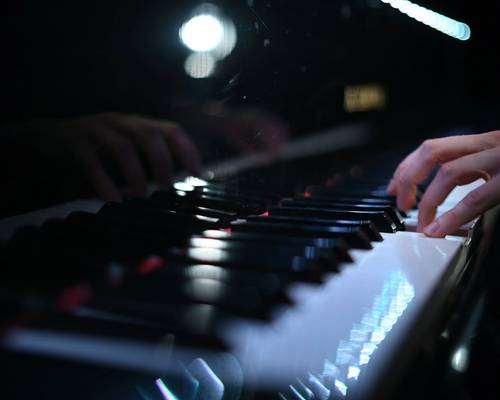
Piano: Psychological Development.
How Piano Learning Improves Memory Over Time
The process of learning, adaptation, and growth of people is mainly driven by memory. Learning Piano has emerged as one of the effective techniques of memory reinforcement via formal repetition, auditory, coordination and recalling over time. This article discusses the process by which practicing piano develops various forms of memory, reasons why these advantages become increasingly more effective, and how the benefits of learning a piano help to retain in the minds of non-musical areas.
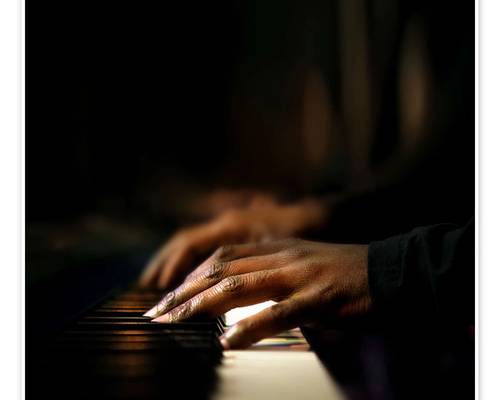
Piano & Skill Development
How Piano Practice Builds Consistency and Self-Discipline
Self-discipline and consistency are crucial personal qualities in the contemporary life but are becoming more challenging to master. The learning of piano provides a natural and effective method of developing both in a structured form of learning, in a progressive manner and through long term commitment. This paper will examine how practice in the piano will develop the consistency over the time, why the self-discipline will develop naturally at the instrument and the applicability of these abilities far beyond music in the life.
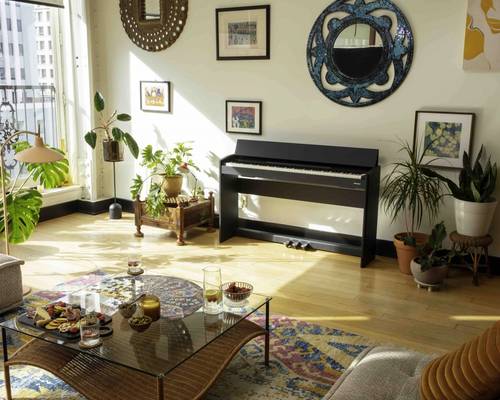
Piano & Lifelong Learning
The Reason behind the Rise of Piano Learning among Mature Beginners in the world.
The world has witnessed a potent surge in piano learning among adult learners. More individuals are learning the piano later in their lives and this is due to the flexibility of digital tools, lifestyles and now people are more focused on their personal development. The article discusses the reasons why this trend is being experienced, how adult learners treat piano differently, and why this trend is transforming the contemporary culture of the piano.
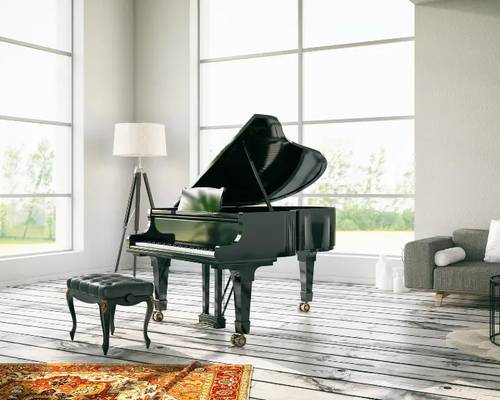
Piano & Modern Skills
The reason Learning Piano Is Better than Multitasking in a Distracted World.
Piano learning is becoming an effective tool to reconnect attention and deep thinking in a day and age where we are bombarded with notifications and do not spend enough time in deep contemplation. The mental clarity ensured by years of discipline in the practice of the piano may be that which is afforded by very few activities because it demands constant focus, physical coordination and active listening. This paper discusses the connection between learning the piano and attention, the level of cognitive and mental discipline and the reason why more and more individuals are turning to the piano to overcome distraction in the modern world.

The Culture of Piano and Contemporary Music.
The reason why Minimalist Piano Music is becoming a sound of this decade.
The minimalist piano music has come out as one of the most effective sounds of the modern age. The style is marked by its simplicity, repetition, and restraint, and they are defining the manner in which individuals listen, create, and relate to piano music nowadays. This paper delves into the reasons behind the growth of minimalist piano in popularity all over the world, its reflection of the contemporary life, and why it is a simply a new voice of this decade.
Piano & Future Learning
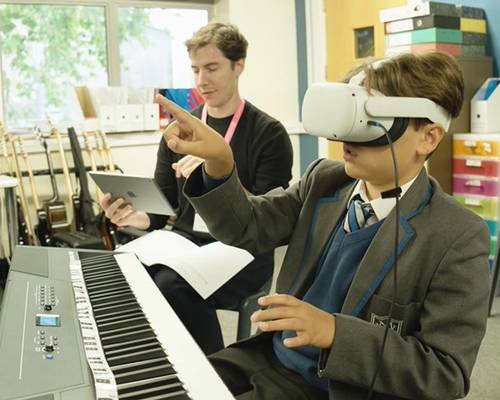
The Way AR is beginning to transform Piano Learning.
The concept of augmented reality is gradually presenting itself in the business of piano study, providing a fresh interpretation of music, technique, and practice. AR is transforming the interaction between pianists and the keyboard by combining digital guidance and physical instruments to create a new approach to playing the piano. This paper discusses the reasons behind the growing interest in augmented reality learning of piano, its functionality as well as its potential future impact on the teaching of piano.The concept of augmented reality is gradually presenting itself in the business of piano study, providing a fresh interpretation of music, technique, and practice. AR is transforming the interaction between pianists and the keyboard by combining digital guidance and physical instruments to create a new approach to playing the piano. This paper discusses the reasons behind the growing interest in augmented reality learning of piano, its functionality as well as its potential future impact on the teaching of piano.