
Piano & Cognitive Skills
The way Learning Piano Can Enhance Problem-Solving and Creative Thinking.
Creative thinking and problem-solving are the key skills of the contemporary world but not many activities can develop both of these skills simultaneously. Learning piano provides a certain training as a powerful means of creative thinking and analysis based on the recognition of patterns, decision-making, and expressive discovery. This article discusses the effects of practicing piano as a way of enhancing problem-solving power, enhancing creative thinking and promoting its capacity to think freely which goes much further than music.
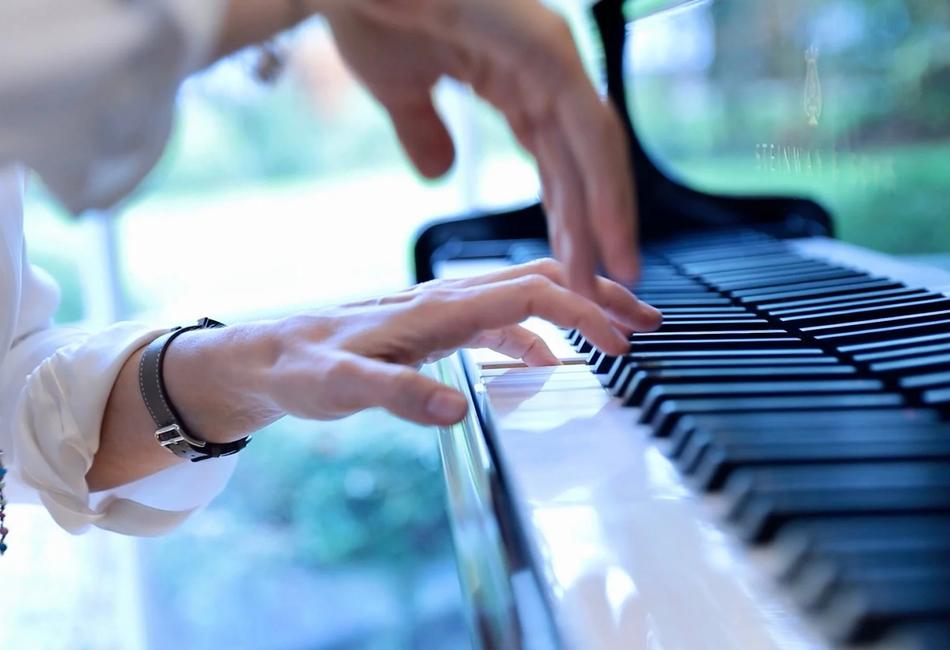
The challenges in the modern world seldom have a set of guidelines. At work, during the learning process, or in current life, a person is always needed to analyse situations, to adjust to change and to be creative in their ways. Solving problems as well as creativity has ceased being an optional skill set. They are necessary in dealing with complexity.
At first sight piano learning does not seem to be connected with these abilities. Nevertheless, recurrent learning and playing piano are activities that keep the mind alive in its analysis, adaptation, and creative decision making. Each practice session has some challenges, which have to be resolved by observation, experimentation, and refinement.
These recurrent mental activities build up over time to solve problems and become creative in a much broader than instrument.
The Reason Modern Life Requires more Ability to think
Modern life is also accelerated and promotes a reactionary mode instead of a reflective approach. Numerous tools offer immediate responses, and one does not have time to solve issues on their own. Consequently, flexible thinking may become weak in the long run.
Problem-solving increases when the mind is trained to notice details, experiment methods and learn conclusions. When experimentation is not pressured in order to produce perfection, then creativity increases.
These are conditions that are naturally generated during Piano learning. It presents the problems which cannot be resolved immediately and one will have to patiently wait, be curious and make intelligent adaptations.
Introduction of Continuous Problem-Solving by Piano Learning
Each piano composition is a problem set that is to be resolved. What are the most effective motions of the hands? What is the timing that needs to be adjusted? How to make sound therefore molded clearly and consistently?
Students are always critical about the things they listen to and sense. They change direction when it is not working instead of giving up on it. The process of observation, trial and correction enhances the power of thinking.
Piano problems are also immediate in terms of feedback, given that the learning process is active and interactive, unlike theoretical puzzles that give feedback in the form of sound.
The Function of Pattern Recognition in Learning Piano
Problem-solving and creativity require the use of pattern recognition. Learning to play the piano, this skill is trained all the time.
Students start to notice the use of repetitive chord patterns, scale, and rhythmic arrangements. They do not perceive individual notes, but they know groups of notes as significant units.
This is the power to recognize patterns and is efficient and helps in creative thinking. Perceiving structure enables the mind to engage in exploration of variation and not to be confined in detail.
The reason why Piano makes one think flexibly
Problem-solving depends on flexibility. After failure in one course of action, there has to be an attempt in the next.
This flexibility is required in the learning of piano. An uncomfortable fingering should be swapped. When timing is disjointed, one has to slow down on the practice. When there is no clarity to sound, there should be a change in technique.
This flexibility is habitual. The learners become accustomed to switching tactics instead of replicating ineffective approaches.
How Innovative Thinking is Bred by Discovery
The invention of creativity at the piano usually starts with exploration. Students make some experiments with the sound, dynamics and time. Minor differences result in new ideas.
This experimentation makes one have confidence in creativity. There is no right and wrong solution. It can be viewed in various ways, and the individual preferences are significant.
In the process, learners find out that the process of creativity is not an impulsive undertaking, but an outcome of thoughtful journey.
The reason Why Piano Learning Strikes a Balance between Logic and Imagination
Solving problems is dependent on logic. Imagination is important in creativity. The learning of piano reinforces the two at the same time.
Logic is reflected in order, time and synchrony. The imagination is manifested in expression, formulation, and timbre. All these aspects need to cooperate in order to play.
This equilibrium conditions the mind to flow freely in the transition of analysis and intuition, something that can help in innovation in various fields.
Decision-Making as a Pivotal Piano Skill
Each time when a person is playing the piano it consists of decision-making. Students choose the intensity of volume when playing, the speed of movement or how to form phrases.
Such decisions are not abstract. They have an instantaneous effect on sound. During the period, learners feel more assured to take decisions and evaluate the results.
This habit enhances decision making skills which are transferred in natural scenarios in the context of music to problem solving scenarios.
Why When It Goes Wrong Solving Problems Becomes More Creative
Ergos are bound to happen during learning of the piano. Instead of shunning them, they turn out to be useful sources of information.
The mistakes will tell something about the coordination, timing, or understanding. Instead of failing to see errors as a failure, learners make changes with such feedback.
This attitude makes mistakes learning resources. Innovative problem solving is best performed in environments where experimentation is not dangerous.
The way Piano Learning Promotes Perseverance in the face of difficulties
Difficult issues do not readily have easy solutions. Piano learning teaches to persist as challenges are being offered that need time and patience.
Students will be able to go and reread troublesome passages multiple times, improving effectiveness in the process. Improvements come slowly out of hard work.
Such perseverance enhances long term problem solving instead of getting short term solutions.
The Introduction to the Process of Analytical Thinking by the Role of Listening
Listening is a very important skill of analysis. Learning in the piano will teach learners to listen attentively to the balance, clarity, and timing.
This kind of concentrated listening enhances attention. Minor differences are observed, and minor change is significant.
Good listening helps in conscientious listening, not only to music but also on other problem-solving contexts.
The way Piano facilitates Divergent Thinking
Divergent thinking entails the creation of many solutions instead of one. This is aided by learning piano which helps to explore.
There are numerous ways of playing a phrase. The tempo, articulation and expression may vary without modifying the notes.
Such openness conditions the mind to think of alternatives instead of concentrating on a single solution.
The reason Structured Practice builds creativity
Creativity is not a constraint by structure. It supports it. This is evidenced by piano learning.
Within the form of practice, creativity is given limits. Scales, patterns and exercises bring familiarity by which exploration can be made without confusion.
In structure, creative thinking goes center stage as opposed to being dispersed.
The Learning Method of Piano: Developing Confidence in Problem-Solving
When one makes an effort and the effort results in improvement confidence increases. This relationship can be well evidenced by learning piano.
Students understand that careful practice is the way to get improvement. This strengthens the thinking that problems can be solved after persistence and reflections.
Trust is based on experience as opposed to supposition.
Transference of Creative Skills out of the Music
Problem solving skills that are developed at the piano also have a tendency to manifest in other spheres. Students tackle problems with interest, as opposed to evading them.
They feel freer to experiment, change tactics and believe in slow progress.
The piano will be training creative way of thinking in the daily life.
The reason behind Why Piano Learning Helps Support Independent Thinking
The practice of the piano is mostly self-regulated. Learners should assess self-playing and adjust themselves.
Critical thinking is enhanced by this autonomy. Instead of being guided by continuous teaching, learners build the inner guidance.
Problem solving in most fields is supported by independent thinking.
The Relationship of Curiosity and Learning
Exploration is a result of curiosity. Piano education stimulates inquisitiveness as an investigation is rewarded.
In asking questions of the form why something sounds in a particular way, learners enhance comprehension. Practice is discovery because of curiosity.
Such an attitude encourages life long learning and innovation.
Why Piano Learning Makes the Mind Agile
Mental agility is the ability to switch between tasks, ideas and visions. This skill is taught in learning the piano by means of coordination and adaptation.
Learners are able to cope with rhythm, movement, and listening concurrently. This co-ordination enhances cognitive flexibility.
Mental agility facilitates good problem-solving in intricate settings.
The Development of Creativity With Experience
Piano creativity is gained with experience. The premature discovery increases certainty and sophistication.
With time, learners make their individual choices and expressive preferences. It is not accidental but purposeful creativity.
This expansion resembles imaginative progress in most areas.
The importance of Reflection at Piano Learning
Problem-solving cannot be achieved without reflection. Piano students would constantly ponder on what they did right and what they did wrong.
This practice enhances metacognition, the skill or power to consider thinking. Reflection helps in defining constant improvement.
Reflection should be a regular habit to make problem-solving more effective.
The Cultural Importance of the Creativity of Thinking
Creativity and flexibility are becoming more appreciated in the modern society. Piano education is in line with these priorities as it enhances the two.
Intelligence to think creatively is required as the complexity of the challenges increases.
This cultural shift is facilitated by the learning of piano.
Why Piano Is the Only Effective One in Creative Development
The piano is a union of sound, motion, structure and emotion. Such integration gives a great environment of creativity.
There are hardly any activities that occupy the mind as much. Development of creativity is a result of communication and not teaching.
Piano is still a potent instrument of creative intelligence development.
Long-term effects on the style of thinking
Thinking style is transformed with time through the learning of the piano. Students are more tolerant, inquisitive and adaptable.
Issues become accessible and not threatening. Creativity does not seem like something that is only used on extraordinary occasions.
This change embraces life-long development.
The reason why these skills are important in the future
Problem-solving and creativity is more useful as automated work replaces routine work.
The learning of piano empowers these skills via experiences and not theory. This is a practical change that learners are exposed to, and this is ready to face the future.
The relevance of the instrument has been increasing.
Conclusion
Practice of piano enhances the skills of problem-solving and creative thinking because of continuous involvement, exploration, and reflection. Every practice session challenges the student to analyze, be flexible and imaginative.
Through structure and freedom, learning the piano produce flexible minds, which are not afraid of experimenting and testing out solutions. These abilities are not limited to music but they apply to life in general, where they help in intelligent decision making and creative development.
Piano education provides an effective avenue in the world that requires flexibility and innovativeness.
More from the blog
Keep exploring new ideas
Piano: Psychological Development.
How Piano Learning Improves Memory Over Time
The process of learning, adaptation, and growth of people is mainly driven by memory. Learning Piano has emerged as one of the effective techniques of memory reinforcement via formal repetition, auditory, coordination and recalling over time. This article discusses the process by which practicing piano develops various forms of memory, reasons why these advantages become increasingly more effective, and how the benefits of learning a piano help to retain in the minds of non-musical areas.

Piano & Skill Development
How Piano Practice Builds Consistency and Self-Discipline
Self-discipline and consistency are crucial personal qualities in the contemporary life but are becoming more challenging to master. The learning of piano provides a natural and effective method of developing both in a structured form of learning, in a progressive manner and through long term commitment. This paper will examine how practice in the piano will develop the consistency over the time, why the self-discipline will develop naturally at the instrument and the applicability of these abilities far beyond music in the life.
Piano & Lifelong Learning
The Reason behind the Rise of Piano Learning among Mature Beginners in the world.
The world has witnessed a potent surge in piano learning among adult learners. More individuals are learning the piano later in their lives and this is due to the flexibility of digital tools, lifestyles and now people are more focused on their personal development. The article discusses the reasons why this trend is being experienced, how adult learners treat piano differently, and why this trend is transforming the contemporary culture of the piano.
Piano & Modern Skills
The reason Learning Piano Is Better than Multitasking in a Distracted World.
Piano learning is becoming an effective tool to reconnect attention and deep thinking in a day and age where we are bombarded with notifications and do not spend enough time in deep contemplation. The mental clarity ensured by years of discipline in the practice of the piano may be that which is afforded by very few activities because it demands constant focus, physical coordination and active listening. This paper discusses the connection between learning the piano and attention, the level of cognitive and mental discipline and the reason why more and more individuals are turning to the piano to overcome distraction in the modern world.

The Culture of Piano and Contemporary Music.
The reason why Minimalist Piano Music is becoming a sound of this decade.
The minimalist piano music has come out as one of the most effective sounds of the modern age. The style is marked by its simplicity, repetition, and restraint, and they are defining the manner in which individuals listen, create, and relate to piano music nowadays. This paper delves into the reasons behind the growth of minimalist piano in popularity all over the world, its reflection of the contemporary life, and why it is a simply a new voice of this decade.
Piano & Future Learning
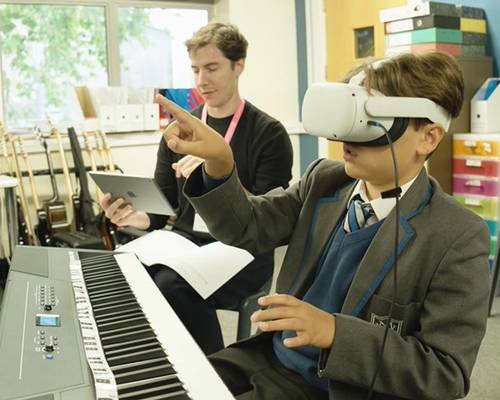
The Way AR is beginning to transform Piano Learning.
The concept of augmented reality is gradually presenting itself in the business of piano study, providing a fresh interpretation of music, technique, and practice. AR is transforming the interaction between pianists and the keyboard by combining digital guidance and physical instruments to create a new approach to playing the piano. This paper discusses the reasons behind the growing interest in augmented reality learning of piano, its functionality as well as its potential future impact on the teaching of piano.The concept of augmented reality is gradually presenting itself in the business of piano study, providing a fresh interpretation of music, technique, and practice. AR is transforming the interaction between pianists and the keyboard by combining digital guidance and physical instruments to create a new approach to playing the piano. This paper discusses the reasons behind the growing interest in augmented reality learning of piano, its functionality as well as its potential future impact on the teaching of piano.