
Piano & Personal Mastery
the way piano lessons develop self confidence with gradual improvement
Mental flexibility is the ability to adapt, adjust, and think clearly when situations change. In a world where routines are constantly disrupted, this skill has become essential. Piano learning develops mental flexibility naturally through coordination, listening, adjustment, and problem-solving. This article explores how piano practice reshapes adaptive thinking and why its impact reaches far beyond music into everyday decision-making and learning.
Confidence is the most common of them that people tend to misinterpret as a character trait, either one has it or not. As a matter of fact, trust is developed by experience. It is cultivated through effort that results in improvement and problems that are tackled with patience and not evading.
Learning of piano conditions the creation of ideal conditions of growth. The development in piano is a truthful and quantifiable factor. One can not pretend to be improving but can always do so with practice. This level of difficulty and rewarding provides the learning process of piano with a lot of confidence-building.
As the learners continue to increase the level of their learning, they start believing in themselves and this is not due to the fact that they are perfect but because they are aware of the fact that they can become better. This revolution changes the self-confidence on a basic level.
The reason why Confidence tends to diminish with time
Responsibilities and time to develop personal growth reduce the confidence of many people. Self-belief can be lost when the individual is subjected to repetitive assignments that do not show any obvious improvements.
Confidence is lost when there is no notable linkage between effort and results. Individuals start questioning their potential to develop.
Learning piano turns this trend around since learning becomes visible and meaningful
The way Piano Learning prepares the clear evidence of progress
In the piano, one can hear and feel the improvement. A passage becomes smoother. Coordination improves. Timing stabilizes.
These developments give tangible testimony to the fact that effort pays.
Students are not dependent on external confirmation. The growing part in itself is a growth.
This fact reinforces the belief since it is not speculative but founded on facts.
The Importance of Small Wins over Big Breakthroughs
Confidence becomes achieved through building up. Learning of Piano focuses on minor and repetitive changes.
Every successful practicing session helps to support the notion that improvement can be made. The learners feel accomplished on a regular basis and not on a big scale.
These minor competitions add up and form a consistent confidence and not a false excitement.
The Consistency as a Trust-builder on the self
The key of confidence is trust. Learning Piano makes learners attend on a regular basis despite the changes in motivation.
The more the consistency, the more the learners start believing in their follow through capabilities. This trust is powerful.
Trust is not based on ability, but on dependability.
The reason Piano Learning promotes healthy self-assessment
The practice of self-evaluation will either build or destroy confidence, depending on the way in which it is done.
Learners also judge sound and movement as opposed to personal value at the piano. Feedback is factual and practical.
This makes one less self-critical and encourages positive change.
The Power of Overcoming Obstacle Makes you More Confident
All learners are facing a challenge. Passages feel awkward. Coordination takes time.
As the learners persist in these struggles and realize that they are improving, confidence increases. Challenge is an evidence of development and not a drawback.
Challenge is associated with progress rather than failure by the brain.
The reason why Piano Learning helps to eliminate the fear of making mistakes
Errors are aspects of learning. The process of practicing the piano reforms the errors as an informational source.
Every mistake indicates what should be changed. Students react by perfecting the technique instead of giving up.
This eliminates fear and develops confidence to experiment.
The Piano Learning Confidence to a Power of One
A lot of work in the piano involves solitude. Independent decisions are made and results are heard by the learners.
This autonomy enhances self-sufficiency. Trust is self-reliant as opposed to approval.
The judgments of the learners are more reliable in the long term.
Why Confidence Increases without Comparison
Confidence is undermined by comparison. Learning of piano concentrates the attention inwards and not outwards.
Measures of progress are based on self-improvement and not on other people. This self standard helps in maintaining consistent self-confidence.
Self-progress leads to confidence and not competition.
The way Piano Learning Teaches One to be Patient with himself/herself
Confidence is backed up by patience. Patience with gradual progress is taught by learning the piano.
Students do not refute that change is a slow process. Frustration is mitigated by this acceptance.
It instills confidence when the learners treat themselves with understanding.
The Emotional Differences of gradual Improvement
Constant enhancement brings about emotional certainty. Students are empowered and down to earth.
Such psychological stability makes one feel confident in a new scenario.
The learning of piano comes as a comfort.
Why Confidence at Piano Invigorates to the daily life
The self-trust built up with the help of the piano can be revealed in other aspects. Students are better confident about work.
They believe in their capacity to learn, adjust and develop.
This transfer enables the importance of piano learning in other fields other than music.
The use of Piano Learning in promoting long-term self-belief
Short-term success can fade. Long term confidence prevails.
The learning of piano instills confidence in the process of long-term work and constant achievement.
The self-belief forms strong and not conditional.
The Reason Why Confidence Built upon Skill Is more Stable
Skill development based confidence is more difficult to dislodge. Learning piano does not provide confidence through reassurance.
Learners are aware of their ability to improve since they have repeated it.
Such confidence helps in endurance.
How Reflection Can Be Done to Strengthen Confidence
The reflection process makes learners identify development. Praxis in the form of piano practice is a way of meditating.
Rehearing progress, and changing the strategy makes one confident.
Consciousness enhances faith
The reason why Piano Learning is related to personal development
Personal development relies on belief in personal change capability. This belief is supported by piano learning.
Students are transformed through hard work.
This correspondence renders the study of piano very significant
The way Confidence Alters Learning Psychology
Learners become willing to take new challenges as they grow in confidence.
Interest supersedes indecision. Effort feels worthwhile.
Learning mind is opened and absorbed
The reason Piano Learning Cultivates the Silent Confidence
Confidence gained in the course of learning the piano is not loud but quite calm.
It does not seek attention. It rests on experience.
And this silent faith upholds considered action
Cultural Value of Confidence Brought about by Diligence
The contemporary culture is becoming more resilient and adaptive. Both are supported by confidence which is earned.
Learning piano also helps in this cultural transformation by placing more focus on the growth rather than the performance.
The effectiveness of piano in building confidence is particularly relevant because of the reasons outlined below
The piano is immediate feedback, definite progression and unrestricted development.
It is hard to find activities that combine these factors.
This renders the piano an effective confidence-making tool.
Long-Term Self-perception Effect
In the long run, learners identify themselves in another way. They perceive difficulties as an opportunity and not a threat.
The self-image changes to competence and development.
Confidence is incorporated into identity.
Conclusion
Practicing piano will provide confidence in oneself by enhancing gradual advancement, regular practice, and direct feedback. This belief becomes stronger with each practice session, that the improvement is possible.
Piano learners gain confidence based on experience as opposed to using comparison or validation. It is not only in relation to music but to everyday life as well that helps to grow and gain strength and trust in oneself.
Piano education is a sure way of gaining self-confidence in a world where it is usually very shaky.
More from the blog
Keep exploring new ideas
Piano: Psychological Development.
How Piano Learning Improves Memory Over Time
The process of learning, adaptation, and growth of people is mainly driven by memory. Learning Piano has emerged as one of the effective techniques of memory reinforcement via formal repetition, auditory, coordination and recalling over time. This article discusses the process by which practicing piano develops various forms of memory, reasons why these advantages become increasingly more effective, and how the benefits of learning a piano help to retain in the minds of non-musical areas.
Piano & Skill Development
How Piano Practice Builds Consistency and Self-Discipline
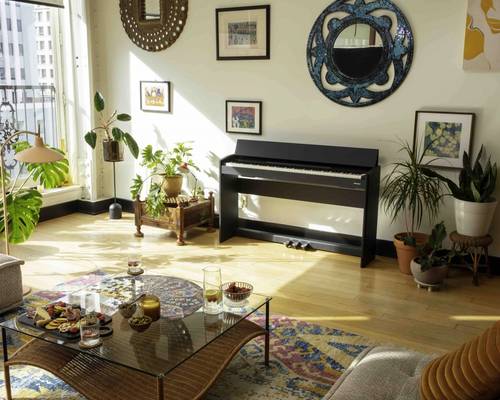
Self-discipline and consistency are crucial personal qualities in the contemporary life but are becoming more challenging to master. The learning of piano provides a natural and effective method of developing both in a structured form of learning, in a progressive manner and through long term commitment. This paper will examine how practice in the piano will develop the consistency over the time, why the self-discipline will develop naturally at the instrument and the applicability of these abilities far beyond music in the life.
Piano & Lifelong Learning
The Reason behind the Rise of Piano Learning among Mature Beginners in the world.
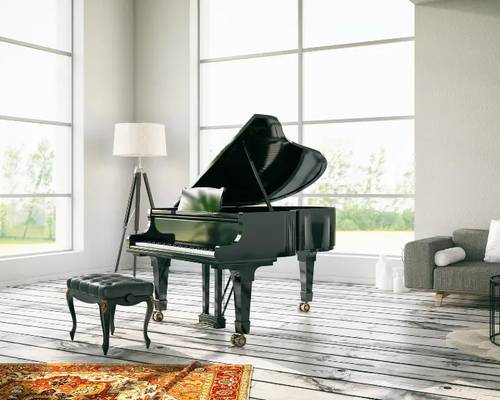
The world has witnessed a potent surge in piano learning among adult learners. More individuals are learning the piano later in their lives and this is due to the flexibility of digital tools, lifestyles and now people are more focused on their personal development. The article discusses the reasons why this trend is being experienced, how adult learners treat piano differently, and why this trend is transforming the contemporary culture of the piano.
Piano & Modern Skills
The reason Learning Piano Is Better than Multitasking in a Distracted World.
Piano learning is becoming an effective tool to reconnect attention and deep thinking in a day and age where we are bombarded with notifications and do not spend enough time in deep contemplation. The mental clarity ensured by years of discipline in the practice of the piano may be that which is afforded by very few activities because it demands constant focus, physical coordination and active listening. This paper discusses the connection between learning the piano and attention, the level of cognitive and mental discipline and the reason why more and more individuals are turning to the piano to overcome distraction in the modern world.

The Culture of Piano and Contemporary Music.
The reason why Minimalist Piano Music is becoming a sound of this decade.
The minimalist piano music has come out as one of the most effective sounds of the modern age. The style is marked by its simplicity, repetition, and restraint, and they are defining the manner in which individuals listen, create, and relate to piano music nowadays. This paper delves into the reasons behind the growth of minimalist piano in popularity all over the world, its reflection of the contemporary life, and why it is a simply a new voice of this decade.
Piano & Future Learning
The Way AR is beginning to transform Piano Learning.
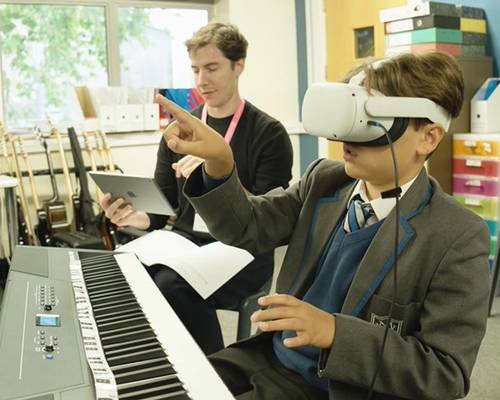
The concept of augmented reality is gradually presenting itself in the business of piano study, providing a fresh interpretation of music, technique, and practice. AR is transforming the interaction between pianists and the keyboard by combining digital guidance and physical instruments to create a new approach to playing the piano. This paper discusses the reasons behind the growing interest in augmented reality learning of piano, its functionality as well as its potential future impact on the teaching of piano.The concept of augmented reality is gradually presenting itself in the business of piano study, providing a fresh interpretation of music, technique, and practice. AR is transforming the interaction between pianists and the keyboard by combining digital guidance and physical instruments to create a new approach to playing the piano. This paper discusses the reasons behind the growing interest in augmented reality learning of piano, its functionality as well as its potential future impact on the teaching of piano.