
Piano & Learning Habits
Why Piano Practice is better at creating Long-term Consistency in Skill Learning.
To develop any meaningful skill, one needs to be consistent, but consistency throughout the process is one of the most challenging tasks to handle in the contemporary life. Learning piano provides a special model of realizing consistency due to systematic training, gradual advancement and evident commentary. The article discusses the benefits of learning piano in terms of commitment over the long term, transformation of the practice habits, and establishment of consistency that is not confined to the field of music but to the learning and personal development in general.
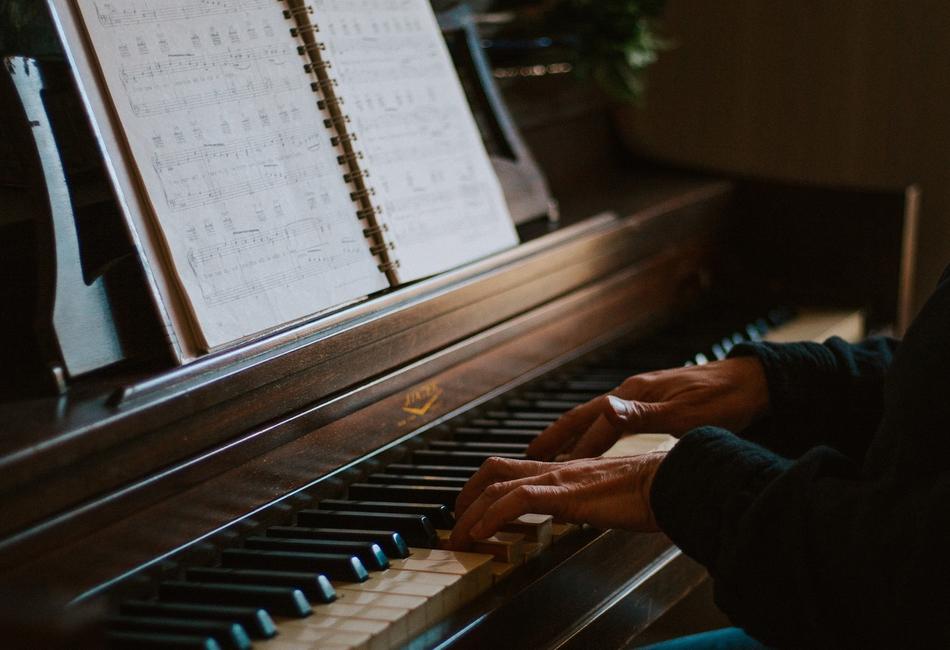
The same thing is said of consistency as it is touted to be the basis of success, but consistency is among the most difficult ones to practice. Most individuals start acquiring new skills with a lot of enthusiasm yet they get overwhelmed when the learning process is hindered later on when they experience slowness or changes in routines. It is not motivation but perseverance in the face of slow results and not fast results.
Piano lessons are a solution to this dilemma in a real and sustainable manner. Practice at the piano is directly connected to frequent practice. The improvement is evident in short, intensive practice sessions, and the lack is shown in a short span of time. This obvious cause and effect combine to make piano learning one of the best instructors of consistency.
In the long run, learners start trying to make regular practice a natural aspect of the development, instead of something that needs constant encouragement.
The reasons why it is challenging to maintain consistency
The contemporary life promotes spurts of interest as opposed to hard work. There are numerous activities where instant feedback or quick rewards are provided, and slow progress would be unappreciated. Dedication usually lowers when one cannot see progress at the outset.
Consistency demands a setting, where work does not go to waste even in cases where progress is minute. This environment is achieved through piano learning. Even miniature changes can be added to the coordination, listening, and understanding at each session.
This progressive reinforcement will leave the learners interested without depending on external force.
The Way Piano Learning develops a Natural Practice Rhythm
Learning of piano would naturally promote routine. Most of the learners train at the same time in a day though the sessions could be short. This familiarity enhances resistance to resistance to starting.
Instead of perceiving practice as a kind of disruption, learners start to perceive it as the continuation of a natural rhythm in their day. This rhythm is conducive to the uniformity as it reduces decision fatigue.
Consistency will be easier when the practice is habitual.
The Use of the Role of Clear Feedback in Maintaining Effort
Lack of instant feedback is one of the reasons why consistency is challenging in most skills. Learning piano gives one feedback on a consistent, thorough, and unambiguous basis: sound and motion.
Students can hear when timing is increased, feel when coordination is more efficient and can see when passages are less strenuous. These are the indications that uphold the importance of practicing regularly.
Response allows the progress to be felt, which aids in long-term commitment.
The Reason Why Small Sessions are Better than Long Sessions
In the case of frequency, consistency is achieved, as opposed to duration. This principle is supported by the learning of piano.
The short, frequent practice sessions usually give better results in comparison to the infrequent and long sessions. This is felt by the learners when they get involved in a daily activity that results in gradual improvement.
This realization changes the expectations. It is possible to be consistent and not overwhelming.
The Reducing Motivation Dependence of Piano Learning
Motivation is a natural phenomenon. It makes it dependent and therefore weak in terms of consistency.
Piano lessons make one less reliant on motivation since habit is in focus. Even during the days when enthusiasm is lacking, learners practice due to the fact that routine pushes them on.
As time goes by, the motivation is overtaken by discipline as the engine of advancement.
Why Progress Seems Won, not Chance
The daily practice at the piano has predictable improvement. This dependability gains confidence in the process.
The learners understand that they should work repeatedly until they achieve success. This discovery makes devotion solid.
Coherence is meaningful where results match response.
The process of Piano Learning and Operant Conditioning
The slow development of the piano goes on. Students get used to gradual advancement as opposed to the abrupt change.
This tolerance promotes regularity by making a person less angry. Students embrace the fact that improvement is a gradual process and do not give up by going through at a slow pace.
Patience is also an art that is learnt with time.
The Psychological Stability made by Practice
Stability is brought about by consistency. Practicing the piano on a regular basis gives an effective focus in everyday life.
This permanency helps in the stabilization of emotions. Another term learners tend to use to describe practice is grounding as it provides a predictable and constructive activity.
The aspect of stability strengthens the concept of consistency as it makes practice supportive and not demanding.
The reason why Piano Learning teaches people to think long-term
The activities that are planned are based on short-term objectives. Learning Piano focuses on long term development.
Essays get better after weeks and months. Skills are based on what has been previously known. A long-term orientation is natural in learners.
This attitude believes in consistency in that attention is no longer on short-term outcomes.
The Strength of Consistency to Build Confidence
When one experiences success, confidence also builds up. Learning piano gives one regular experiences of improvement.
With consistency, the playing is smooth and the control is more effective, therefore the confidence rests on experience and not belief.
This faith contributes to the tendency of going back to practice.
The reason why perfectionism is discouraged in Why Piano Learning
Consistency is one of the factors that can be destroyed by perfectionism that generates unrealistic expectations. This tendency is opposed by learning piano.
The only gauge of progress is improvement and not perfection. Errors are involved in the learning process.
This view advocates interaction instead of evading.
The way Piano Learning Cultivates Trustworthy Practice Traits
It is by repetition that habits are developed. This is strengthened with the learning of piano in the daily process.
Students observe that ease and clarity disappear with lack of practice, whereas control is regained with the resumption of practice. This is the consciousness that enhances habit formation.
It is more of a practice and not a choice.
The Extensibility of Consistency Music to other areas
The consistency gained at the piano may spread over to other spheres. Students are more responsible in learning, employment, and personal undertakings.
The routine of turning up on a regular basis is carried over.
Piano training is practice in long-term endeavor in life.
The Support of Consistency by Structure
Form minimizes the ambiguity. The practice of the piano is designed with the use of pieces, exercises, and objectives.
This understanding aids in the consistency as it brings purpose and organization to practice.
Learners are aware of what to work on and this minimizes hesitation.
The precise way Piano Learning Forges Accountability in the absence of any pressure
Piano learning is accountable by structuring feedback instead of supervision.
Students can perceive improvement or lack of it instantly. This consciousness promotes uniformity without criticism.
It is more of a question of personal accountability than of enforced accountability.
Why Consistency is an Element of Identity
With time, the self-perception is modified through regular training. Students consider themselves as trustworthy and loyal.
This identity favors further interaction. Regularity is incorporated in their nature.
Goal-based habits are less permanent as compared to the identity-based ones.
The Long-term Effect of Practicing
Consistency in the long term results in long-run growth. Competencies enhance as opposed to undoing them.
Students develop a platform upon which continuity improvement is applicable.
This build up effect builds on the worthiness of daily endeavor.
The Rationale behind why Piano Learning is in line with Lifelong skill development
Lifelong learning is more of a continuity than a vigor. This is evident in the models of learning how to play the piano.
The continuous growth takes place in form of constant interaction.
This interest will assist in maintaining commitment.
The value of using piano as a particularly effective teaching tool in the area of teaching consistency
The piano answers instantly to labor. Practice is an immediate expression of improvement.
There is no other activity that can bring out the advantages of consistency in a way as evident.
This responsiveness renders the learning of piano very effective in the development of habits.
Conclusion
The discipline that comes with piano learning ensures consistency because it establishes the strong linkage between hard work and improvement. With the help of the regular practice, formative feedback, and smooth improvement, learners will have habits that lead to long-term development.
It makes consistency at the piano natural as opposed to being enforced. Gradually, this habit is not only limited to music but other aspects of life as it helps in long-lasting learning and development of self.
With the world being extremely divided in terms of attention, learning piano can be a sure way to stay consistent, patient, and make a substantial progress.
More from the blog
Keep exploring new ideas
Piano: Psychological Development.
How Piano Learning Improves Memory Over Time
The process of learning, adaptation, and growth of people is mainly driven by memory. Learning Piano has emerged as one of the effective techniques of memory reinforcement via formal repetition, auditory, coordination and recalling over time. This article discusses the process by which practicing piano develops various forms of memory, reasons why these advantages become increasingly more effective, and how the benefits of learning a piano help to retain in the minds of non-musical areas.
Piano & Skill Development
How Piano Practice Builds Consistency and Self-Discipline
Self-discipline and consistency are crucial personal qualities in the contemporary life but are becoming more challenging to master. The learning of piano provides a natural and effective method of developing both in a structured form of learning, in a progressive manner and through long term commitment. This paper will examine how practice in the piano will develop the consistency over the time, why the self-discipline will develop naturally at the instrument and the applicability of these abilities far beyond music in the life.
Piano & Lifelong Learning
The Reason behind the Rise of Piano Learning among Mature Beginners in the world.
The world has witnessed a potent surge in piano learning among adult learners. More individuals are learning the piano later in their lives and this is due to the flexibility of digital tools, lifestyles and now people are more focused on their personal development. The article discusses the reasons why this trend is being experienced, how adult learners treat piano differently, and why this trend is transforming the contemporary culture of the piano.
Piano & Modern Skills
The reason Learning Piano Is Better than Multitasking in a Distracted World.
Piano learning is becoming an effective tool to reconnect attention and deep thinking in a day and age where we are bombarded with notifications and do not spend enough time in deep contemplation. The mental clarity ensured by years of discipline in the practice of the piano may be that which is afforded by very few activities because it demands constant focus, physical coordination and active listening. This paper discusses the connection between learning the piano and attention, the level of cognitive and mental discipline and the reason why more and more individuals are turning to the piano to overcome distraction in the modern world.

The Culture of Piano and Contemporary Music.
The reason why Minimalist Piano Music is becoming a sound of this decade.
The minimalist piano music has come out as one of the most effective sounds of the modern age. The style is marked by its simplicity, repetition, and restraint, and they are defining the manner in which individuals listen, create, and relate to piano music nowadays. This paper delves into the reasons behind the growth of minimalist piano in popularity all over the world, its reflection of the contemporary life, and why it is a simply a new voice of this decade.
Piano & Future Learning
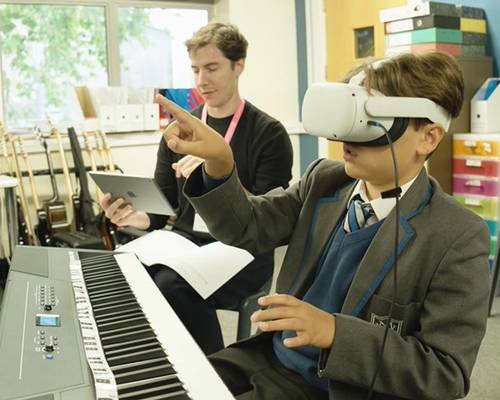
The Way AR is beginning to transform Piano Learning.
The concept of augmented reality is gradually presenting itself in the business of piano study, providing a fresh interpretation of music, technique, and practice. AR is transforming the interaction between pianists and the keyboard by combining digital guidance and physical instruments to create a new approach to playing the piano. This paper discusses the reasons behind the growing interest in augmented reality learning of piano, its functionality as well as its potential future impact on the teaching of piano.The concept of augmented reality is gradually presenting itself in the business of piano study, providing a fresh interpretation of music, technique, and practice. AR is transforming the interaction between pianists and the keyboard by combining digital guidance and physical instruments to create a new approach to playing the piano. This paper discusses the reasons behind the growing interest in augmented reality learning of piano, its functionality as well as its potential future impact on the teaching of piano.