Musical Intervals Explained - A Beginner's Guide
July 8, 2026
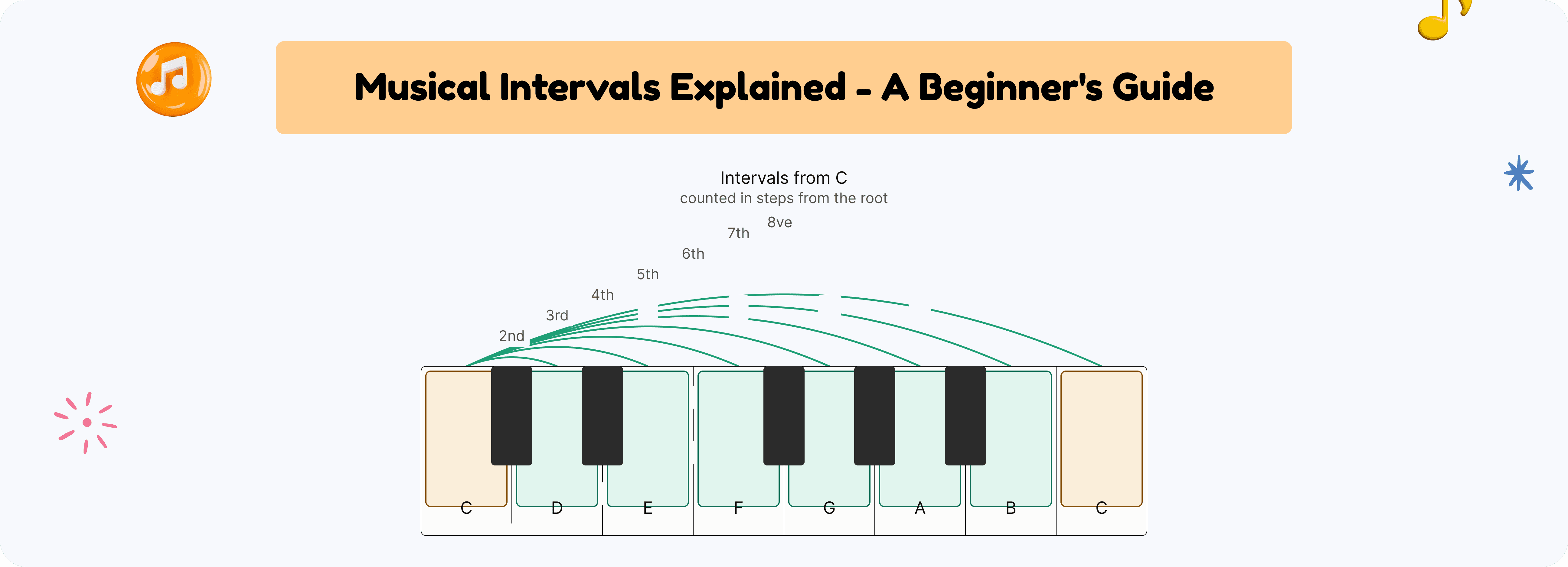
Musical Intervals Explained - A Beginner's Guide
Any type of music involves the relationship between notes. Be it playing a melody, forming a chord, or a scale, you are going to deal with intervals. An interval just means a space between two notes and thus is one of the most valuable notions for further learning piano. A clear explanation of musical intervals will help you notice patterns instead of memorizing each note separately. With increasing knowledge, it will be easier for you to learn songs and analyze them.
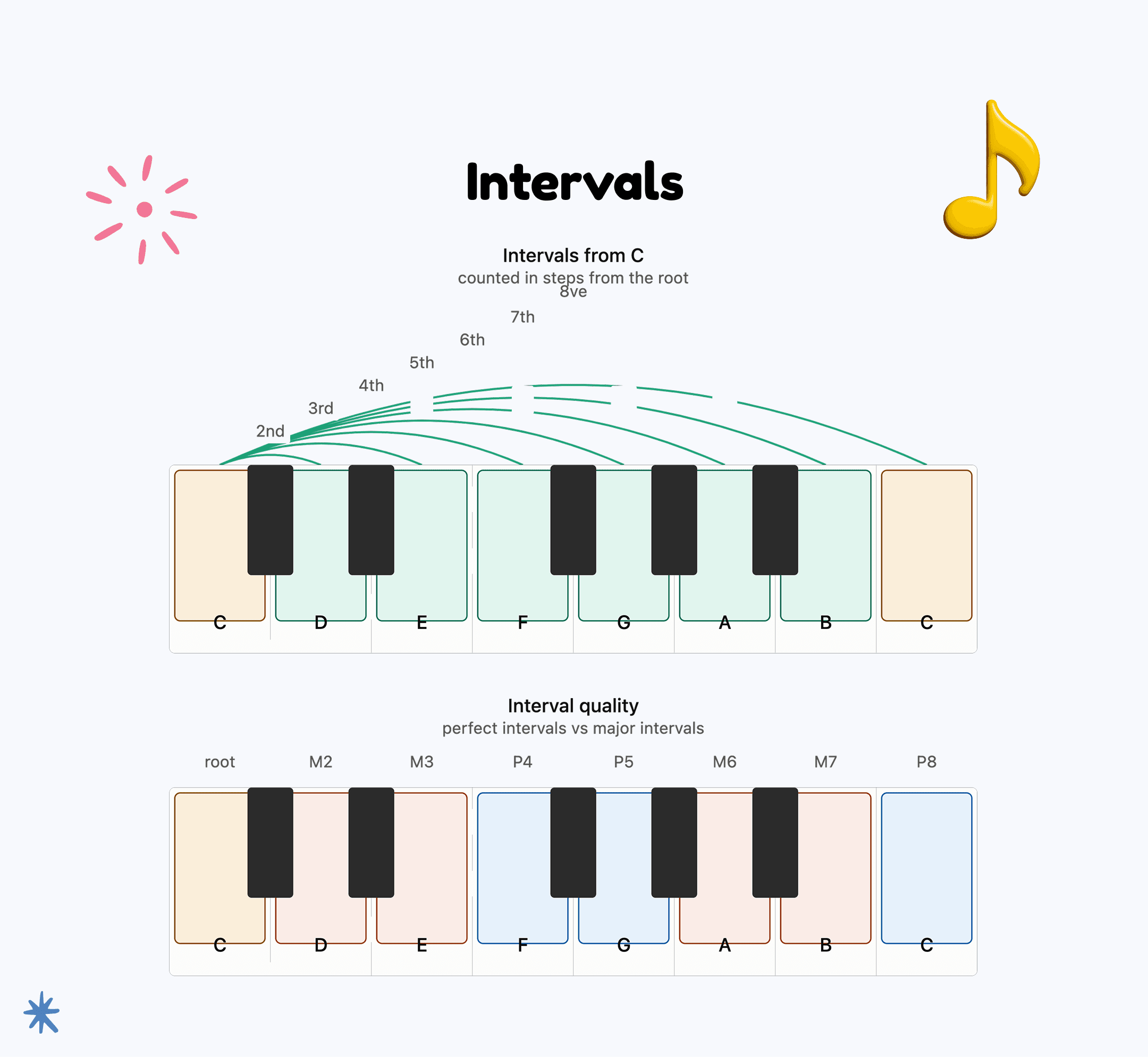
Are you asking yourself what musical intervals are? Simply put, an interval is the space between one note and another. The space can be big or small and each will have a different sound. Forget notes for now and start thinking in terms of how they connect with each other. You will develop a much better understanding of harmony by doing this.
Common Types of Musical Intervals
There are various kinds of musical intervals such as seconds, thirds, fourths, fifths, sixths, sevenths, and octaves. Every kind has its own nature and occurs frequently in piano music. You are not required to remember all intervals at once. Try to familiarize yourself first with the most frequent intervals, and then proceed gradually.
Major, Minor, and Perfect Intervals
In your musical journey ahead, you will encounter major and minor intervals as well as perfect intervals. These terms describe the nature of the interval and enable musicians to be more precise while describing music. For now, pay attention to recognizing how each type of interval sounds and avoid memorizing all definitions for the time being. One of the most effective ways to develop your musical sense is through listening.
Practice Recognizing Intervals
Intervals for beginner piano practice involve listening and observing on a frequent basis. Play two notes simultaneously or sequentially, then observe the sound difference between them. With enough practice, you'll start recognizing some interval combinations without necessarily counting all notes. The use of an interval chart for the piano is also beneficial during practice. It serves as your visual aid until such a time as the note differences are recognizable through practice.
Strengthen Your Musical Ear
Interval recognition in music is a skill that requires regular training to perfect. Start from basic drills involving notes close to each other and, slowly but surely, expand your exploration to larger intervals as you gain confidence in yourself. You don’t have to try remembering all intervals right away – just train your ear! As your listening skills become better, you will notice interval relationships within scales, chords, and melodies without even having to search for them on purpose. It will aid in every future lesson and make you a better pianist!
Frequently Asked Questions
Why are musical intervals important for piano players?
Musical intervals assist a person in identifying the distance between the different notes and thus understanding melodic lines and chords and scales. Learning musical intervals also enhances one’s ear skills and makes learning new songs easy.
Can I learn intervals by listening instead of reading music?
Yes. Hearing two tones and comparing them will help you learn how to recognize intervals. A combination of ear training and practicing intervals from sheet music will definitely aid a beginner to understand more about intervals.
What is the easiest interval for beginners to recognize?
Octaves and perfect fifths are considered the easiest intervals for beginners to identify since these intervals have distinct tones. Once you hone your hearing ability, you will be able to easily identify smaller intervals like seconds and thirds.
Should I practice intervals every day?
It is recommended to practice short but daily sessions. It will help you improve your skills if you spend even a couple of minutes distinguishing notes and getting used to the interval sounds.
Can musical intervals help me play songs by ear?
Yes. Knowing about intervals means that you will be able to recognize the distance between notes of a tune, which will make it possible for you to play the songs by ear without the need of having the sheet music.
What should I learn after understanding musical intervals?
Having learned about intervals, you should proceed to Piano Keys & Finger Placement. The knowledge about intervals will be complemented by correct hand placement while playing the piano.
Related Lessons
View All Lessons
Ready to Play?
Go ahead and start practicing with our online piano right in your browser. Have fun playing songs, lessons, and more.
Play Now