Learn to Read the Music Staff and Note Positions
July 8, 2026
Learn to Read the Music Staff and Note Positions
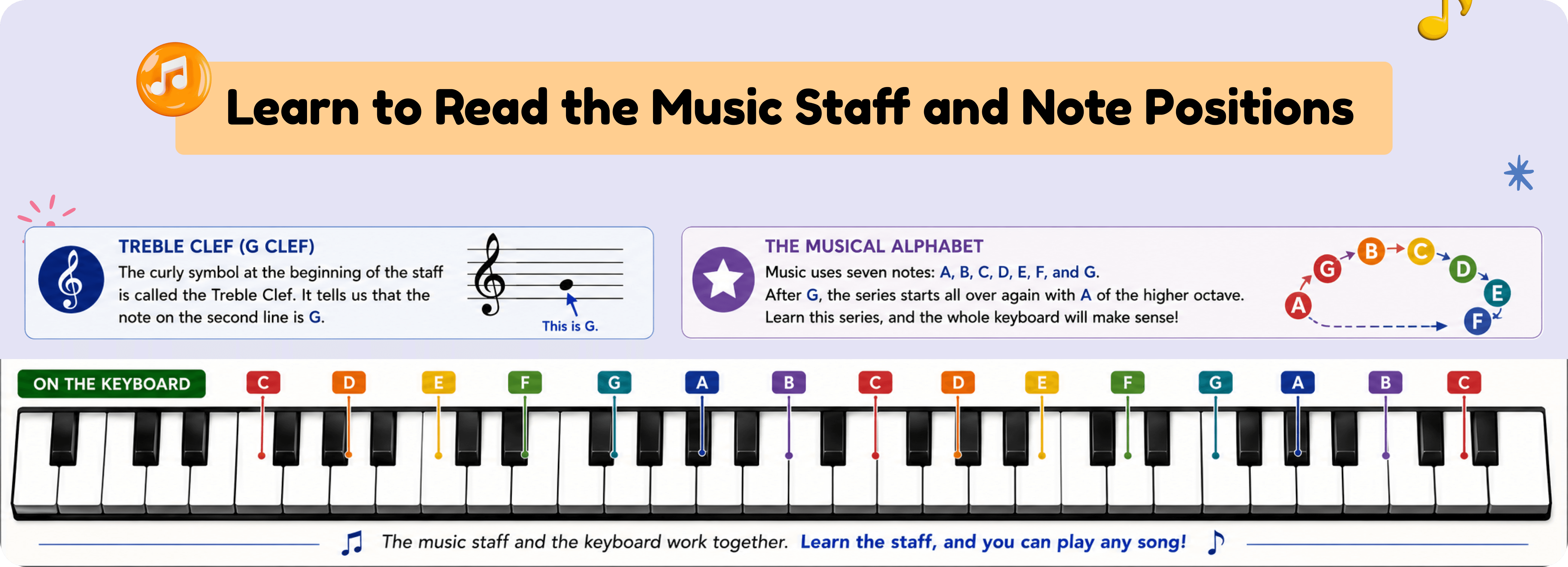
If you have already been taught about how to play a particular note on the piano keyboard, the next part of your training should be about how to recognize it in a score. The music staff is a way to write down notes and musical ideas. As soon as you learn about note locations on the music staff, you will be able to follow any written music easily. While studying piano notation, try not to think of the music staff as something that has to be memorized. Each note has its own unique place on the staff, and that place tells you exactly which note to play.
Every Position Represents a Different Pitch
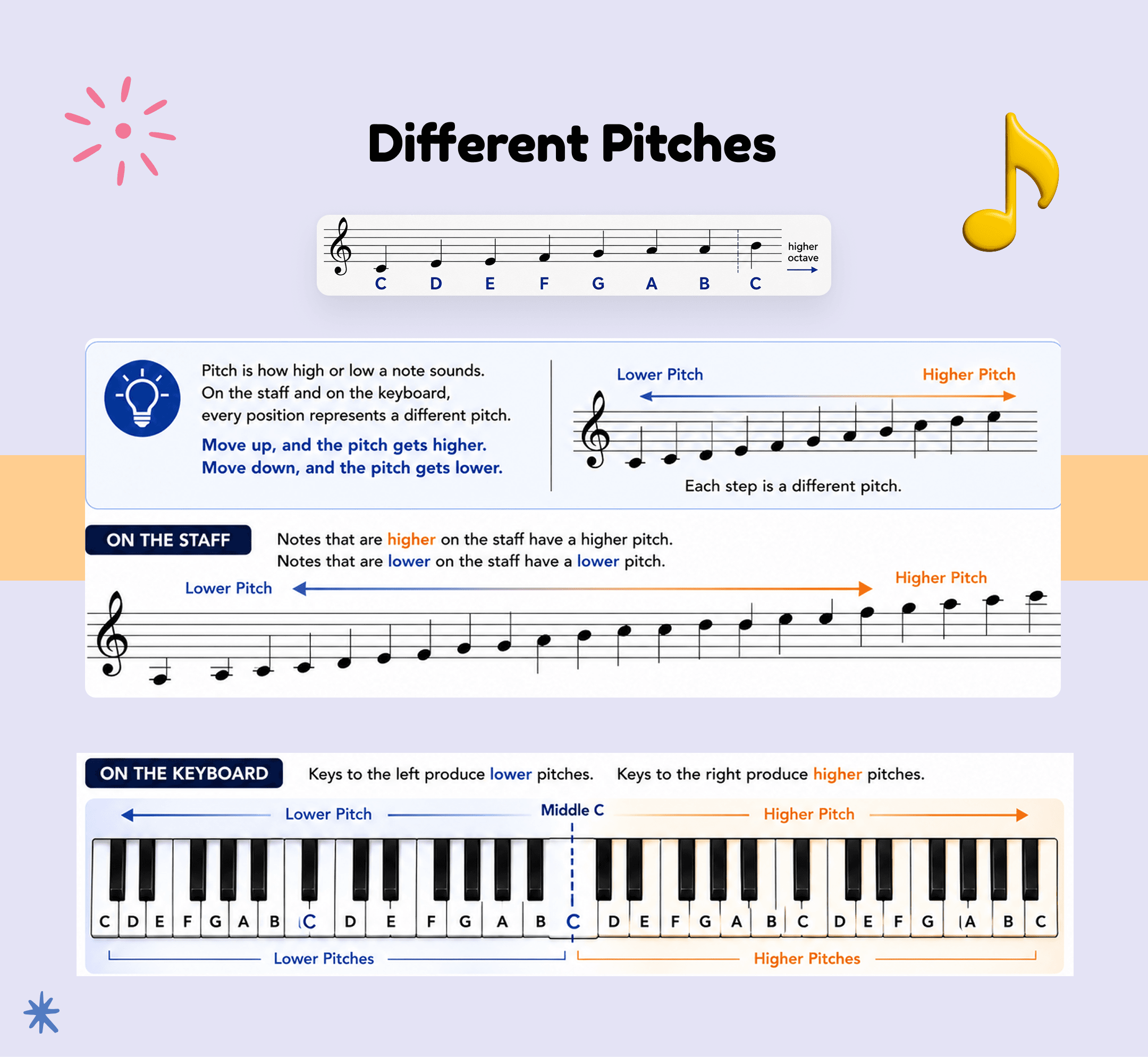
The staff consists of five horizontal lines with four spaces in between. The notes are positioned on a line or space, and each note in a particular position corresponds to a unique note. When the notes move up on the staff, they become higher in pitch. Similarly, as they go down on the staff, their pitches become lower. For those learning to read music notes, it is crucial to know these positions rather than to try to read rapidly.
Patterns Make Reading Easier
There are visual patterns in piano sheet music. The notes tend to either move up or down gradually, skip to a closer position, or stay in the same spot. It is recommended to focus on recognizing such patterns while practicing. This way, you will find it easier to read music and make your eye movements on the paper more natural. When you gain more confidence, you will need to spend much less time analyzing each note separately.
Ledger Lines Expand the Music Staff
Some notes fall above or below the five-lined staff. To indicate these notes, which have either a higher or a lower pitch than those on the five-lined staff, the composer employs short lines known as ledger lines. Initially, ledger lines might be hard to identify. But as you keep learning about reading music for the piano, you will be able to recognize the notes that are written on the ledger lines.
Reading Notes and Rhythm Together
Reading piano notes is not just about finding out the pitch of each note, but also about its duration, which informs us how long it has to be played. Learning both the rhythm and pitch reading gives us the opportunity to play the music as intended. A good exercise for developing this skill is to read from a simple musical score while also comparing each note with the corresponding one on an online keyboard or an actual piano.
Practice One Line at a Time
Music reading is something that can be achieved by constantly practicing and not by memorizing. Start with an exercise that will have fewer notes, and as you get used to them, increase their number. Small increments of improvement every day will make music reading for beginners very easy. After becoming familiar with note placement, you are now ready to understand how treble and bass clefs arrange those notes to be played with either the left hand or the right.
Frequently Asked Questions
Is reading piano sheet music difficult for beginners?
Reading music sheets for pianos can be difficult for a new person, but with consistent practice, it will become very easy. One should begin by practicing exercises using a few notes and then advance to more complicated songs.
Do I need to memorize every note on the staff?
No. Rather than remembering all the notes in one go, remember a few reference notes and understand the pattern in between. Eventually, you will be able to recognize the notes faster without depending upon memorization.
Can I learn to read sheet music without a piano?
Yes. You can practice the skills of note identification, rhythm reading, and music staff recognition by using worksheets or an online virtual piano. It is useful to play the notes as you read them.
How often should I practice reading sheet music?
Reading music for 10 to 15 minutes a day is much more productive than one or two intensive sessions during the week. Reading basic exercises in 10 to 15-minute increments per day will help you become better at reading notes and increase your speed.
What mistakes do beginners make when reading piano music?
Beginners tend to look for individual notes rather than patterns of notes and rhythms. Anticipating what you are going to read and reading at a slower pace will help in accurate reading of the notes.
What should I learn after reading the music staff?
The next thing to learn after becoming familiar with the music staff is the treble clef and the bass clef. Knowing how notes are arranged on each of the clefs will make reading music much easier for both hands.
Related Lessons
View All Lessons
Ready to Play?
Go ahead and start practicing with our online piano right in your browser. Have fun playing songs, lessons, and more.
Play Now